Archaeologists working at the Sun Gate of ancient Nineveh have uncovered a monumental Assyrian stele inscribed with records of King Ashurbanipal's building projects, offering new evidence for royal activity in the seventh century BCE
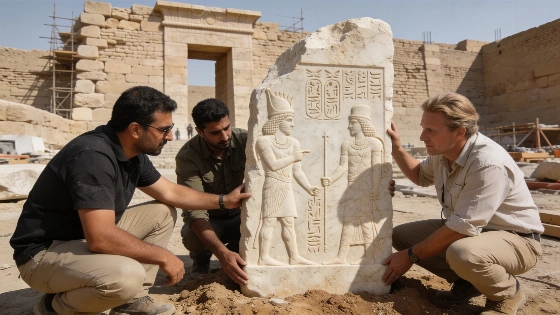
A joint Iraqi-American archaeological team has identified a monumental Assyrian stele during restoration work at the Sun Gate, one of the principal entrances to the ancient city of Nineveh in present-day Mosul, Iraq. The stele, carved from a single block of Mosul marble, stands approximately 2 meters high and 1.55 meters wide, with a semi-circular top and a rectangular base. Its discovery adds a significant new example to the corpus of Neo-Assyrian royal monuments, with preliminary analysis suggesting it dates to the reign of King Ashurbanipal (668-627 BCE).
Monumental Evidence and Context
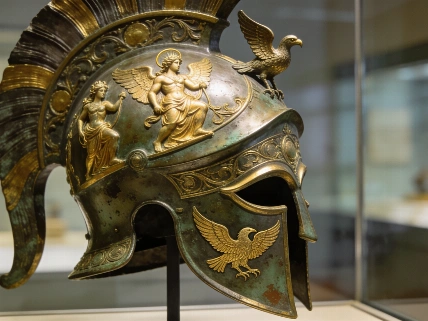
The stele was recovered in situ near the eastern defensive walls of Nineveh, an area that has seen extensive damage and subsequent restoration following the occupation of Mosul by the Islamic State group between 2014 and 2017. The Sun Gate, also known as Bab Shamash, remains a key landmark and is still used as a modern traffic route. The monument's front face features a large relief of Ashurbanipal wearing a distinctive bronze helmet, while the reverse side contains two smaller reliefs believed to depict other Assyrian rulers, accompanied by a lengthy cuneiform inscription.
Although the inscription has not yet been fully deciphered, initial readings indicate it records building projects commissioned by Ashurbanipal both in Nineveh and across the wider Assyrian Empire. The stele's size and preservation make it one of the most substantial royal inscriptions from the late Neo-Assyrian period to survive in its original context. Its recovery was made possible through a partnership with the University of Chicago's Institute for the Study of Ancient Cultures, which has supported ongoing conservation at the site.
Inscription and Interpretation
The cuneiform text, while only partially translated, appears to document construction and restoration activities, providing direct evidence for royal involvement in urban development during Ashurbanipal's reign. The monument's iconography and inscription together offer a rare opportunity to study the visual and textual strategies used by Neo-Assyrian rulers to legitimize their authority and commemorate their achievements. Researchers emphasize that further study of the inscription may clarify the chronology and scope of Ashurbanipal's building program, as well as the administrative and ceremonial functions of the Sun Gate itself.
Measured at roughly 2 meters in height and 1.55 meters in width, the stele is among the largest known from the Neo-Assyrian period. Its marble was sourced locally, and the reliefs show evidence of skilled carving techniques characteristic of late Assyrian monumental art. The monument's preservation is notable given the extensive destruction suffered by Nineveh's ancient walls and associated structures in recent decades.
Heritage, Display, and Ongoing Research
Decisions regarding the stele's permanent display have not yet been finalized. Options under consideration include exhibiting the monument near the restored Sun Gate or transferring it to the planned Mosul Civilisation Museum. The find highlights the importance of ongoing conservation and research at sites affected by conflict and destruction, and underscores the value of collaborative international archaeological work in Iraq.
Comparative discoveries of monumental inscriptions at other ancient sites, such as the identification of ritual complexes at Gradište in North Macedonia, have similarly expanded our understanding of elite activity and urban development in the first millennium BCE. For example, recent work at Gradište has revealed evidence of Hellenistic ritual dining and imported ceramics, as discussed in this report on ritual architecture in North Macedonia.
Researchers hope that continued analysis of the Nineveh stele's inscription will provide new insights into the final decades of the Neo-Assyrian Empire, a period marked by both monumental construction and political instability. The monument's recovery also raises questions about the preservation and interpretation of royal inscriptions in contexts affected by modern conflict and restoration.
Understanding Cuneiform Inscriptions
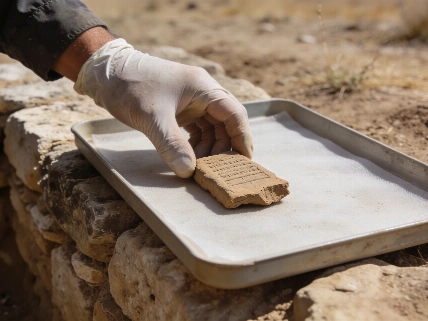
Cuneiform was the primary writing system of ancient Mesopotamia, used for administrative, legal, and commemorative texts over several millennia. Inscriptions on stone monuments such as stelae were typically composed in Akkadian or Sumerian and required specialized knowledge to carve and interpret. Decipherment of cuneiform relies on the survival of both the physical inscription and comparative texts, and is often complicated by damage, erosion, or incomplete preservation. Monumental inscriptions like the Nineveh stele provide direct evidence for royal claims and activities, but their interpretation depends on careful philological analysis and contextual archaeological information. The process of translating and understanding these texts is ongoing, and new discoveries can significantly alter our understanding of ancient political and social history.