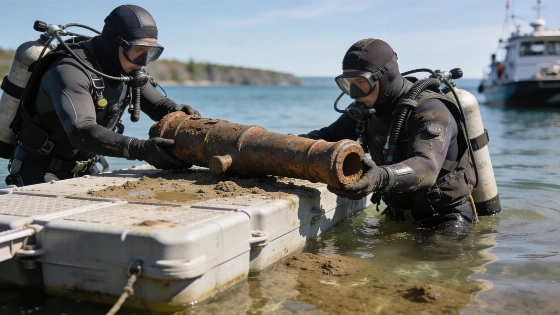
Archaeologists have retrieved the last known fragment of a Revolutionary War-era cannon from Lake Champlain, closing a decades-long search and providing new evidence for the Battle of Valcour Island's archaeological record
The last missing fragment of a Revolutionary War cannon has been recovered from the bottom of Lake Champlain, marking the completion of a decades-long effort to document the material remains of the 1776 Battle of Valcour Island. The find, made nearly 250 years after the naval engagement, offers new physical evidence for one of the earliest naval battles in American history and helps clarify the archaeological record of the conflict.
Recovery and Context
The fragment was located and retrieved 27 years after the first section of the same cannon was discovered in the lake. The recovery was led by the Centre for Maritime Archaeology & Conservation (CMAC) in partnership with Texas A&M University's Nautical Archaeology Program (NAP), the New York State Museum, the Lake Champlain Maritime Museum, and the Naval History and Heritage Command. Funding was provided by the Institute of Nautical Archaeology and the International Nautical Archaeology Foundation. The project relied on advanced magnetometer survey techniques during the 2025 field season, which enabled the team to identify the elusive fragment after previous searches using metal detectors had failed.
Researchers believe the recovered piece is likely the same fragment that caused the fatal injury to Lieutenant Thomas Rogers during the battle, an event later commemorated by his widow. The fragment's association with a specific casualty is based on historical accounts and the artifact's context, but direct confirmation remains limited by the available evidence.
Archaeological Significance
The Battle of Valcour Island, fought on 11 October 1776, was a pivotal engagement in the American Revolutionary War, involving a small American fleet attempting to delay British advances. The cannon fragments, now fully accounted for, provide rare material evidence for the battle's intensity and the types of armament used. The recovery also coincides with the United States' 250th anniversary of independence, underscoring the ongoing relevance of archaeological research to national historical narratives.
The project team included faculty, graduate students, and alumni from Texas A&M and East Carolina University, as well as former principal investigators and museum staff. The Clinton County Historical Association hosted a lakeside ceremony to mark the recovery and commemorate the battle. The event was attended by key figures from the Lake Champlain Maritime Museum and the Valcour Bay Research Project, reflecting the collaborative nature of the investigation.
Methods and Limitations
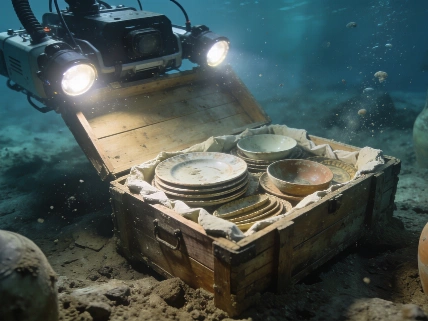
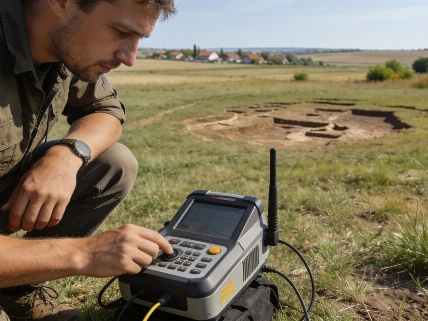
The search for the final cannon fragment required the application of high-resolution magnetometer surveys, which detect variations in the Earth's magnetic field caused by buried or submerged metal objects. This approach proved more effective than previous metal detector sweeps, which had failed to locate the fragment due to sediment coverage and the lake's challenging underwater conditions. The successful recovery demonstrates the value of integrating geophysical survey methods into underwater archaeological research, particularly in environments where visibility and access are limited.
While the cannon fragments provide direct evidence for the battle's material culture, their interpretation is constrained by the incomplete preservation of associated artifacts and the absence of detailed stratigraphic context underwater. The identification of the fragment as the one that wounded Lieutenant Rogers is plausible but cannot be confirmed without further evidence. The recovery nonetheless completes the known archaeological record of this particular cannon, allowing for more comprehensive analysis of the site and its historical significance.
Material evidence from Revolutionary War contexts remains rare, and each new find contributes to a more nuanced understanding of the conflict's logistics, technology, and human cost. Comparable efforts to reconstruct battle events from fragmentary remains have also been reported in other regions, such as the analysis of imported Roman artifacts in early British cemeteries, as discussed in recent research on Iron Age burials in England.
Understanding Underwater Archaeology
Underwater archaeology presents unique challenges compared to terrestrial excavation. The preservation of metal artifacts like cannon fragments is influenced by water chemistry, sedimentation, and biological activity, which can accelerate corrosion or obscure objects from detection. Geophysical survey methods, such as magnetometry, are essential for locating metal artifacts in submerged contexts where direct visual inspection is impractical. However, the lack of stratigraphic layering underwater often limits the ability to reconstruct precise depositional sequences, making it difficult to associate artifacts with specific events or individuals. Despite these limitations, underwater finds remain critical for reconstructing historical events that unfolded in aquatic environments and for filling gaps in the archaeological record where written sources are incomplete or ambiguous.