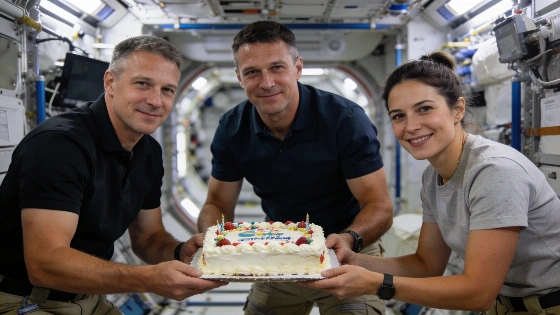
Expedition 74 astronauts Anna Kikina, Pyotr Dubrov, and Anil Menon have joined the International Space Station, starting an eight-and-a-half-month mission focused on microgravity research and operational adaptation
Three new crew members have joined the International Space Station (ISS), marking the start of Expedition 74's science operations. Anna Kikina and Pyotr Dubrov of Roscosmos, along with NASA astronaut Anil Menon, arrived at the orbital laboratory on July 14, 2026, following their launch from the Baikonur Cosmodrome in Kazakhstan. Their arrival expands the station's international contingent and initiates a new phase of microgravity research and operational activity.
Arrival and Early Adaptation
The trio's journey to the ISS was completed in a single day, with docking and hatch opening occurring on July 14. Within days, the new arrivals began acclimating to the station's microgravity environment, a process that requires both physiological and operational adjustment. Early tasks have included safety briefings, familiarization with station systems, and initial participation in ongoing experiments.
Expedition 74's planned duration is approximately eight and a half months, during which the crew will rotate through a range of scientific and maintenance duties. The mission's timeline is designed to maximize research output while ensuring crew health and safety in the unique conditions of low Earth orbit.
Scientific Objectives and Research Activities
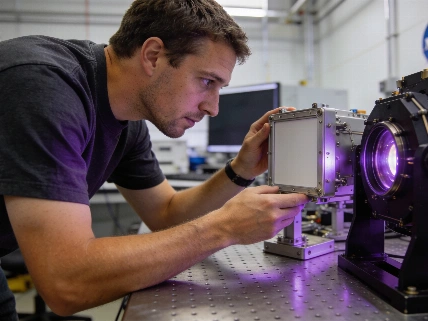
The ISS serves as a platform for multidisciplinary research, with experiments spanning biology, physics, materials science, and human health. The new crew members are expected to contribute to studies on the effects of long-duration spaceflight, including investigations into muscle atrophy, bone density loss, and immune system changes. These experiments rely on the station's specialized laboratory modules and instrumentation, which enable controlled studies not possible on Earth.
In addition to biological research, the crew will support physical science experiments that exploit the absence of gravity to probe fundamental processes. This includes fluid dynamics, combustion, and materials solidification studies, which can reveal behaviors masked by gravity on the ground. The results are intended to inform both basic science and future mission design.
International Collaboration and Mission Context
The composition of Expedition 74 reflects ongoing international cooperation in space science. Roscosmos and NASA continue to coordinate crew assignments, launch logistics, and research priorities, maintaining the ISS as a shared scientific resource. The Baikonur Cosmodrome remains a key launch site for crewed missions, supporting both Russian and international astronauts.
Medical and operational protocols are continually updated based on new findings. For example, recent work on astronaut health risk assessment, such as the development of a venous thromboembolism (VTE) risk algorithm, has been informed by in-flight data and is discussed in detail in recent coverage of NASA's medical research on ISS missions. Such advances directly impact crew safety and mission planning.
Mission Timeline and Operational Milestones
Expedition 74's schedule includes regular handovers, resupply missions, and potential spacewalks to maintain and upgrade station systems. The crew's activities are coordinated with ground teams to ensure efficient use of limited resources and to respond to any technical anomalies. The mission's success depends on the integration of scientific objectives with the practical demands of station operation.
Key milestones will include the completion of major research campaigns, the arrival of cargo vehicles, and the preparation for eventual crew rotation. Throughout their stay, Kikina, Dubrov, and Menon will contribute to the ISS's ongoing role as a testbed for technologies and procedures essential for future exploration beyond low Earth orbit.
Understanding the process of crew adaptation to microgravity is central to ISS operations. Microgravity affects nearly every physiological system, from fluid distribution to bone and muscle maintenance. Astronauts undergo extensive preflight training, but real adaptation begins only after arrival in orbit. Monitoring and supporting this transition is critical for both immediate mission safety and the long-term health of crew members on extended missions.