Astronomers using the Very Large Telescope have detected a moon-like object orbiting a brown dwarf in the CD-35 2722 system, raising questions about how to classify such bodies beyond our solar system
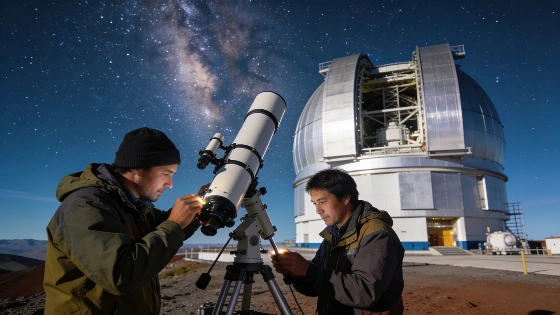
Astronomers have reported the detection of a moon-like object orbiting a brown dwarf in the CD-35 2722 system, located approximately 73 light-years from Earth. The observation, made with the European Southern Observatory's Very Large Telescope (VLT), marks a rare opportunity to study a potential exomoon or exosatellite outside our solar system. However, the nature of the object blurs the conventional boundaries between planets and moons, highlighting the complexity of classifying such bodies in other star systems.
Detection in the CD-35 2722 System
The CD-35 2722 system consists of a star with about half the mass of the Sun, orbited by a brown dwarf-a type of object more massive than a planet but not massive enough to sustain hydrogen fusion like a true star. The newly detected companion orbits this brown dwarf, rather than a planet, making its classification ambiguous. The VLT's high-resolution imaging and spectroscopic capabilities enabled astronomers to distinguish the faint object from its brighter companions, but the data do not fit neatly into existing categories.
Brown dwarfs typically have masses between 13 and 80 times that of Jupiter, occupying a mass range between the largest planets and the smallest stars. The companion object in CD-35 2722 appears to be a giant gaseous body, with a mass consistent with that of a planet, yet its orbital relationship to the brown dwarf complicates its status as a moon or planet. The research, published in Nature, emphasizes that the system does not conform to solar system analogies, where moons orbit planets and planets orbit stars.
Classification Challenges and Scientific Implications
The discovery raises fundamental questions about how astronomers define moons, planets, and satellites in systems unlike our own. In the solar system, the distinction is clear: moons orbit planets, and planets orbit the Sun. In CD-35 2722, the companion orbits a brown dwarf, which itself orbits a star, creating a hierarchical structure that does not fit standard definitions. The research team refers to the object as an "exosatellite," a term that avoids presuming its status as a true exomoon or planet.
Current classification schemes are based on the solar system's architecture, but as more diverse systems are observed, astronomers are forced to reconsider these categories. The detection of this exosatellite demonstrates that planetary systems can form in configurations not previously anticipated, and that the language used to describe them may need to evolve. The ambiguity in classification also affects how scientists interpret the formation and evolution of such systems.
Instrumental Advances and Future Prospects
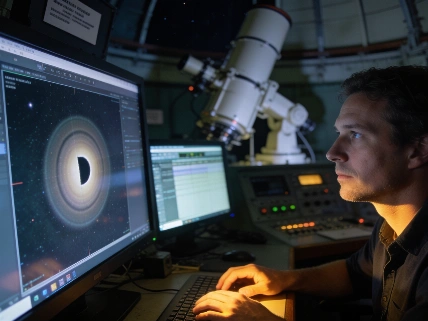
The Very Large Telescope's adaptive optics and imaging capabilities were crucial in resolving the faint companion in the glare of the brown dwarf. As more powerful observatories come online, such as the Extremely Large Telescope (ELT) currently under construction in Chile, astronomers expect to detect additional exomoons and exosatellites. These instruments will provide higher sensitivity and resolution, enabling the study of smaller and more distant companions.
Until more examples are found and characterized, the discovery in CD-35 2722 stands as a reminder of the diversity of planetary systems. The detection also echoes the variety seen in other planetary science discoveries, such as the identification of possible ancient impact craters on Earth, which similarly challenge established categories and prompt new questions about formation and classification. For instance, a recent study of a circular structure in Quebec has led researchers to reconsider how impact features are recognized and defined.
Limits of Current Evidence
Despite the significance of the detection, astronomers caution that the object's status as an exomoon remains unconfirmed. The available data establish its existence and orbital relationship, but do not resolve whether it should be classified as a moon, planet, or another category entirely. Further observations, including precise measurements of mass, composition, and orbital dynamics, will be needed to clarify its nature.
The discovery highlights the limitations of current observational techniques and the need for refined definitions as new types of objects are found. As the catalog of exoplanets and their companions grows, astronomers will continue to encounter systems that defy easy classification, underscoring the importance of flexibility in scientific terminology and interpretation.
In direct imaging studies like this, astronomers rely on the ability of large telescopes to separate faint objects from brighter ones using adaptive optics and high-contrast imaging. These methods correct for atmospheric distortion and enhance the resolution of ground-based observations, allowing researchers to detect companions that would otherwise be lost in the glare of their primaries. The distinction between direct detection and inference from indirect signals is crucial, as it determines the confidence with which objects can be classified and studied.