Astronomers have identified a Jupiter-sized exosatellite orbiting a brown dwarf, itself in orbit around the star CD-35 2722. The finding, made using high-resolution spectroscopy, challenges current definitions of moons and planets.
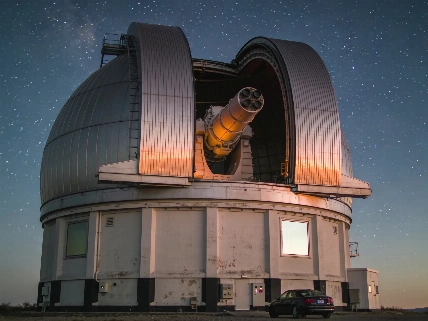
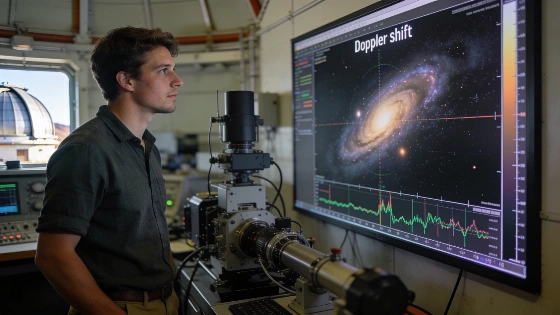
Astronomers have reported the detection of a massive exosatellite candidate-an object with a minimum mass close to that of Jupiter-gravitationally bound to a brown dwarf, which itself orbits the red dwarf star CD-35 2722. This hierarchical three-body system, located approximately 73 light years from Earth, was identified using the CRIRES+ spectrograph on the Very Large Telescope. The instrument measured subtle Doppler shifts in the brown dwarf's spectrum, indicating the presence of a companion exerting a measurable gravitational influence.
The brown dwarf, designated CD-35 2722b, has a mass about 37 times that of Jupiter. Its candidate exosatellite, with a minimum mass of roughly 90% that of Jupiter, completes an orbit every 170 days. In contrast to previously discovered planetary-mass companions around brown dwarfs, such as 2M1207b, the mass ratio and orbital separation in this system more closely resemble the relationship between moons and planets in our Solar System, though at a much larger scale. Notably, the brown dwarf itself follows a 5000-year orbit around its host star, creating a nested orbital hierarchy not observed in our own planetary system.
Defining Moons and Satellites
The discovery raises questions about the language used to describe such objects. While the term "exomoon" is typically reserved for satellites orbiting planets, the mass and orbital configuration of this candidate challenge traditional categories. Some astronomers suggest "exosatellite" as a more inclusive term for companions that do not fit neatly into the definitions of planet or moon. The distinction is not merely semantic: it reflects differences in formation mechanisms and dynamical histories.
In the Solar System, moons are generally thought to form from debris disks around planets via core accretion, resulting in relatively low-mass satellites on near-circular orbits. The mass and eccentricity of the CD-35 2722b exosatellite, combined with the short timescale since system formation-estimated at 150 million years-make in situ formation via core accretion unlikely. Instead, the evidence is more consistent with both the brown dwarf and its companion forming directly from the collapse of a molecular gas cloud, a process more akin to binary star formation than to the assembly of moons around planets.
Formation and Rarity
The minimum mass of the exosatellite, inferred from the amplitude of the brown dwarf's Doppler shift, leaves open the possibility that the system could be a binary brown dwarf pair rather than a true satellite-host configuration. However, the observed mass ratio and orbital period are unusual for known brown dwarf binaries, and the system's architecture is closer to that of a binary giant planet than to typical stellar binaries. Recent observations with the James Webb Space Telescope have identified approximately 40 pairs of free-floating giant planets, known as Jupiter Mass Binary Objects (JuMBOs), suggesting that such systems may be more common than previously thought, though they remain rare compared to single planets or stars.
Whether the CD-35 2722b exosatellite can itself host moons is an open question. Dynamical stability calculations indicate that any such sub-satellites would need to orbit closely to avoid being stripped away by tidal forces from the brown dwarf. Current detection methods lack the sensitivity to identify such small companions at these distances, but future advances in direct imaging, astrometry, and microlensing may expand the census of exosatellites in complex systems.
Measurement and Uncertainty
The detection relied on high-resolution near-infrared spectroscopy to track the motion of the brown dwarf over time. The CRIRES+ instrument provided the necessary velocity precision to resolve the gravitational tug of a massive companion. The minimum mass of the exosatellite is constrained by the observed velocity amplitude, but the true mass depends on the unknown orbital inclination. No direct imaging of the exosatellite has yet been achieved, and the system's full three-dimensional architecture remains uncertain. The result, published in Nature, represents one of the most convincing exosatellite candidates to date, but independent confirmation and further characterization will be required to establish its nature definitively.
The European Space Agency's PLATO mission, scheduled for launch in 2027, is expected to expand the search for large exomoons and exosatellites via transit photometry. Meanwhile, the discovery of the CD-35 2722 system highlights the diversity of planetary architectures and the limitations of current classification schemes. As more complex systems are identified, astronomers will need to refine the language and models used to describe the formation and evolution of substellar companions.
Understanding the distinction between planets, brown dwarfs, and satellites is central to interpreting discoveries like this one. In astrophysics, the classification of an object depends not only on its mass but also on its formation history and orbital context. Brown dwarfs occupy the mass range between the heaviest planets and the lightest stars, typically unable to sustain hydrogen fusion. When two substellar objects form together from a collapsing gas cloud, they may be considered a binary system rather than a planet-moon pair, even if their masses resemble those of giant planets. The ambiguity in terminology reflects the complexity of formation processes and the need for precise observational evidence to distinguish between competing scenarios.