Astronomers using the Gran Telescopio Canarias and Hubble Space Telescope have identified Cloud 9, a galaxy near Messier 94, as a leading candidate for a starless galaxy dominated by dark matter and gas
Astronomers have identified a galaxy known as Cloud 9, located approximately 14 million light-years from Earth near the spiral galaxy Messier 94, as the strongest candidate yet for a starless or 'failed' galaxy. Unlike typical galaxies, Cloud 9 appears to contain vast amounts of hydrogen gas and dark matter but emits almost no detectable starlight, challenging conventional understanding of galaxy formation.
Evidence for a Starless Galaxy
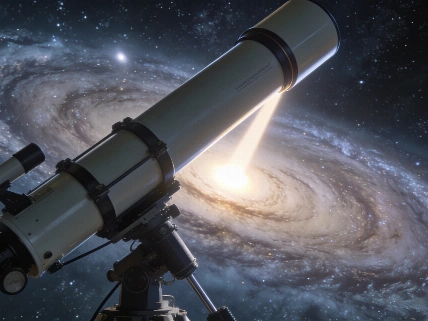
Cloud 9 was first recognized as an unusual object due to its significant reservoir of neutral hydrogen gas-estimated at around one million solar masses-combined with a dark matter halo of roughly five million solar masses. Despite these ingredients, which would normally support star formation, deep imaging from the Hubble Space Telescope in January 2026 revealed no significant starlight from the region. The absence of a visible stellar population was further confirmed by the HiPERCAM instrument on the Gran Telescopio Canarias, which produced optical images ten times deeper than previous attempts. These observations set an upper limit on the total stellar mass at just 16,000 solar masses, far below what would be expected for a galaxy of this size.
Observational Methods and Limits
Detecting a galaxy without stars presents a unique observational challenge. Traditional surveys rely on starlight to identify and characterize galaxies, but Cloud 9 was detected through its hydrogen gas emission at radio wavelengths. To rule out even a faint stellar component, astronomers combined deep optical imaging with sensitive radio observations. The HiPERCAM data, collected over 2.36 hours of integration, reached depths sufficient to detect even old, metal-poor stars, yet found none. This approach is consistent with the methods used in other recent studies of faint or unusual galaxies, such as those cataloging fading radio lobes in galaxies with dormant black holes (see related research).
Theoretical Context and Formation Scenarios
The existence of starless galaxies has long been predicted by cosmological models, but direct evidence has remained elusive. The leading explanation for Cloud 9's lack of stars involves the ultraviolet background radiation that permeated the universe after the epoch of reionization. This radiation is thought to heat gas in low-mass dark matter halos, preventing it from cooling and collapsing to form stars. Simulations suggest that halos below about five billion solar masses should remain largely starless, and Cloud 9's estimated halo mass fits within this regime. If confirmed, Cloud 9 would represent a natural outcome of standard galaxy formation models rather than an anomaly.
Uncertainties and Next Steps
While the current evidence strongly supports Cloud 9 as a starless galaxy candidate, astronomers caution that further observations are needed to rule out all possible stellar populations. Deeper space-based imaging, particularly with the James Webb Space Telescope, could help resolve individual stars if any exist. The research team has made their findings available as a preprint on arXiv, and the astronomical community will be watching closely for independent confirmation and follow-up studies. The discovery of Cloud 9 may open a new window on the population of dark galaxies predicted by theory but rarely observed in practice.
Understanding how astronomers detect galaxies without stars requires a combination of radio and optical techniques. Neutral hydrogen gas emits at a specific radio wavelength (21 centimeters), allowing astronomers to map gas-rich regions even when no starlight is present. Deep optical imaging is then used to search for faint or diffuse stellar populations. By combining these methods, researchers can set stringent limits on the presence of stars and distinguish truly starless galaxies from those with only a sparse or hidden stellar component. This approach is essential for testing theoretical predictions about galaxy formation and the role of dark matter in shaping cosmic structure.