A new study proposes that tiny fragments of ancient alien technology might be preserved in the Moon's surface. The authors outline how future lunar samples and advanced analysis could help search for these microscopic technosignatures.
Tiny traces of advanced technology from long-lost alien civilizations might be mixed into the Moon's surface, according to a new theoretical study led by Lewis J. Pinault and colleagues. The research, now a preprint under review for the International Journal of Astrobiology, argues that the lunar regolith could hold technosignatures-physical evidence of non-human technology-delivered by interstellar dust over billions of years. The authors estimate that analyzing just one cubic meter of lunar soil could help set limits on how many technological civilizations have existed in the Milky Way. The idea has drawn interest from groups like the SETI Institute and Birkbeck College (Sci.News).
Looking for more than radio signals
Most searches for extraterrestrial intelligence, including those by NASA and the SETI Institute, have focused on picking up radio signals or spotting giant structures like Dyson spheres. These methods only work if alien civilizations are active now or have built massive objects. Pinault's team takes a different approach: they suggest looking for physical remnants-micron-sized technosignatures-that could have been blasted out of distant planetary systems by stellar winds, impacts, or other violent events. These fragments, possibly just a few micrometers across, might travel through interstellar space and eventually settle on the Moon, where the lack of atmosphere and geological activity means they could survive for eons.
The authors point out that the Moon is a good place to look because its surface is constantly bombarded by cosmic dust and meteorites, and foreign particles can stay trapped in the regolith for extremely long periods. This idea fits with other research describing the Moon as a kind of cosmic archive, as discussed in recent lunar formation studies.
How to search the lunar surface
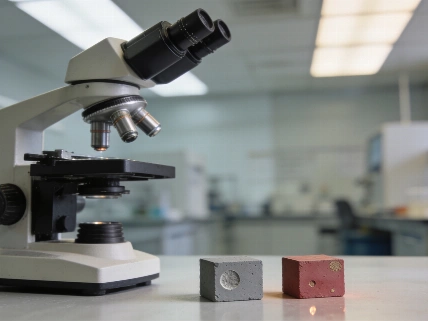
To test their idea, the researchers modeled how much interstellar debris reaches the Moon and estimated what fraction could be technological in origin. Their calculations suggest that analyzing about one cubic meter of lunar soil-roughly 35 cubic feet-could be enough to find at least one microscopic fragment of alien technology, if such civilizations ever existed and made durable materials. So far, no lunar samples have turned up technosignatures, likely because the samples have been small and earlier studies weren't designed to look for these particles.
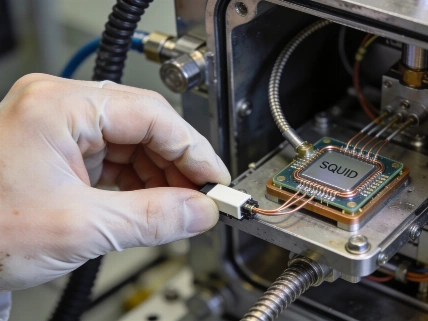
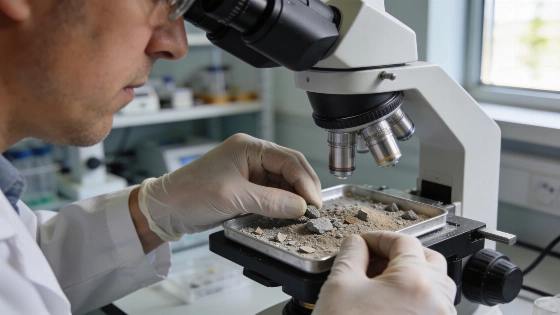
The team proposes collecting and analyzing much larger amounts of lunar regolith than current missions usually return. They recommend using high-resolution microscopes, advanced materials analysis, and artificial intelligence to scan for unusual particles in future samples. While upcoming missions like NASA's Artemis program and China's Chang'e-7 will bring back new lunar soil, these missions won't provide enough material for a thorough search. The researchers suggest that a permanent lunar base, equipped for on-site analysis, may be needed to examine enough regolith. This idea is being discussed in the planetary science community and at international conferences, including those organized by the Max Planck Society.
What the evidence can and can't show
The study is theoretical and does not claim to have found any alien technology. The calculations rely on several assumptions, such as how often technological civilizations arise, how tough their materials are, and how likely fragments are to escape their home systems and survive the trip through space. Even if future lunar samples turn up nothing, that wouldn't rule out alien technology-it could mean the density is lower than expected or that search methods need improvement. As noted in The New York Times, Pinault, who is affiliated with the SETI Institute and Birkbeck College, said it is "not unreasonable" to think that particles from another technological civilization could be present on the Moon if such civilizations ever existed in the Milky Way.
Independent experts from MIT and Harvard have called the proposal both original and scientifically plausible, saying it broadens the search for technosignatures beyond just electromagnetic signals. The SETI Institute has shown interest in supporting this approach, and the method is being discussed as part of future lunar exploration plans.
Why it matters
If microscopic technosignatures were found in lunar soil, it would be a major discovery. It would offer direct physical evidence of non-human technology and shed light on how common and long-lived technological civilizations might be in our galaxy. It would also highlight the Moon's value as a collector of interstellar material and could change how scientists approach planetary protection and sample analysis. Such findings would likely interest journals like Nature and Science, which often publish breakthroughs in astrobiology and planetary science.
On the other hand, finding nothing after a careful search would still help scientists set limits on how common and durable alien technology might be. It would inform models of how interstellar dust moves, how materials survive in space, and how likely we are to find technosignatures elsewhere in the Solar System. The proposal makes the case for designing future lunar missions to collect and analyze large, uncontaminated samples and to use careful, unbiased methods when searching for non-terrestrial artifacts.
Technosignatures are measurable signs of technology made by intelligent life, different from biosignatures that point to biological activity. While radio signals and megastructures have dominated the search for extraterrestrial intelligence, physical technosignatures-like engineered materials buried in planetary surfaces-offer another way to look. Finding these traces requires sensitive instruments, careful analysis to tell natural from artificial origins, and an understanding of how interstellar processes deliver and preserve such materials over geological timescales.