A collaboration between Quantinuum, NVIDIA, and Pfizer has demonstrated an AI-driven framework for generating quantum circuits, executing them on a 98-qubit trapped-ion processor to model pharmaceutical molecules
Researchers from Quantinuum, NVIDIA, and Pfizer have reported the experimental validation of a generative quantum AI (GenQAI) framework designed to automate the synthesis of quantum circuits for molecular ground-state preparation. The approach integrates classical high-performance computing, transformer-based generative models, and commercial trapped-ion quantum hardware to address computational bottlenecks in quantum chemistry relevant to pharmaceutical research.
Hybrid AI and Quantum Workflow
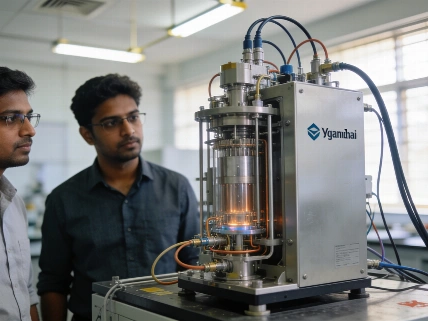
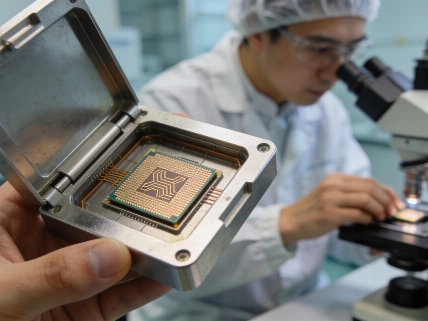
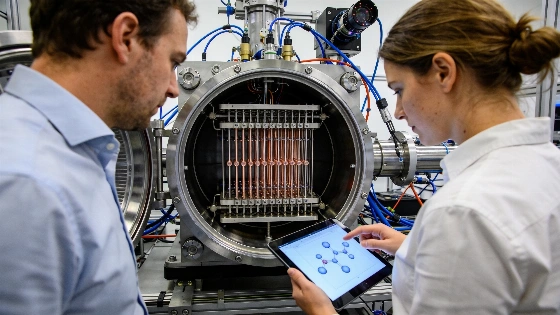
The GenQAI framework employs a hybrid architecture in which classical supercomputers generate quantum chemistry datasets, which are then used to train transformer models. These models, including fine-tuned versions of Nemotron and Gemma 3, are tasked with predicting full quantum circuits for preparing the ground state of complex molecules. The circuits are subsequently compiled and executed on Quantinuum's Helios-1 trapped-ion quantum processor, which features 98 physical qubits. The demonstration focused on imipramine, a tricyclic antidepressant commonly used as a benchmark in pharmaceutical stability studies.
Accelerating Circuit Synthesis
Traditional adaptive quantum algorithms, such as ADAPT-VQE, require repeated gradient evaluations and parameter optimizations at each step, making them computationally expensive for systems beyond approximately 15 qubits. The GenQAI approach, termed ADAPT-GQE, bypasses this iterative process by generating compact, low-energy quantum circuits in a single forward pass of the transformer model. According to the preprint, the AI-generated circuits matched or exceeded the ground-state accuracy of reference ADAPT-VQE data, while reducing circuit generation time by three to four orders of magnitude for active spaces of 12, 14, and 16 qubits.
Hardware Execution and Optimization
After synthesis, the circuits were compiled using Quantinuum's InQuanto software and executed on the Helios-1 trapped-ion processor. Reinforcement learning, specifically Group Relative Policy Optimization (GRPO), was applied to further refine the operator sequences proposed by the generative model, resulting in improved accuracy over the original training baseline. The experiment demonstrates that AI-driven circuit generation can be integrated with commercial quantum hardware for nontrivial molecular systems, though the overall workflow remains limited by current hardware noise and the classical resources required for model training and validation.
Context and Remaining Challenges
This work establishes an open-source reference for automating quantum circuit design in computational chemistry, but it does not yet demonstrate quantum advantage or practical utility beyond classically accessible regimes. The circuits were verified for imipramine conformers, a molecule small enough to allow classical benchmarking. The approach may help address scaling challenges as quantum hardware improves, but further advances in error mitigation, circuit depth, and hardware fidelity will be required for applications beyond current classical reach. For comparison, recent efforts to integrate trapped-ion quantum processors into cloud infrastructure, such as the deployment of Helios hardware in enterprise data centers, highlight the ongoing push to make quantum resources more accessible for hybrid workflows (see coverage of Helios integration with Oracle Cloud).
Quantum circuit synthesis is a central challenge in quantum computing for chemistry and materials science. Preparing a molecule's ground state on a quantum processor requires mapping the electronic structure problem onto qubits and designing a circuit that can efficiently reach the desired quantum state. Adaptive algorithms like ADAPT-VQE iteratively build circuits by selecting operators that minimize energy, but this process becomes computationally prohibitive as system size grows. Generative AI models offer a potential route to automate and accelerate this step, but their effectiveness depends on the quality of training data, the ability to generalize to new molecules, and the performance of the underlying quantum hardware. As quantum processors scale and error rates decrease, the integration of AI-driven circuit design may become increasingly important for realizing practical quantum simulations in chemistry and beyond.