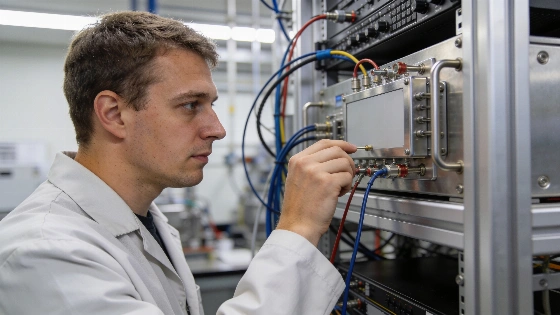
Microsoft has opened a 15,000-square-foot Maryland center where DARPA can physically test Majorana 2 and research partners can develop quantum hardware, control systems, and software-without yet establishing a useful fault-tolerant machine.
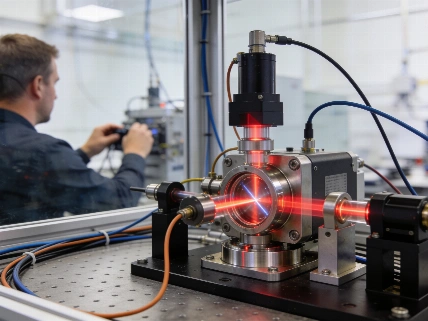
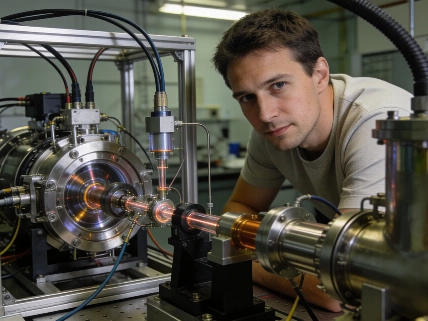
Microsoft has placed its Majorana 2 topological quantum processing chip inside a new Maryland facility where DARPA and research partners can examine the hardware independently. The 15,000-square-foot Quantum Research Center in College Park is designed to connect device testing with cryogenic infrastructure, hands-on assembly, and workforce training. Reuters reports that the arrangement gives DARPA physical access to the equipment rather than the remote evaluation previously conducted through installations in Redmond and Europe.
A testbed with limits
The center is located in the University of Maryland Discovery District near Washington, D.C. It was developed with the University of Maryland and supported by Governor Wes Moore's state-backed Capital of Quantum initiative. Its operating plan includes classified research zones, a hardware makerspace, and dedicated testing infrastructure. The most consequential function is not the building's size but its role as a physical evaluation site under DARPA's Underexplored Systems for Utility-Scale Quantum Computing program, or US2QC, within the broader Quantum Benchmarking Initiative. The program is intended to independently assess whether quantum approaches can reach utility-scale operation by 2033.
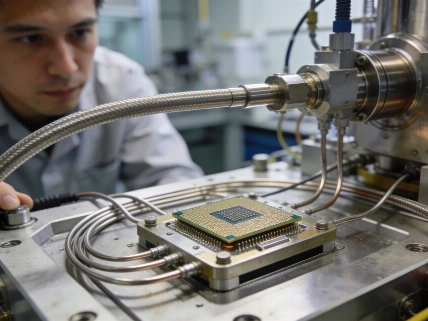
Microsoft says the Majorana 2 chip uses a lead-based material stack in place of aluminum to improve topological protection. That design claim does not provide a measured logical error rate, qubit count, operating temperature, coherence time, or demonstrated fault-tolerant computation for the processor. The reported arrangement is an evaluation milestone, not proof that a scalable topological quantum system has been realized. The distinction is consistent with the evidentiary standards used in fields ranging from CERN detector development to NASA mission hardware: access to an instrument enables testing, but does not substitute for independently reproducible performance data.
Reuters reports that DARPA will begin with Majorana 2, while the Maryland system is designed so that chips can be replaced as Microsoft develops later generations. Microsoft has also obtained in-person cooperation from the University of Maryland and other partners for the project. The company has previously presented a 2029 target for a scalable quantum computer, but neither that roadmap nor the new facility establishes that the target has been achieved.
Hardware beyond the chip
The makerspace broadens the center's purpose beyond one processor. AMD, Bluefors, Intel, IQM, Quantum Motion, Riverlane, and Fermilab are among the named partners contributing hardware or technical infrastructure. Students and researchers are expected to work across signal processing, pulse design, component integration, and debugging rather than treating the quantum processor as an isolated object.
Fermilab's open-source Quantum Instrumentation Control Kit is part of that training environment. QICK uses FPGA- and RFSoC-based control and readout and has been adapted across superconducting, trapped-ion, cold-atom, and silicon spin-qubit architectures. That cross-platform role matters because control electronics, measurement chains, calibration, and decoder latency can determine whether a promising device can be operated reliably. The announcement describes an educational and engineering capability, not a benchmark showing that one architecture outperforms another. Similar concerns about reproducibility and instrument calibration are central to the way institutions such as MIT and the Max Planck Society evaluate complex experimental systems.
Microsoft also established annual measurement-based quantum computing workshops and funded new quantum postdoctoral research fellowships at the University of Maryland. Those programs address a practical bottleneck: a quantum workforce needs experience with wiring, control pulses, readout, and hardware failure modes as well as with abstract circuits. The training model therefore links device physics to the engineering disciplines required for repeatable experiments.
Software meets evaluation
A separate part of the launch is the private preview of the Microsoft Quantum Development Kit for analytics. Its Quantum Tensor Principal Component Analysis library is intended to identify higher-order correlations in high-dimensional data. Microsoft is evaluating the software with the London Stock Exchange Group across financial risk modeling, mortgage prepayment analytics, counterparty credit risk known as XVA, and market data feed reliability.
Those applications remain an evaluation program rather than a reported quantum-advantage result. The supplied material does not give a quantum runtime, a classical baseline, an accuracy improvement, a confidence interval, or evidence that the workflows require quantum hardware. Without those measurements, the software announcement establishes a research direction but not a practical replacement for established financial computing methods. A rigorous comparison would need a clearly defined data set, matched classical and quantum workloads, stated error bars, and reproducible computational conditions, the same general reporting discipline expected in journals such as Nature and Science.
The center's industrial geography is also deliberate. Riverlane's U.S. headquarters expansion in College Park was reported earlier as part of the same Discovery District concentration of quantum companies and academic researchers. In this setting, the value of proximity is concrete: teams can share access to control systems, test equipment, and specialized expertise instead of treating error-correction software and hardware integration as separate projects.
Defining logical scale
Alongside the opening, Microsoft Quantum published a technical paper on arXiv co-authored by Dr. Matthias Troyer, Dr. Chetan Nayak, and Nobel Laureate Dr. John Martinis. The paper proposes a formal definition of scalable logical qubits across four linked dimensions: reliability, scale, capability, and performance. It specifies logical error rates in the range of 10⁻¹² to 10⁻¹⁵ and considers systems ranging from 100 to more than 1,000 logical qubits, with overhead scaling described as O(N log ε⁻¹).
Those figures define criteria in the paper rather than reporting that the Maryland facility has achieved them. The framework also requires universal operations, low-latency real-time decoding, measurement-conditioned control flow, fast logical cycles, and cost efficiency. Each requirement reaches beyond the existence of a processor. It connects the encoded qubit to fabrication yield, cryogenic wiring, measurement accuracy, decoder latency, software control, and the expense of operating the complete stack. These are engineering metrics, not merely milestones in device fabrication.
DARPA's independent testing role is therefore central. Reuters describes the Maryland arrangement as a new phase of US2QC evaluation, allowing engineers to work directly with Microsoft's equipment after earlier remote assessments. The wider partner network includes the Air Force Research Laboratory, Johns Hopkins University Applied Physics Laboratory, and national laboratories in Los Alamos, Oak Ridge, Lawrence Berkeley, and Lawrence Livermore. The supplied material does not report the outcome of that verification and does not establish independent confirmation of Majorana 2 performance.
A physical qubit is an individual controllable quantum system, while a logical qubit distributes information across multiple physical components so errors can be detected or corrected. More physical hardware does not automatically produce a better logical system. The Maryland center is valuable precisely because it puts measurement and verification beside construction and software development, but it should be read as infrastructure for resolving the engineering problem-not as evidence that fault-tolerant quantum computing has already arrived.
The next meaningful assessment will depend on measurements that can be independently repeated: logical error rates under defined workloads, the number and quality of usable qubits, coherence and cycle times, decoder performance, and demonstrations of error-corrected operations. Until those data are publicly reported and evaluated, Majorana 2 remains a system undergoing verification within an ambitious research program rather than a demonstrated utility-scale quantum computer.
For the broader field, the Maryland facility represents a shift from isolated laboratory claims toward direct, infrastructure-level scrutiny. Its significance will ultimately be determined not by the presence of a new chip, but by whether independent teams can operate, characterize, and reproduce the claimed behavior across successive hardware generations.
That standard is particularly important for topological quantum computing, where the central promise is that hardware design may reduce the burden of active error correction. The promise remains scientifically consequential, but its practical value depends on showing that the intended protection survives fabrication variability, control noise, measurement errors, and system-scale integration. The DARPA testing arrangement creates a setting in which those questions can be examined more directly.
As the project develops, comparisons with established experimental practice at institutions such as CERN and MIT will remain useful-not because quantum processors are particle detectors, but because both fields must connect sophisticated components into calibrated systems whose performance can be independently checked. The Maryland center is positioned to perform that connective work. It is an important verification platform, while the decisive scientific result still lies ahead.