
arXiv - Part 2
90 reports
IonQ Reports Up to 74-Fold Faster Logical Gates Through qLDPC Scheduling
An arXiv preprint by Mark Webster and Nicolas Delfosse describes scheduled joint measurements paired with CliNR, reporting up to 74-fold speedup for logical Clifford operations and up to fivefold for Toffoli gates against sequential logical measurements. The analysis considers Q70 and Q102 codes in IonQ's Walking Cat trapped-ion architecture, but does not establish a full fault-tolerant computer or a useful algorithm run.

Xanadu Reports Nearly Fourfold QROM Cost Reduction in Algorithmic Estimate
Xanadu-linked circuit constructions are reported to reduce the estimated non-Clifford cost of quantum read-only memory by about 3.9-fold for 32-bit entries. The result remains an unverified algorithmic resource estimate, not demonstrated hardware acceleration.
Trapped Ion Processor Resolves a Subtle NMR Double Peak
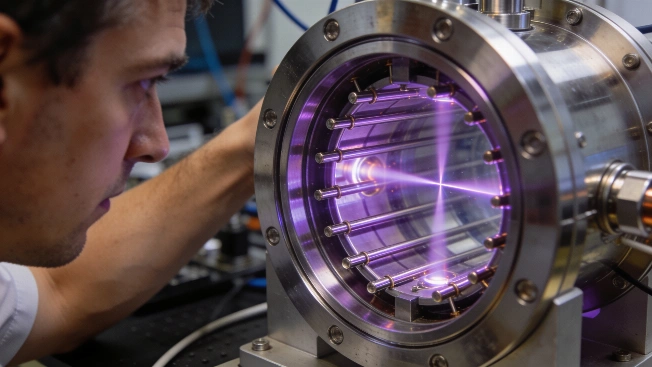
Quantinuum and HQS reproduced a difficult diphosphane NMR feature on trapped-ion hardware after compressing a 22-spin model into 21 effective spins, using 70 Trotter steps and circuits with more than 1,400 two-qubit gates.
Haiqu Tests AI Agents Against Quantum Research Failure
Haiqu's Quantum Agentic Operating System, marketed as AgenticOS, uses specialized AI agents and locked scientific checks to automate quantum research. Reported demonstrations show improved protocol compliance, but remain preliminary process evidence rather than proof of quantum advantage.
Quantum Error Correction Benchmark Tests Three Hardware Platforms
A preprint from Jülich Supercomputing Centre compares ten IBM, IQM and Quantinuum processors, testing whether repeated measurement, reset, feed-forward and idling preserve the signals required for quantum error correction.

LuGo Cuts Quantum CFD Gate Counts by More Than 95 Percent
ORNL's LuGo structure moves heavy initialization onto Frontier before quantum state mapping, reducing a fluid-dynamics circuit from about 2 million gates to 91,000 across several hardware platforms.
DC-Biased SQUID Stabilizes Multi-Photon Cat Qubits
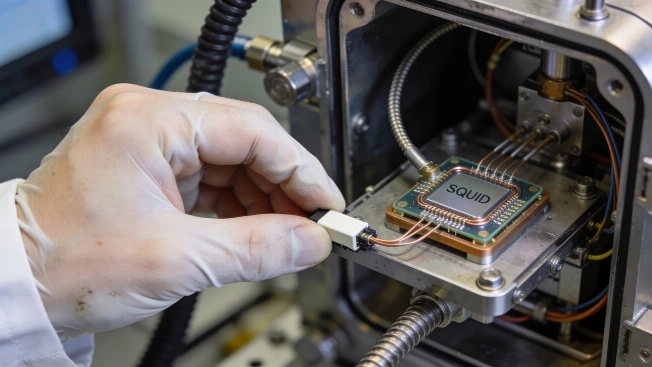
Alice & Bob and ENS Lyon used a microvolt-scale DC-biased SQUID to control photon conversion between superconducting resonators and demonstrate multi-photon dissipation for cat-qubit stabilization.
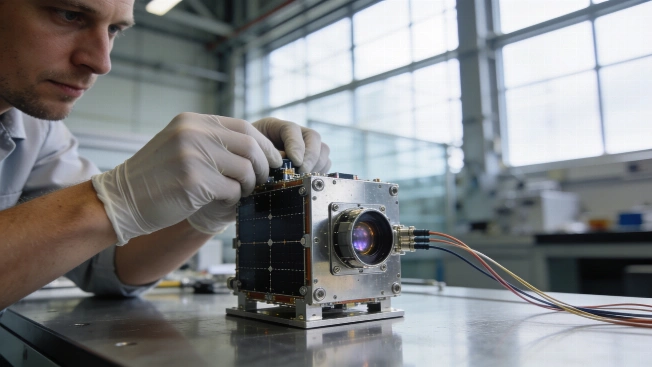
Quantum Photonic Processor Survives Its First Orbit Test
A University of Vienna payload has demonstrated two-photon interference and programmable matrix execution in orbit, showing that integrated photonic quantum hardware can operate beyond the laboratory.
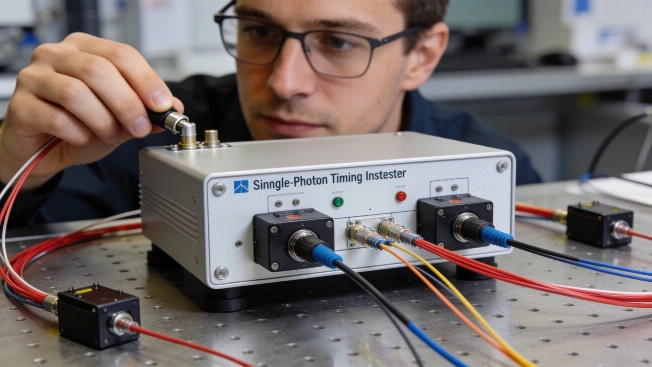
Quantum Effects 2026 Awards Four Routes Toward Useful Quantum Hardware
Quantum Effects 2026 has recognized four application-focused projects: quantum annealing hardware and open-source software, alongside atomic magnetometry and photon timing for networked QKD. The winning projects are set to be presented publicly in Stuttgart on 6-7 October 2026.

IonQ QCBM Beats Classical Radar Change Detection Baselines
IonQ reports that a 20-qubit trapped-ion quantum generative model improved radar change detection on a high-resolution airfield dataset while matching classical methods on volcanic InSAR imagery
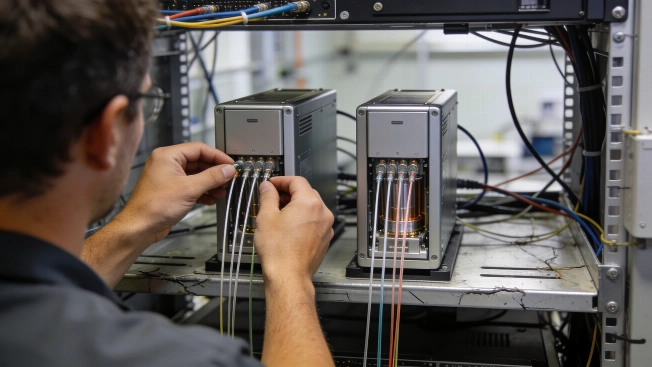
memQ Releases Compiler for Heterogeneous Quantum Networks
memQ has released an open-source compiler that converts monolithic quantum circuits into network-aware execution graphs and models entanglement costs across heterogeneous QPUs.

IonQ Hardware Tests Quantum Optimization for Gas Networks
Classiq and Israel Natural Gas Lines used hybrid quantum-classical improvement to search for gas pipeline pressure settings. IonQ Forte-1 produced physically valid candidates close to the classical optimum, but the feasibility test did not demonstrate quantum advantage.
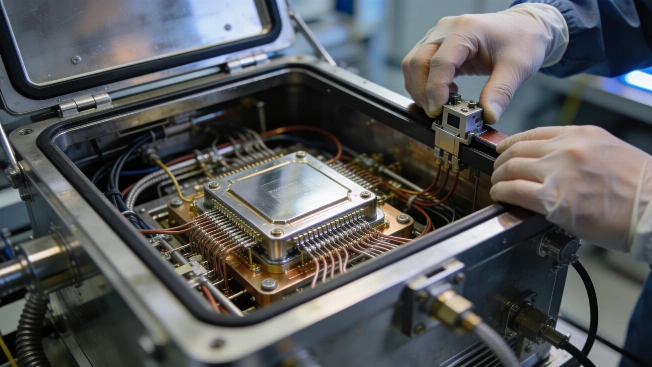
Q-CTRL Outperforms IBM Error Suppression on 156-Qubit Heron
An arXiv benchmark on IBM's 156-qubit Heron processor finds that Q-CTRL led exact-output sampling, while Qedma delivered the lowest estimator error at a much higher QPU time cost.
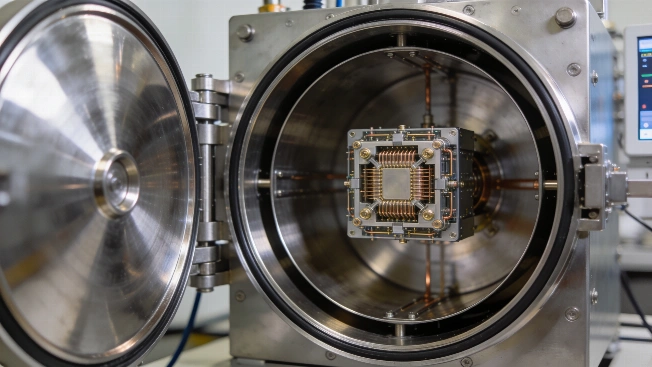
Q-CTRL Executes a 100-Qubit Quantum Fourier Transform
Q-CTRL has run a functional Quantum Fourier Change on up to 100 physical qubits in an IBM Heron R3 processor while testing a compilation method designed to limit routing and noise.
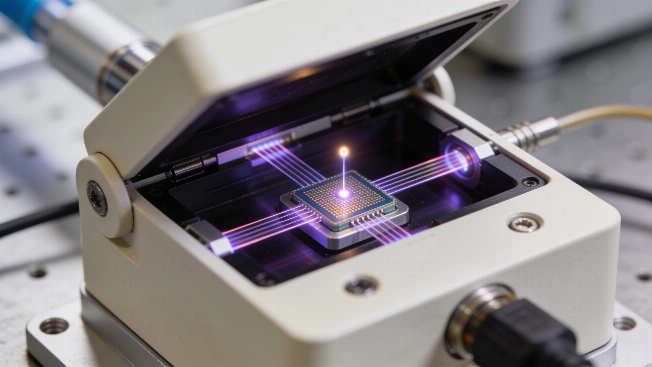
Standing Wave Cooling Brings Trapped Ions Near Ground State
Cornell researchers used a 397 nm standing wave on a fabricated ion-trap chip to cool a single 40Ca+ ion near its motional ground state in 150 microseconds
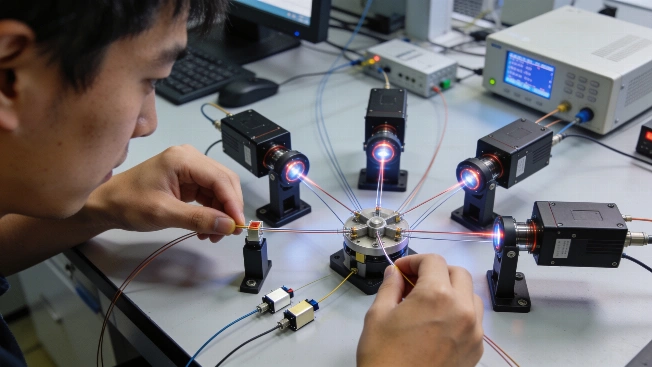
Nanjing Team Brings Asynchronous Quantum Conferencing to 59.6 dB Loss
Nanjing University has demonstrated a three-user measurement-device-independent quantum conferencing network that retains O(η) loss scaling and uses timestamped event pairing and software phase correction instead of global laser locking.
Microsoft Builds Maryland Hub for Quantum Hardware Verification
Microsoft has opened a 15,000-square-foot Maryland center where DARPA can physically test Majorana 2 and research partners can develop quantum hardware, control systems, and software, without yet establishing a useful fault-tolerant machine.
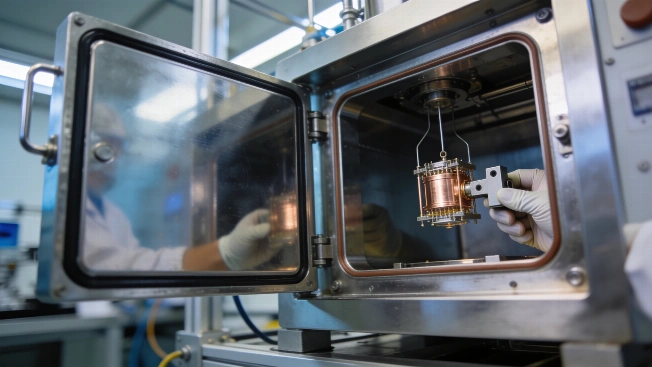
IBM Hybrid Error Mitigation Cuts Quantum Sampling Overhead 63-Fold
IBM researchers tested a hybrid protocol on a 27-qubit superconducting processor, recovering Ising-model magnetization while reducing inferred error-mitigation sampling overhead by up to 63-fold.
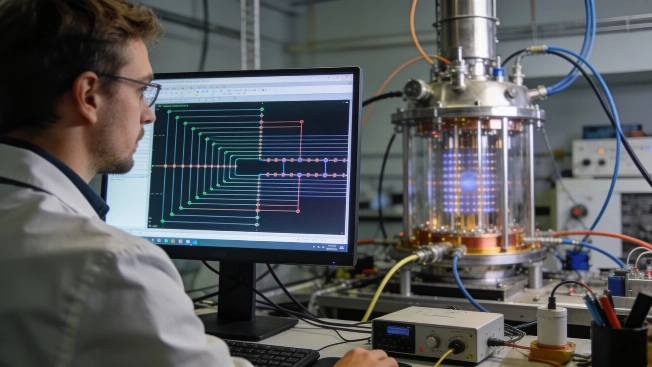
Erasure Noise Simulator Targets Quantum Error Mitigation in Qiskit Circuits
Oxford Quantum Circuits has launched erado, a Python library that simulates erasure noise and post-selection in Qiskit circuits. The tool enables researchers to test error mitigation strategies before running algorithms on superconducting quantum hardware.
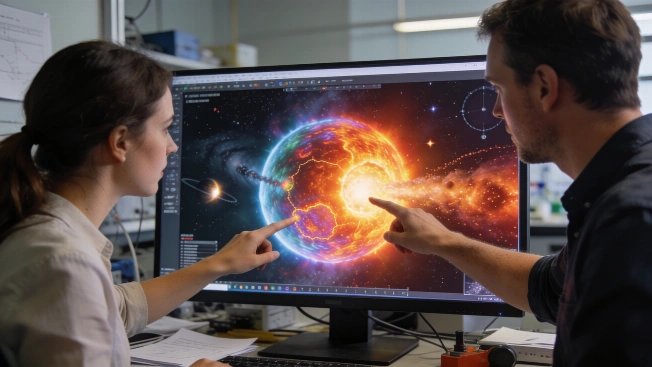
Vampire white dwarfs can collapse into neutron stars under precise conditions
Researchers have modeled how certain white dwarfs feeding on companion stars can collapse into neutron stars if their mass and accretion rate fall within a narrow range, revealing a rare but physically distinct pathway for stellar evolution.
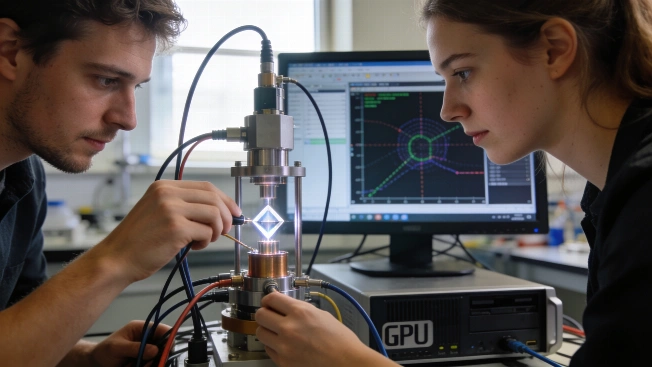
GPU-Accelerated Digital Twin Maps Quantum Sensor Error Sources
A team led by MITRE has developed a GPU-accelerated simulation tool that pinpoints how different physical mechanisms limit sensitivity, accuracy, and robustness in quantum sensors.
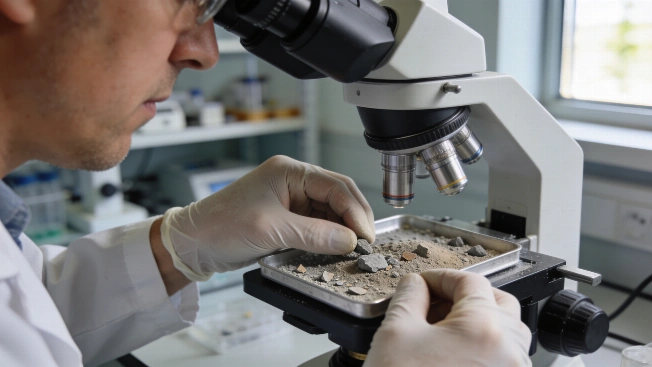
Researchers suggest searching the Moon for alien technology fragments
A new study proposes that tiny fragments of ancient alien technology may be preserved on the Moon's surface. The authors outline how future lunar samples and advanced analysis could help search for these microscopic technosignatures.

High Energy Photon From Distant Gamma Ray Burst Challenges Physics Limits
A photon with record-breaking energy from the gamma ray burst GRB 221009A reached Earth despite theoretical barriers. New analysis suggests a possible explanation involving axion-like particles and Lorentz invariance violation.
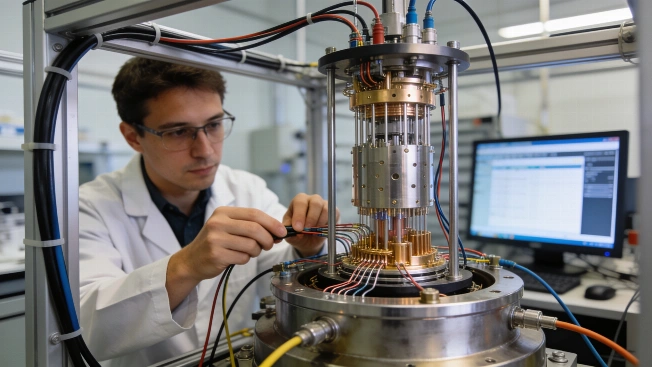
Quantum Preconditioning Cuts Classical Solver Time by Orders of Magnitude
Rigetti Computing and Purdue University have experimentally shown that quantum-derived correlation matrices can accelerate classical mixed-integer programming solvers, enabling near-optimal solutions to hard-constrained combinatorial problems up to 100 times faster.
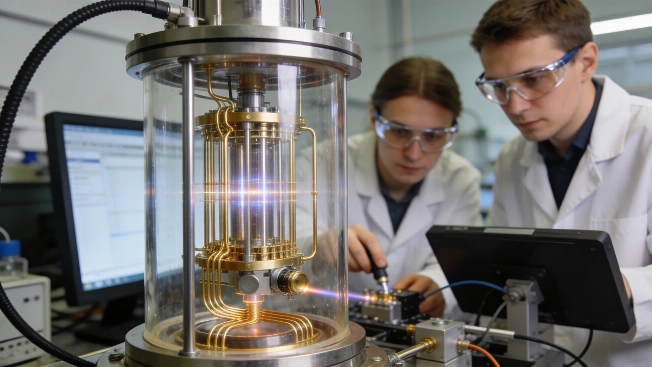
IonQ, NVIDIA, and qBraid Cut Quantum Simulation Errors by Over Half
A new collaboration between IonQ, NVIDIA, and qBraid reports a 54% reduction in logical error rates for deep Trotterized quantum chemistry simulations, using trapped-ion hardware and active mid-circuit error detection.
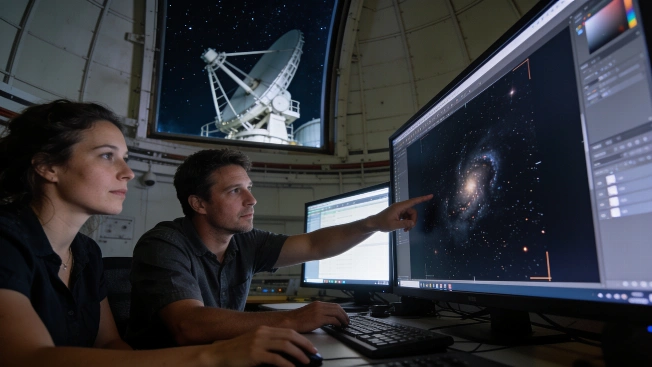
Cloud 9 Galaxy May Be the Closest Starless Galaxy Candidate Yet
Astronomers using the Gran Telescopio Canarias and Hubble Space Telescope have identified Cloud 9, a galaxy near Messier 94, as a leading candidate for a starless galaxy dominated by dark matter and gas.
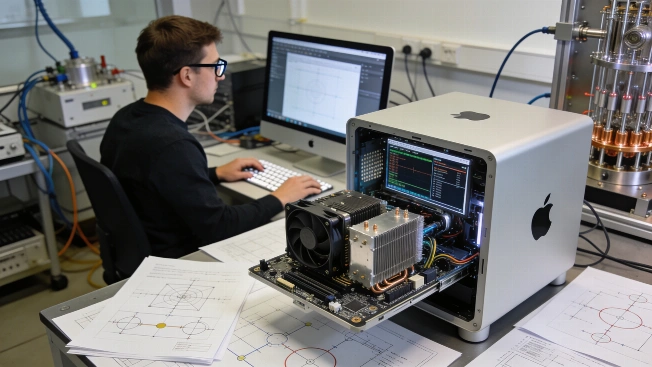
IonQ Runs Real-Time Quantum Error Correction on Apple M4 Max CPU
IonQ researchers have demonstrated a real-time quantum error correction decoding pipeline for large-scale trapped-ion quantum computers, processing MegaQuOp-scale workloads on a single Apple M4 Max CPU and addressing classical decoding bottlenecks.

Quantum Gravimeter Demonstrates GPS-Free Navigation in Coral Sea Trial
Q-CTRL has field-tested a quantum gravimetric navigation system on open water, achieving 1-nautical-mile accuracy without GPS by combining cold-atom interferometry with classical sensors in a real maritime environment.
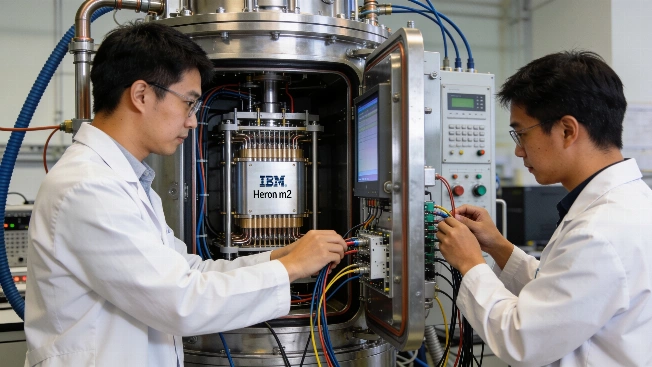
Singapore Team Compresses Qubit Use for Drug Docking on IBM Quantum Chip
Researchers at A*STAR and NUS have demonstrated a hybrid quantum-classical approach that reduces the number of qubits needed for molecular docking, with experiments on IBM's 156-qubit Heron r2 processor.
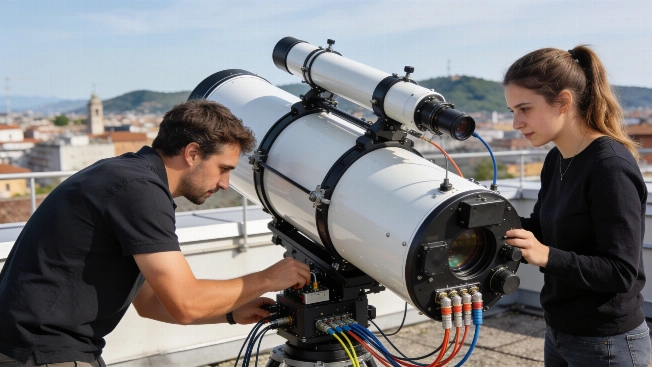
Field Test Links Quantum Key Distribution Over 18 km Free-Space Channel
A team in Italy has demonstrated real-time quantum key distribution over an 18-kilometer free-space link, using room-temperature detectors and adaptive optics to counter atmospheric turbulence and couple the signal into standard fiber.
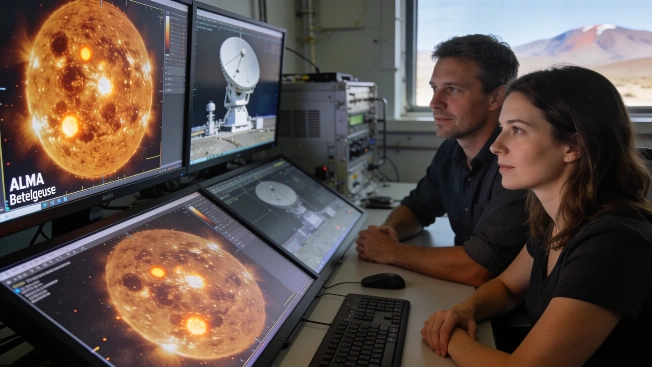
ALMA Reveals Persistent Hotspots on Betelgeuse's Turbulent Surface
Astronomers using the Atacama Large Millimeter/submillimeter Array have mapped Betelgeuse's surface in unprecedented detail, revealing long-lived hotspots and complex plasma flows that challenge current models of red supergiant stars.
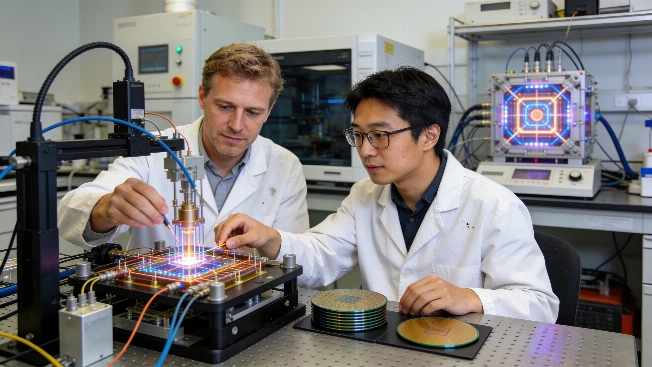
Quantum Simulation Targets EUV Lithography Blur in Canada-Japan Project
Xanadu and Mitsubishi Chemical are advancing quantum simulation for semiconductor fabrication, aiming to address radiation-induced blur in extreme ultraviolet lithography with support from Canadian and Japanese research funding.
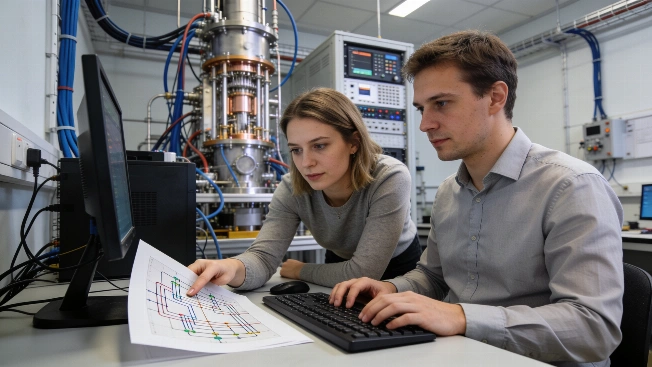
AI Models Now Optimize Quantum Algorithms for Real Hardware
Recent advances show that AI systems are directly optimizing quantum algorithms for cryptography and hardware compatibility, improving circuit efficiency and potentially influencing quantum workforce development.
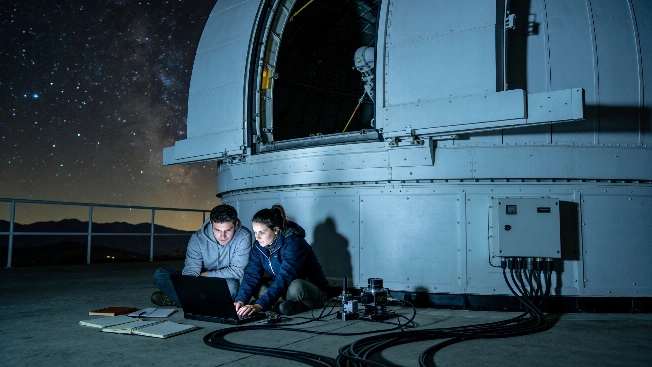
Discovery of GJ 523b Challenges Theories of Rocky Planet Formation
Astronomers have identified GJ 523b, a rocky exoplanet more than 23 times Earth's mass, using TESS and ground-based spectroscopy. Its discovery raises new questions about how such dense worlds form and whether they retain or lose their atmospheres.
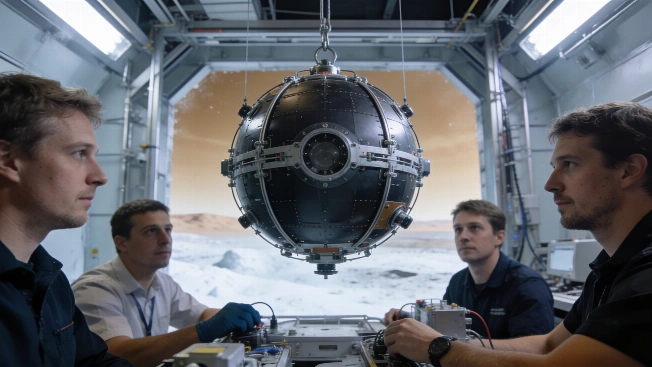
NASA Backs Spherical Aerobots to Probe Titan's Subsurface Caves
A NASA-funded study is developing small, spherical flying robots designed to explore the hydrocarbon caves and sinkholes of Saturn's moon Titan. The aerobots would use solid-state ion propulsion to handle terrain that conventional rovers could not cross.
Part 2 of 3