Astronomers have identified GJ 523b, a rocky exoplanet over 23 times Earth's mass, using TESS and ground-based spectroscopy, raising new questions about how such dense worlds form and retain-or lose-their atmospheres
An international team has reported the detection of GJ 523b, an exoplanet with a mass and density that place it well outside the range predicted by current models of rocky planet formation. The planet, which orbits a nearby star, is both unusually large and dense for a world composed primarily of rock and metal, prompting researchers to reconsider how such objects can form and evolve.
Observational Evidence
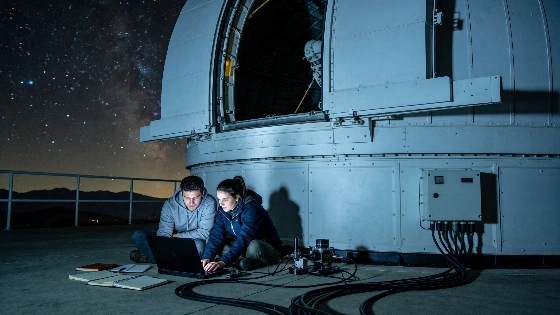
GJ 523b was first identified as a candidate by NASA's Transiting Exoplanet Survey Satellite (TESS), which monitors the brightness of stars to detect periodic dips caused by transiting planets. Follow-up observations were conducted using the WIYN 3.5-meter Telescope at Kitt Peak National Observatory in Arizona, where astronomers measured the planet's gravitational influence on its host star through high-precision spectroscopy. By combining transit and radial velocity data, the team estimated GJ 523b's mass at approximately 23.5 times that of Earth and its radius at 2.55 Earth radii, resulting in a bulk density of about 7.9 grams per cubic centimeter. The planet completes an orbit every 17.75 days, and the host system is estimated to be around 170 million years old.
Physical Properties and Anomalies
The measured density of GJ 523b is significantly higher than expected for a planet of its size, suggesting a composition dominated by rock and metal with little retained atmosphere. In the Solar System, planets that reach roughly 20 Earth masses during formation are thought to rapidly accrete thick envelopes of hydrogen and helium, becoming gas giants like Neptune or Saturn. GJ 523b, however, appears to have exceeded this threshold without developing a substantial gaseous layer, raising questions about the processes that could strip or prevent the accumulation of a massive atmosphere.
Possible explanations include the loss of an initial atmosphere through intense stellar radiation or a giant impact event that removed much of the planet's gas. The planet's youth and high density make it a particularly challenging case for existing models, which do not predict such massive rocky planets to remain largely atmosphere-free. The informal term "mega-Earth" has been used for similar objects, but GJ 523b's properties are extreme even within this loosely defined category.
Implications for Planet Formation
The discovery of GJ 523b highlights the diversity of planetary outcomes and the limitations of current formation theories. With only a handful of such dense, massive rocky exoplanets known, it remains unclear whether GJ 523b represents a rare exception or the tip of a broader, under-sampled population. The result underscores the need for further discoveries and detailed characterization of similar worlds to identify possible trends and refine theoretical models.
Recent advances in exoplanet detection have revealed a wide range of planetary types, but the physical mechanisms that produce extreme cases like GJ 523b are not yet well understood. As more data become available, astronomers hope to determine whether such planets are the result of unusual formation histories, catastrophic collisions, or other processes not yet fully incorporated into standard models. For context, studies of energetic outflows from supermassive black holes, such as those described in this analysis of black hole-driven turbulence, have similarly challenged established ideas about how cosmic environments evolve.
Publication Status and Next Steps
The findings on GJ 523b have been submitted to The Astronomical Journal and are currently available as a preprint on arXiv. As the results have not yet undergone peer review, the interpretation of GJ 523b's properties and their implications for planet formation should be considered provisional. Future observations, including atmospheric studies and searches for additional planets in the system, will be essential for testing competing hypotheses and refining the planet's measured characteristics.
As the catalog of exoplanets grows, the identification of outliers like GJ 523b will continue to inform and challenge our understanding of planetary system evolution. The case also illustrates the importance of combining multiple detection methods and follow-up observations to constrain the physical properties of newly discovered worlds.
Transit and radial velocity methods are central to exoplanet discovery and characterization. The transit technique detects planets by measuring the slight dimming of a star as a planet passes in front of it, providing information about the planet's size and orbital period. Radial velocity measurements track the star's motion caused by the gravitational pull of an orbiting planet, yielding estimates of planetary mass. By combining these approaches, astronomers can calculate a planet's bulk density, which is crucial for inferring its internal composition and atmospheric properties. However, uncertainties in stellar parameters, orbital inclination, and instrument sensitivity can affect the precision of these measurements, making follow-up observations and independent confirmation essential for robust interpretation.