A NASA-funded study is developing small, spherical flying robots designed to explore the hydrocarbon caves and sinkholes of Saturn's moon Titan, using solid-state ion propulsion to overcome terrain that would defeat conventional rovers
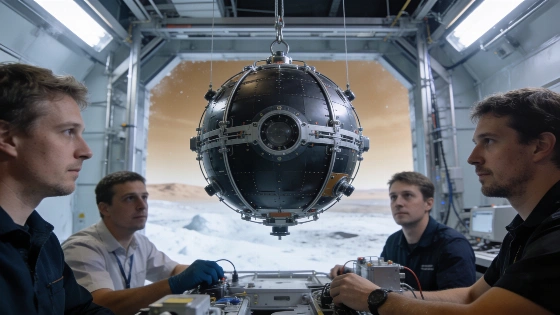
NASA has awarded early-stage funding to a project aiming to develop spherical flying robots-known as aerobots-capable of exploring the complex cave systems beneath the surface of Titan, Saturn's largest moon. The initiative, led by Daniel Drew at the University of Hawaii at Mānoa, is part of the agency's Innovative Advanced Concepts (NIAC) program and seeks to address the challenge of investigating Titan's hydrocarbon-rich terrain, which is marked by rivers, lakes, and extensive karst features such as sinkholes and caves.
Solid-State Propulsion for Titan's Terrain
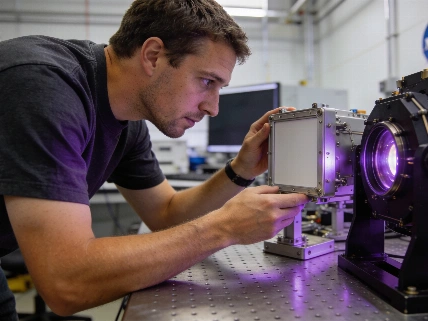
The proposed SPARK (Solid-state Propulsion for Autonomous Reconnaissance of Karst) aerobots are designed to operate in Titan's dense, cold atmosphere using electrohydrodynamic (EHD) ion thrusters. Unlike conventional rotors or jet engines, these solid-state thrusters generate thrust by accelerating ions through an electric field, offering a lightweight and mechanically simple alternative. The technology is virtually silent and minimizes disturbance to Titan's delicate hydrocarbon layers, but it remains less efficient than traditional propulsion methods for most terrestrial applications.
SPARK's design is intended to provide maneuverability and resilience in Titan's near-cryogenic conditions, where surface temperatures average around 94 K (-179 °C). The spherical form factor is optimized for navigating confined subsurface spaces, where wheeled or legged rovers would be unable to operate. The project's current Phase 1 grant supports nine months of feasibility studies, with the possibility of advancing to a longer Phase 2 if initial results are promising.
Mission Timeline and Technical Challenges
While the Dragonfly rotorcraft mission is scheduled to launch toward Titan in 2028, the SPARK aerobots are not expected to be ready for integration with that mission's primary payload. However, should Dragonfly's timeline shift, or should future missions to Titan be planned, the SPARK concept could be considered for inclusion. The project team is focusing on rapid prototyping, subsystem trade studies, and modeling of power and thermal effects to assess the viability of EHD propulsion in Titan's unique environment.
Key collaborators include researchers from NASA's Jet Propulsion Laboratory and the Blue Marble Space Institute of Science. The team's prior work has demonstrated microfabricated EHD actuators and centimeter-scale ion-propelled robots in laboratory settings, including the first ion-propelled micro-hovercraft. However, scaling these technologies for Titan's gravity and atmospheric density remains a significant engineering challenge.
Scientific Potential and Broader Applications
If successful, SPARK aerobots could enable direct exploration of Titan's subsurface voids, providing access to environments that may preserve chemical records of the moon's geological and atmospheric history. Titan's caves and sinkholes are of particular interest because they may shield organic molecules from surface radiation and weathering, offering clues to prebiotic chemistry in the outer solar system.
Although the primary focus is Titan, the underlying EHD propulsion technology could have limited applications for all-electric aircraft, indoor drones, or robotic swarms on Earth. However, the low efficiency of EHD thrusters compared to conventional propulsion restricts their practicality outside specialized environments like Titan's dense, cold atmosphere. For context, NASA's ongoing development of compact surface instruments, such as the Lunar Environment Monitoring Station for Artemis missions, illustrates the agency's broader interest in deploying autonomous systems to challenging planetary environments. For more on NASA's approach to instrument deployment, see this overview of lunar seismic station development.
Uncertainties and Next Steps
The SPARK project remains at an early conceptual stage, with no guarantee of flight hardware or mission selection. The current phase will culminate in a public technical report, summarizing experimental results and design trade-offs. Major uncertainties include the scalability of EHD propulsion, power supply limitations in Titan's cold environment, and the integration of autonomous navigation in complex cave systems. The project's progress will depend on both technical milestones and the evolving landscape of NASA's planetary exploration priorities.
As with many NIAC-funded concepts, SPARK's future will be shaped by the outcome of initial feasibility studies and the availability of mission opportunities. The technology's success would represent a step forward in accessing planetary environments that have so far remained beyond the reach of conventional robotic explorers.
Electrohydrodynamic (EHD) propulsion works by applying a high-voltage electric field to accelerate ions in a fluid-typically air-creating a flow that generates thrust. In the context of planetary exploration, EHD thrusters offer the advantage of having no moving parts, reducing mechanical complexity and potential points of failure. However, their efficiency is generally lower than that of traditional propellers or jets, and their performance depends strongly on atmospheric density and composition. On Titan, the dense nitrogen-methane atmosphere and low gravity may allow EHD-propelled aerobots to achieve flight where similar designs would be impractical on Earth or Mars. Understanding the trade-offs between efficiency, payload capacity, and environmental constraints is central to evaluating the feasibility of EHD-based exploration vehicles for future missions.