
Planetary Geology - Part 3
102 reports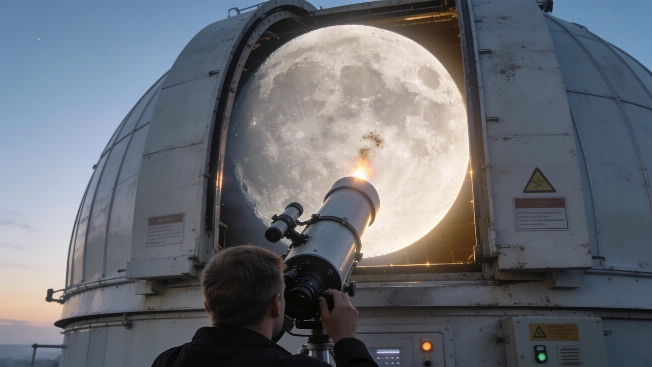
How a Falcon 9 Upper Stage Ended Up Bound for the Moon
A Falcon 9 upper stage abandoned in a high Earth orbit hit the Moon on August 5, 2026, after gravity and solar activity gradually altered its trajectory.
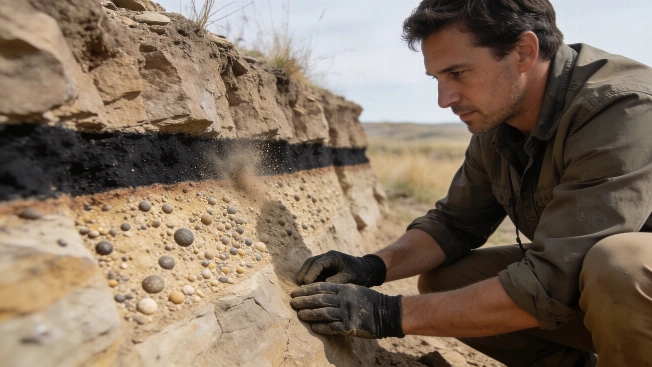
Chicxulub Dust May Have Fueled Lethal Firestorms
A new model of the Chicxulub impact includes ultrafine silicate dust found at fossil sites, suggesting surface temperatures may have become lethal within hours before a prolonged impact winter began
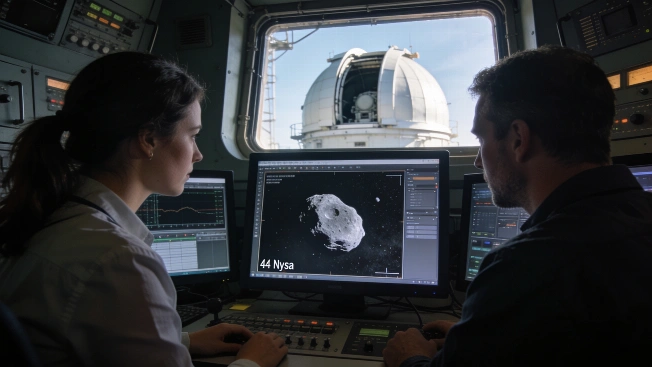
Triple-Lobed Asteroid 44 Nysa Imaged With Orbiting Moon in Asteroid Belt
Astronomers have resolved asteroid 44 Nysa as the first known triple-lobed body in the basic belt, using adaptive optics on major ground-based telescopes. The object also hosts a small moon, raising new questions about asteroid formation and evolution.
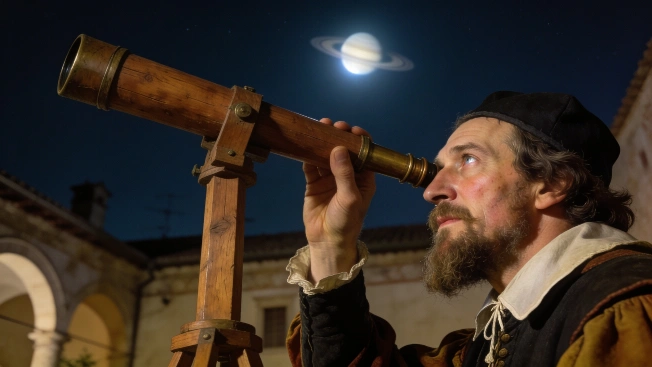
Galileo's 1610 Observation of Saturn's Rings Changed Planetary Science
In July 1610, Galileo Galilei used a newly invented telescope to observe Saturn, recording features later identified as the planet's rings, a finding that reshaped our understanding of planetary systems.

Satellite Images Reveal Penguin Diet Shifts on Antarctica's Danger Islands
NASA's Landsat 8 satellite and drone surveys have enabled researchers to monitor Adélie penguin colonies on the Danger Islands by analyzing the color of their guano, offering new understanding into how changing sea ice may affect Antarctic food webs.
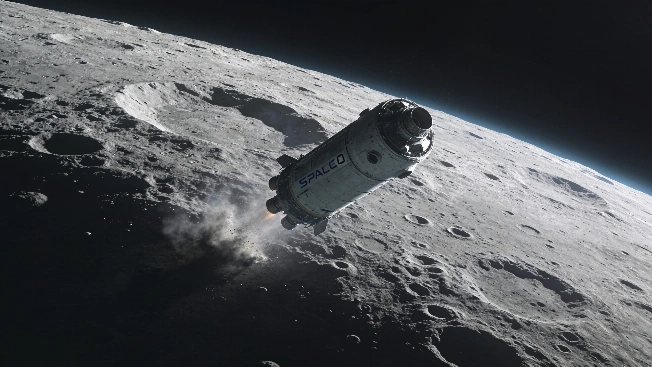
SpaceX Rocket Stage to Impact Moon, Raising New Scientific Questions
A spent SpaceX Falcon 9 upper stage has struck the lunar surface, giving researchers a rare chance to observe artificial impacts on the Moon with telescopes and orbital instruments.
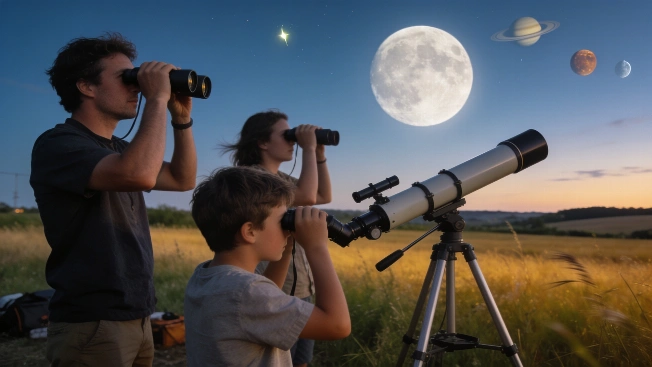
July's Buck Moon Aligns with Venus, Saturn, Mars, and Mercury
The full Buck Moon rises on July 29 alongside Venus, Saturn, Mars, and Mercury. As twilight fades, observers can watch the planetary parade with the naked eye or optical instruments.

Deep Partial Lunar Eclipse to Create 'Almost Blood Moon' in August 2026
A rare deep partial lunar eclipse will occur on August 28, 2026, with an umbral magnitude of about 0.935, meaning 93.5% of the Moon’s diameter will lie within Earth’s umbra. The event will be visible across the Americas and Europe, with views also possible in Africa, offering a striking copper-red lunar display.
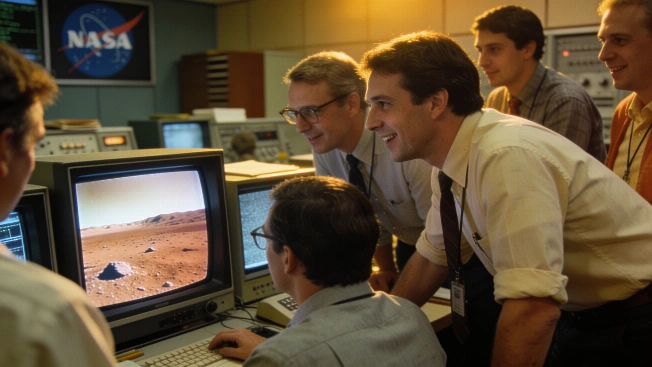
Viking 1's First Mars Surface Image Revisited on 50th Anniversary
NASA has released the original images captured by Viking 1 after its 1976 Mars landing, offering a detailed look at the Red Planet's surface and the mission's scientific legacy.

Bright Moonlight Limits Meteor Shower Viewing as Delta Aquariids Peak
The Southern Delta Aquariids and Alpha Capricornids meteor showers peak on July 30 to 31, but a nearly full moon will significantly reduce visibility of fainter meteors for observers across North America.
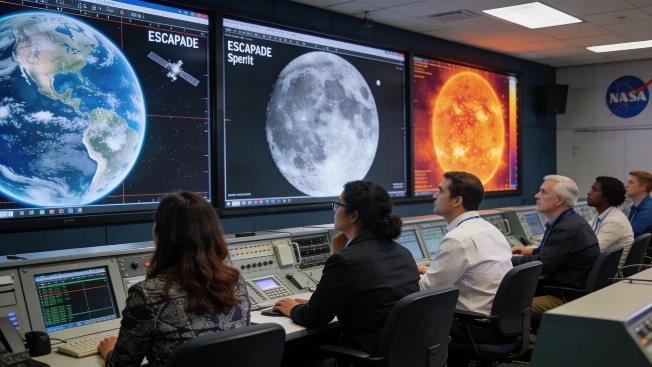
NASA's ESCAPADE Spacecraft Captures Earth and Moon in Dual Light
NASA's ESCAPADE mission has imaged Earth and the Moon in visible and thermal infrared light, offering a rare chance to calibrate its cameras as the spacecraft prepare for their journey to Mars.
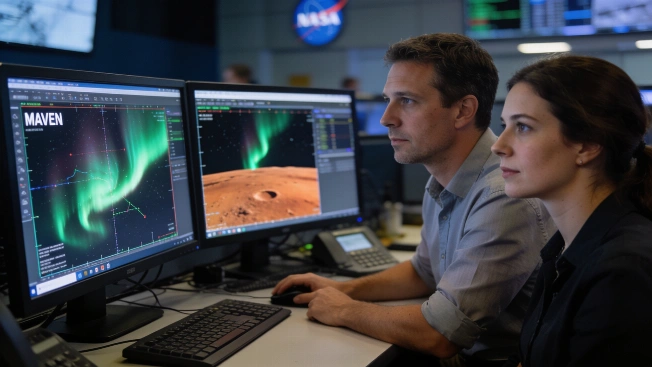
MAVEN Data Reveals Earth-Like Aurora Mechanism on Mars
NASA's MAVEN orbiter has found evidence that localized auroras on Mars are powered by a process similar to Earth's Dungey cycle, offering new understanding into Martian atmospheric loss and magnetic-field interactions.
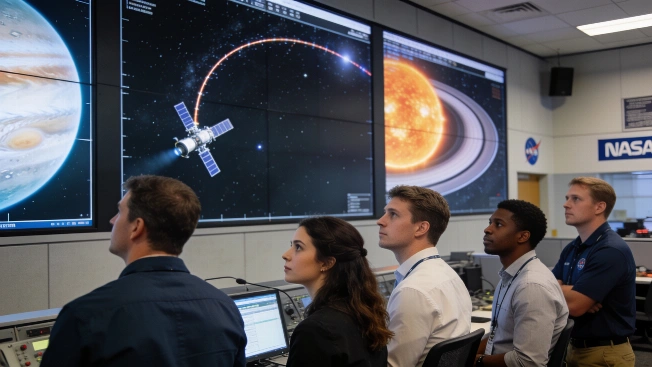
New Horizons Resumes Science at Solar System's Edge After Hibernation
NASA's New Opportunities spacecraft has emerged from a 321-day hibernation and is transmitting data from the outer solar system as it prepares to study the boundary between the Sun's influence and interstellar space with its advanced instruments.
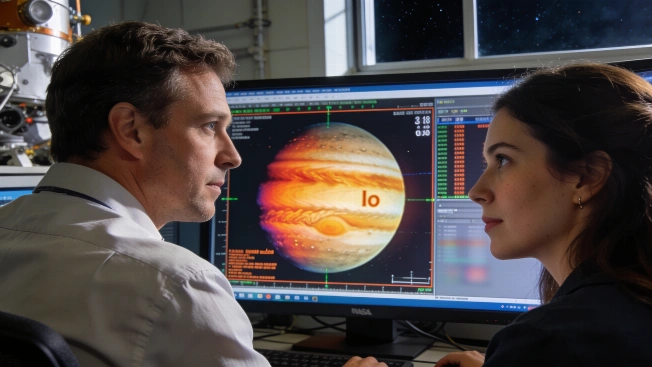
Juno Mission Probes Subsurface Heat on Jupiter's Volcanic Moon Io
NASA's Juno spacecraft has measured temperatures beneath Io's surface, revealing intense internal heating and unexpectedly smooth, low-density terrain. The findings, published in a peer-reviewed journal, offer new understanding into tidal heating on active moons

Metal Spheres on Australian Beach Highlight Space Debris Uncertainty
Six metallic spheres found on an Australian shoreline are believed to be remnants of a space launch vehicle, raising questions about how space debris survives reentry and where it ultimately lands.
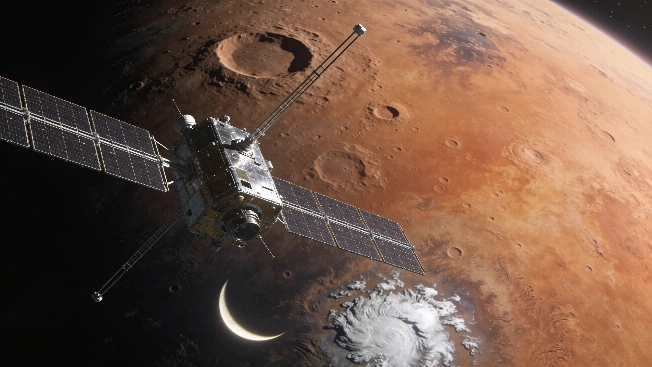
NASA's Psyche Spacecraft Uses Mars Flyby to Refine Asteroid Trajectory
NASA's Psyche probe has completed a close flyby of Mars, capturing a time-lapse sequence and using the planet's gravity to adjust its course toward the metal-rich asteroid Psyche, its target for arrival in 2029.

Exoplanets Smaller Than Mars May Lose Atmospheres Too Quickly for Life
A new planetary modeling study suggests rocky exoplanets must be at least 80% of Earth's width to retain atmospheres for billions of years, narrowing the search for potentially habitable worlds around sun-like stars.
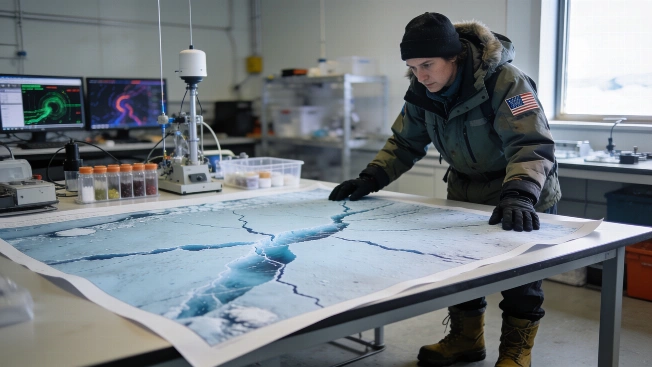
NISAR Satellite Data Reveals Antarctic Ice Fractures in Unprecedented Detail
NASA and ISRO have begun releasing data from the NISAR satellite’s dual radar systems, giving researchers fresh understanding into Antarctic ice movement and structure, as well as other dynamic Earth surfaces.
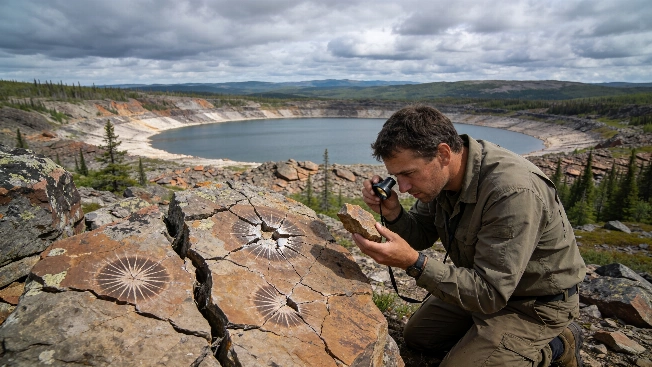
Possible Ancient Impact Crater Identified in Northern Quebec
A large circular structure in Quebec's Côte-Nord region, first spotted on Google Maps, may be a 390-million-year-old impact crater. Fieldwork and rock analysis are underway to confirm its extraterrestrial origin.
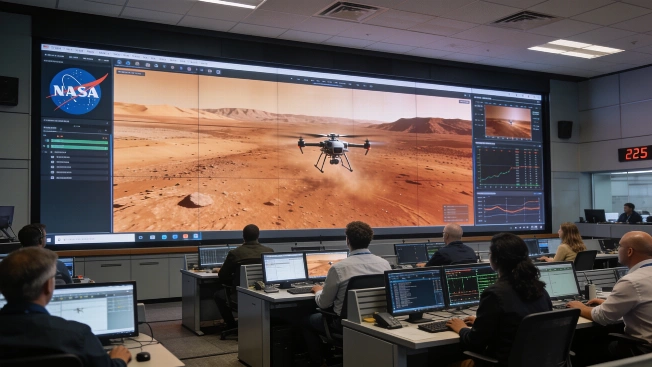
NASA Eyes Mars Skies 50 Years After Viking 1's Landmark Landing
NASA's Viking 1 lander touched down on Mars in 1976, opening a new era of planetary exploration. Now, five decades later, the agency is preparing to extend its reach above the Martian surface with aerial missions.
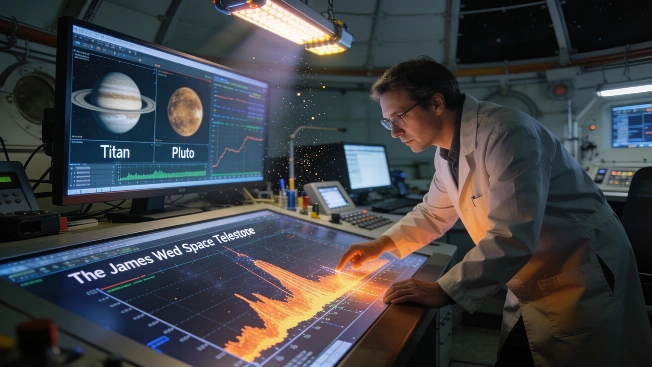
James Webb Telescope Detects Unidentified Infrared Signal on Titan and Pluto
The James Webb Space Telescope has recorded a mysterious infrared absorption feature on both Saturn's moon Titan and the dwarf planet Pluto, hinting at shared surface chemistry despite their contrasting environments.
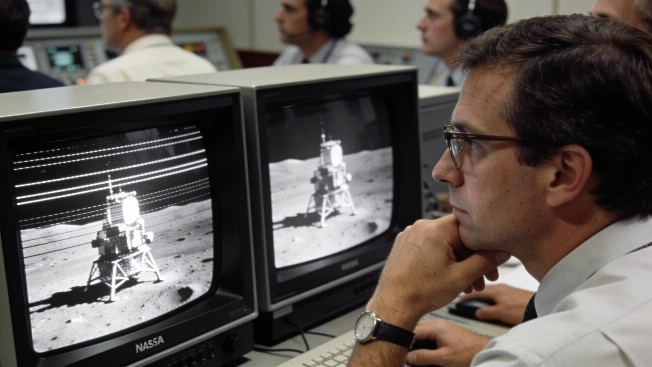
Viking 1's First Mars Surface Image Changed Planetary Exploration
NASA's Viking 1 lander transmitted the first direct image from the Martian surface in July 1976, revealing the planet's rocky terrain and marking a milestone in robotic planetary science

How NASA Langley Engineered the First Mars Landings
Fifty years after Viking 1 and 2 touched down on Mars, the engineering and mission design led by NASA's Langley Research Center remain central to how planetary landings are planned and executed across the solar system.
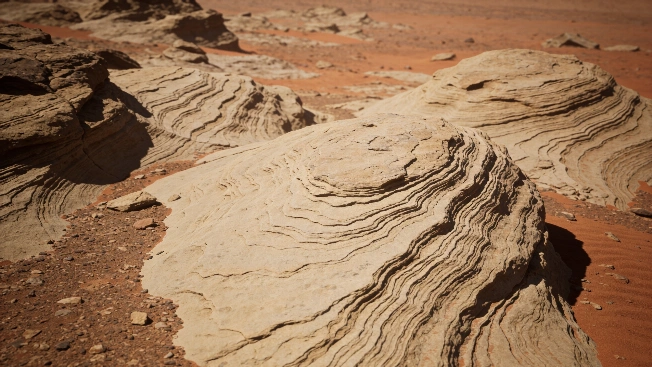
Curiosity Rover Reveals Ancient Sandstorm Evidence on Mars
NASA's Curiosity rover has imaged Martian rocks shaped by a powerful ancient sandstorm, offering new understanding into the Red Planet's dynamic past and the processes that once shaped its surface.
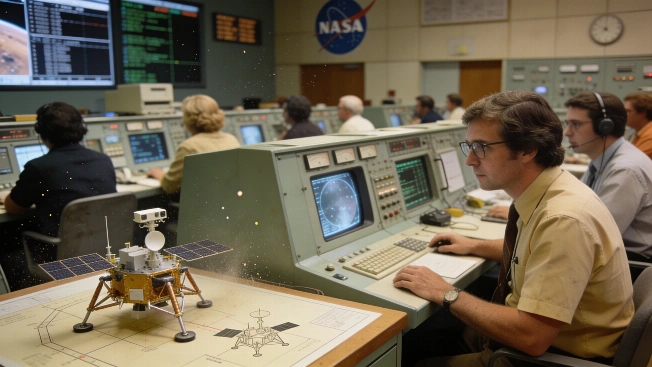
Viking 1's Mars Life Experiments: What the Evidence Still Can't Prove
Fifty years after NASA's Viking 1 lander touched down on Mars, scientists remain divided over whether its life-detection experiments found evidence of Martian biology or were confounded by non-biological chemistry and instrument limitations.

AI Struggles With Unknowns in Search for Extraterrestrial Life
A Michigan State University study using digital life simulations reveals that artificial intelligence can misclassify unfamiliar molecular patterns as signs of life, raising concerns for future missions seeking biosignatures beyond Earth

Hayabusa2's Risky Asteroid Flyby Yields Unprecedented Close-Up Data
Japan's Hayabusa2 spacecraft has captured detailed images and thermal data of the near-Earth asteroid Torifune after a high-speed flyby, following intense debate over the mission's safety and scientific value.
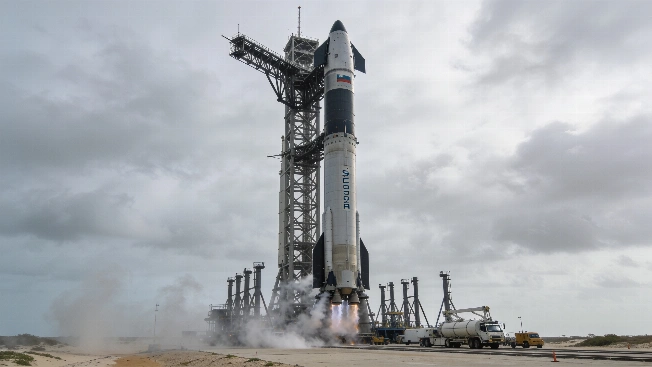
SpaceX Starship Test Aborted as Defense and Science Missions Advance
SpaceX's Starship Flight 13 test launch was halted seconds before liftoff, highlighting ongoing technical challenges as the company expands its role in US military and scientific space operations

Asteroid Apophis to Make Exceptionally Close Approach in 2029
Researchers have mapped the 2029 flyby of asteroid Apophis, predicting that up to 90% of Earth's population could see the object with the naked eye as it passes closer than many satellites, offering a rare opportunity for direct observation

Glaciers Observed Flowing Down the Himalayas from Space
A NASA astronaut aboard the International Space Station captured detailed images of glaciers moving across the Himalayas, providing a rare perspective on the scale and dynamics of these ice flows as they descend toward the Tibetan Plateau
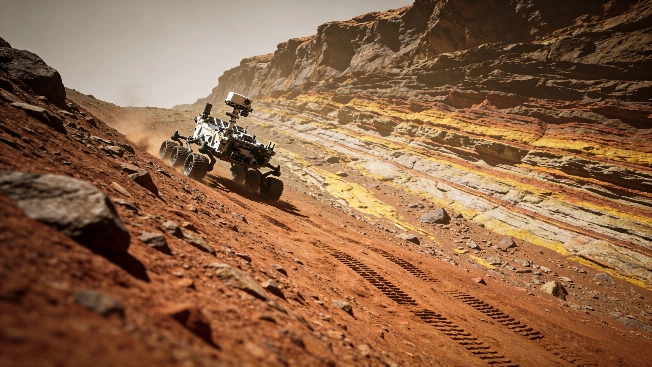
Perseverance Rover Images Ancient Martian Bedrock at Jezero Crater Rim
NASA's Perseverance rover has captured a detailed view of the Jezero Crater rim on Mars, revealing a thick sequence of ancient rocks. Recorded by the Mastcam-Z instrument, the scene offers new evidence about the planet's impact history and surface evolution.
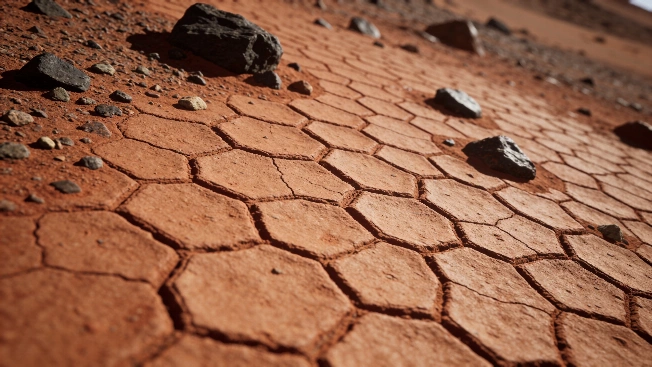
Curiosity Rover Images Unusual Honeycomb Patterns on Martian Surface
NASA's Curiosity rover has captured detailed images of a honeycomb-like texture on Mars, revealing polygonal surface patterns and scattered dark rocks. Scientists are investigating the origin of these features using in situ rover observations and orbital data
Part 3 of 3