NASA's Curiosity rover has captured detailed images of a honeycomb-like texture on Mars, revealing polygonal surface patterns and scattered dark rocks. Scientists are investigating the origin of these features using in situ rover observations and orbital data
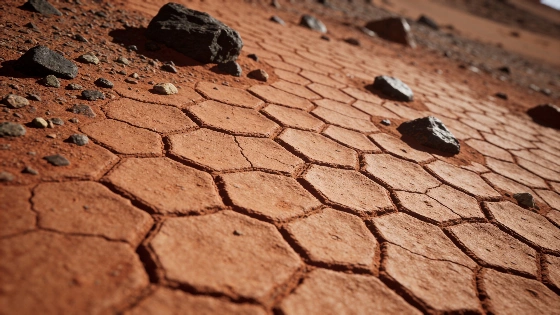
NASA's Curiosity rover has recorded a striking honeycomb-like pattern on the surface of Mars, adding a new puzzle to the planet's complex geological record. The observation, made nearly 14 years after Curiosity's landing in Gale Crater, shows a field of polygonal shapes arranged in a regular, repeating pattern. The rover targeted this area after it was first identified in orbital images, allowing for close-up analysis with its onboard cameras and instruments.
The honeycomb texture consists of nearly identical polygons, each bordered by shallow ridges, giving the surface an appearance reminiscent of a tiled carpet or wallpaper. Alongside these patterns, the rover's images reveal scattered dark rocks and pebbles, some of which appear to rest atop the patterned terrain. The origin of both the polygons and the dark rocks remains uncertain, prompting renewed interest in the site's geological history.
Surface Patterns and Possible Origins
Polygonal surface features are not unique to Mars; similar patterns are found in permafrost regions on Earth, where repeated freeze-thaw cycles cause the ground to crack and form geometric shapes. On Mars, such polygons can result from thermal contraction, desiccation, or other physical processes acting on sedimentary layers. However, the regularity and scale of the honeycomb pattern imaged by Curiosity are unusual, and researchers have yet to determine the precise mechanism responsible.
The dark rocks scattered across the area add another layer of complexity. Some hypotheses suggest these rocks may have originated from higher strata and rolled down to their current positions, while others propose they could be meteorites delivered from space or ejecta from ancient impacts within Gale Crater. Previous analyses of similar Martian stones have identified minerals such as nickel, which are rare in native Martian rocks but common in meteorites, though no definitive link has been established for the current site.
Instrumental Observations and Data
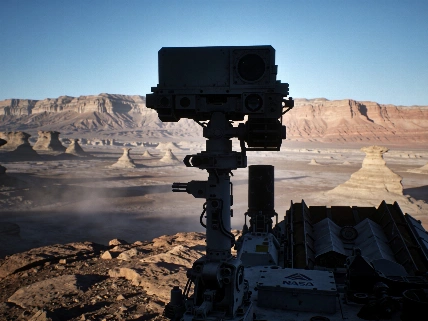
Curiosity's imaging campaign of the honeycomb terrain was guided by earlier orbital reconnaissance, which flagged the area as geologically distinct. The rover's Mastcam and other instruments have provided high-resolution images and compositional data, but a full geochemical analysis of the polygons and dark rocks is ongoing. The mission team is using these datasets to compare the site with other polygonal terrains on Mars and to test competing formation models.
Curiosity landed in Gale Crater in August 2012 and has since traversed more than 30 kilometers across the Martian surface. The rover's primary science payload includes cameras, spectrometers, and environmental sensors designed to investigate the planet's sedimentary history and search for signs of past habitability. The honeycomb-patterned site lies within a region previously mapped from orbit, but the new ground-level images provide a level of detail not achievable from space.
Unresolved Questions and Scientific Significance
At present, the formation process behind the honeycomb polygons remains unresolved. While terrestrial analogs offer plausible mechanisms, the Martian environment presents unique challenges, including lower atmospheric pressure, extreme temperature swings, and a lack of liquid water at the surface. The scattered dark rocks further complicate the picture, as their composition and origin are not yet fully characterized.
Researchers are continuing to analyze Curiosity's data to distinguish between competing hypotheses. The presence of meteorite-like minerals in some Martian rocks suggests that at least some of the dark stones could be extraterrestrial in origin, but confirmation will require detailed compositional measurements. The team is also investigating whether the polygons formed through ancient climatic cycles, volcanic processes, or other geological phenomena unique to Mars.
The discovery of these patterns underscores the value of in situ exploration for planetary science. While orbital images can identify candidate sites, only surface missions like Curiosity can provide the detailed context and measurements needed to unravel Mars's geological history. As the rover continues its traverse, each new observation adds to the growing picture of a planet shaped by both familiar and alien processes.
Polygonal terrain is a common feature in planetary geology, often forming through processes such as thermal contraction or desiccation. On Earth, these patterns are typically associated with permafrost regions, where seasonal temperature changes cause the ground to crack and form geometric shapes. On Mars, the absence of liquid water and the planet's thin atmosphere mean that similar patterns may arise through different mechanisms, including the contraction of sedimentary layers or the sublimation of subsurface ice. Understanding how these polygons form helps scientists reconstruct past environmental conditions and assess the role of climate, water, and impact events in shaping planetary surfaces.