A Michigan State University study using digital life simulations reveals that artificial intelligence can misclassify unfamiliar molecular patterns as signs of life, raising concerns for future missions seeking biosignatures beyond Earth
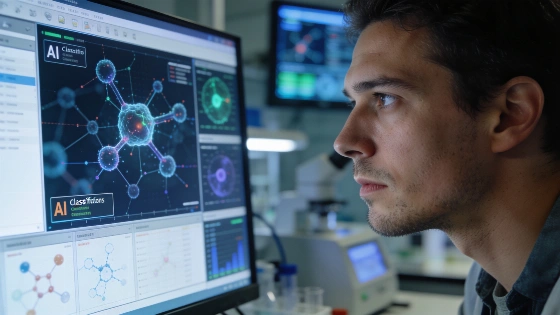
Efforts to automate the search for life beyond Earth increasingly rely on artificial intelligence, but new research highlights a critical vulnerability: AI systems can be easily misled when confronted with unfamiliar data. A study from Michigan State University, using digital life simulations, demonstrates that current AI models may confidently misidentify non-living molecular patterns as biological, especially when those patterns differ from the examples used during training.
Testing AI With Digital Organisms
The research team, led by computational biologist Christoph Adami, employed the Avida platform-a digital evolution environment where self-replicating computer programs compete for resources. This system generates vast datasets of simulated lifeforms and non-life code, providing a controlled testbed for evaluating AI classification performance. Over three months, the team ran experiments on a thousand parallel machines, tasking AI with distinguishing between digital organisms capable of replication and random code sequences lacking this property.
To probe the AI's limits, the researchers systematically altered non-living code, making incremental changes and monitoring the AI's confidence in its life-detection verdicts. After approximately 15 modifications, the AI frequently assigned maximum confidence to non-life samples, despite no actual biological properties being present. This pattern persisted regardless of the starting sequence, revealing a consistent susceptibility to so-called "out-of-distribution" data-inputs that differ significantly from the AI's training set.
Implications for Space Missions
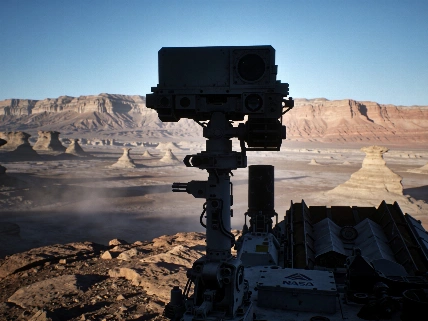
These findings have direct consequences for astrobiology missions that depend on AI to interpret complex datasets from remote environments. While traditional life-detection methods-such as direct imaging of microbial structures-offer clear-cut results, many future missions will rely on indirect evidence, including mass spectrometry data from planetary atmospheres or surface samples. For example, upcoming missions to Mars, Europa, or exoplanets observed by the planned Habitable Worlds Observatory will generate molecular data that may not resemble terrestrial biology.
AI's tendency to misclassify unfamiliar molecular patterns raises the risk of false positives, where non-biological chemistry is mistaken for evidence of life. This challenge is compounded by the fact that alien life, if it exists, may differ fundamentally from Earth-based organisms, making it unlikely that any AI trained solely on terrestrial data will generalize reliably. The issue echoes broader concerns about AI reliability in high-stakes scientific contexts, as seen in other mission-critical applications such as astronaut health risk assessment on the International Space Station, discussed in recent coverage of NASA's medical algorithms.
Limits of Training Data and Next Steps
The core limitation identified by the Michigan State team is the dependence of AI accuracy on the similarity between training and test data. When AI systems encounter inputs outside their training distribution, their predictions become unreliable, regardless of apparent confidence. In the context of life detection, this means that even well-calibrated models may fail when presented with truly novel biochemistry or unfamiliar molecular assemblies.
To address this, the researchers plan to extend their experiments beyond digital simulations, applying similar tests to real-world chemical datasets. Their results are scheduled for presentation at the 2026 Conference on Artificial Life in Waterloo, Canada. The work underscores the need for caution in deploying AI for astrobiological discovery and highlights the importance of developing models that can recognize and quantify their own uncertainty when faced with unknowns.
In practical terms, the study suggests that AI-based life detection should be complemented by traditional analytical methods and human oversight, especially when interpreting ambiguous or unprecedented data from planetary missions. As the search for extraterrestrial life expands to more diverse environments, robust validation and cross-checking will remain essential to avoid misinterpretation of signals that may have non-biological origins.
Understanding the concept of "out-of-distribution" data is central to this research. In machine learning, a model is trained on a specific set of examples-its training distribution. When it encounters new data that differ significantly from this set, its predictions can become unreliable, even if the model expresses high confidence. In astrobiology, this means that AI trained on Earth-based life may not recognize or correctly interpret alien biochemistry, increasing the risk of both false positives and false negatives. Recognizing and mitigating this limitation is crucial for the responsible use of AI in scientific discovery beyond our planet.