The Southern Delta Aquariids and Alpha Capricornids meteor showers reach their peak on July 30-31, but a nearly full moon will significantly reduce visibility of fainter meteors for observers across North America
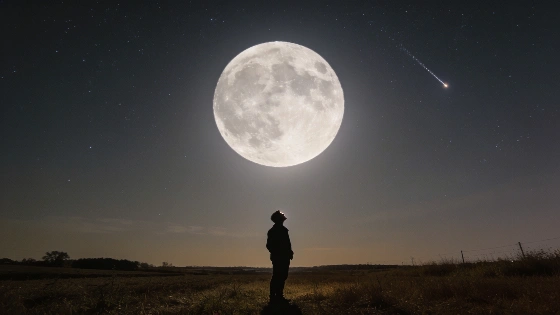
Two annual meteor showers, the Southern Delta Aquariids and the Alpha Capricornids, will reach their peak activity overnight from July 30 to July 31. However, this year's event coincides with a nearly full Buck Moon, creating challenging conditions for observers hoping to catch the maximum number of meteors. The timing places the showers just one night after July's full moon, leaving the sky illuminated by 98% lunar brightness and washing out many of the fainter meteors that would otherwise be visible under darker skies.
Lunar Brightness and Meteor Visibility
The Southern Delta Aquariids are active from July 12 to August 23, with their peak typically producing up to 25 meteors per hour under ideal dark-sky conditions. The Alpha Capricornids, active from July 3 to August 15, are less prolific, averaging around five meteors per hour at their maximum. While the Alpha Capricornids are known for producing occasional bright fireballs-meteors that can outshine the moon and sometimes display vivid colors-the Southern Delta Aquariids tend to generate fainter streaks that are especially vulnerable to being obscured by moonlight. According to the American Meteor Society, the near-full moon will make it difficult to observe all but the brightest meteors during this year's peak.
Best Viewing Strategies and Geographic Factors
For those determined to observe the showers, the optimal viewing window is between midnight and dawn, when the radiant point of the Southern Delta Aquariids-located in the constellation Aquarius-reaches its highest position in the southern sky. Observers in the southern United States, Mexico, and the Caribbean are better positioned, as Aquarius climbs higher at lower latitudes, increasing the chance of spotting meteors. To maximize visibility, astronomers recommend keeping the moon behind you or using natural features such as buildings, trees, or hills to block its glare, and focusing on the darkest part of the sky. Meteor showers are best viewed with the naked eye, as telescopes and binoculars restrict the field of view.
Upcoming Opportunities and Astronomical Context
Those unable to observe the Delta Aquariids and Alpha Capricornids this month will have another opportunity in August, when the Perseid meteor shower peaks overnight on August 12-13. This event will occur just after the new moon, providing moonless skies and a potential peak rate of up to 100 meteors per hour. The same new moon will also bring a total solar eclipse visible along a narrow path through eastern Greenland, western Iceland, and northern Spain, with a partial eclipse observable from parts of Canada and the northeastern United States. As with all solar eclipses, proper eye protection is essential during partial phases. For context on how planetary science missions contribute to our understanding of dynamic solar system events, see this report on Juno's investigation of volcanic activity on Jupiter's moon Io.
The combination of a major meteor shower and a solar eclipse in August is expected to provide a rare sequence of astronomical events for skywatchers, with the Perseids offering a particularly favorable viewing opportunity due to the absence of moonlight.
Meteor showers occur when Earth passes through streams of debris left by comets or asteroids. As these particles enter the atmosphere at high speed, they heat up and ionize the surrounding air, producing visible streaks of light. The brightness of a meteor depends on its size, speed, and composition, but also on the darkness of the sky. Moonlight acts as a source of background illumination, reducing the contrast between meteors and the sky, and making it difficult to detect all but the brightest events. This is why meteor shower forecasts often emphasize the phase of the moon as a critical factor in predicting visibility for observers on the ground.