NASA's Viking 1 lander touched down on Mars in 1976, launching a new era of planetary exploration. Now, five decades later, the agency is preparing to extend its reach above the Martian surface with aerial missions.
Fifty years after Viking 1 became the first NASA spacecraft to land successfully on Mars, the agency is preparing to expand its exploration from the surface to the skies. The shift reflects both the legacy of early missions and the evolving scientific priorities that now drive Mars research.
Viking's Surface Legacy
On July 20, 1976, Viking 1 landed in Chryse Planitia, a broad plain 22.5 degrees north of the Martian equator. Its twin, Viking 2, followed in September of the same year, each equipped with a lander and an orbiter. The primary scientific goal was to search for evidence of life using three biological experiments. Two of these returned negative results, but the third, known as the Labeled Release experiment, detected a release of carbon dioxide after Martian soil was exposed to nutrients. While some researchers interpreted this as a possible sign of microbial metabolism, most attributed the result to non-biological chemical reactions, leaving the question of Martian life unresolved.
The ambiguity of the Viking results, combined with the missions' high cost and a shift in NASA's funding priorities toward the Space Shuttle program, led to a two-decade hiatus in U.S. Mars landings. The next successful surface mission, Mars Pathfinder, arrived in 1997, demonstrating new landing technologies and deploying the Sojourner rover, which found rounded pebbles consistent with ancient water flow.
From Rovers to Aerial Exploration
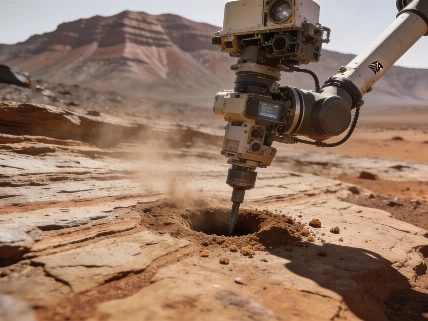
Following Pathfinder, NASA adopted a "follow the water" strategy, sending increasingly sophisticated rovers-Spirit, Opportunity, Curiosity, and Perseverance-to investigate Mars' geological history and search for habitable environments. These missions have collectively found extensive evidence of past liquid water and, in the case of Curiosity and Perseverance, detected complex organic molecules in Martian rocks. However, none has provided definitive evidence of life.
Perseverance, which landed in Jezero Crater in 2021, is actively collecting samples for potential return to Earth. The agency's original Mars Sample Return plan was recently deemed too expensive, prompting a search for alternative strategies. The need for detailed laboratory analysis on Earth reflects the lessons of Viking: surface instruments alone may not be sufficient to resolve the question of Martian biology.
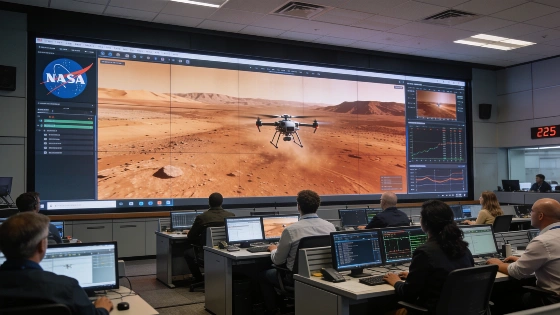
Perseverance also carried Ingenuity, a 1.8-kilogram helicopter designed to demonstrate powered flight in Mars' thin atmosphere. Ingenuity far exceeded expectations, completing 72 flights between April 2021 and January 2024 and proving that aerial vehicles can operate on Mars.
Skyfall and the Next Phase
Building on Ingenuity's success, NASA is developing the Skyfall mission, scheduled for launch in 2028. Skyfall will send three helicopters, each similar in design to Ingenuity but equipped with scientific instruments, to survey the Martian surface from the air. The mission aims to map subsurface ice deposits and monitor weather patterns, providing data that could inform future human exploration and resource utilization.
NASA officials have stated that Skyfall's aerial scouts will generate detailed terrain and subsurface maps, helping to identify safe and resource-rich sites for future astronauts. The mission will use a nuclear-powered rocket for delivery, reflecting the increasing technical complexity of Mars exploration. The Jet Propulsion Laboratory is also investigating larger, more capable rotorcraft for future missions, potentially expanding the range and scientific reach of aerial exploration on Mars.
Unresolved Questions and Future Directions
The search for life on Mars remains scientifically unsettled. While surface missions have revealed a planet shaped by water and complex chemistry, no experiment has yet produced unambiguous evidence of biology. The debate over Viking's Labeled Release results continues to illustrate the difficulty of distinguishing biological from abiotic processes with remote instruments.
Returning Martian samples to Earth for laboratory analysis is widely regarded as the best path to resolving these questions, but technical and budgetary challenges remain. Meanwhile, aerial exploration offers new opportunities to access previously unreachable terrain and to conduct surveys at scales not possible with rovers alone. As NASA and its partners refine their strategies, the legacy of Viking 1 endures in the persistent effort to understand Mars as both a planetary system and a potential habitat.
As international interest in reusable launch vehicles grows, recent developments such as Japan's RV-X prototype test-covered in detail in our report on Japan's step toward reusable rocket technology-highlight the broader context of advancing spaceflight capabilities that may shape future Mars missions.
Understanding the challenges of Mars exploration requires an appreciation of the limits of current instruments. Surface landers and rovers are constrained by their immediate environment and the sensitivity of their onboard detectors. Aerial vehicles like Ingenuity and the planned Skyfall helicopters can access new regions and gather data over wider areas, but they too face constraints from power, payload, and communication. Ultimately, the combination of surface, aerial, and sample-return missions will be needed to build a comprehensive picture of Mars' history and its potential for life.