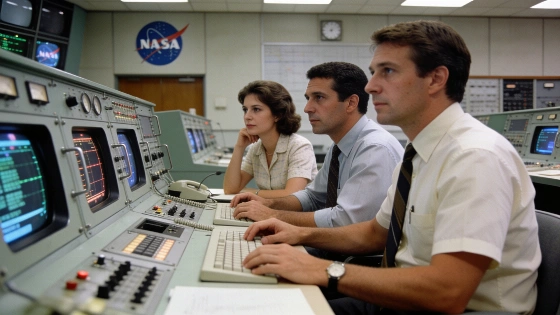
Fifty years after Viking 1 and 2 touched down on Mars, the engineering and mission design led by NASA's Langley Research Center remain central to how planetary landings are planned and executed across the solar system
When NASA's Viking 1 and 2 landers became the first spacecraft to successfully reach the Martian surface in 1976, the achievement marked a turning point in planetary exploration. The missions' success was rooted in the technical leadership and methodical engineering of NASA's Langley Research Center in Hampton, Virginia, which was tasked with transforming a high-risk concept into a viable interplanetary landing.
Designing for Martian Entry
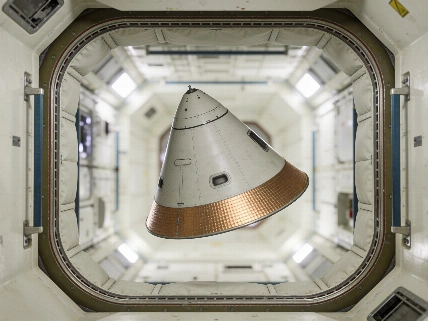
Selected in 1968 to lead the Viking project, Langley engineers faced the unprecedented challenge of delivering a spacecraft safely through Mars' thin atmosphere. The team prioritized rigorous system testing and engineering reviews, led by project manager James S. Martin Jr., to ensure every component could withstand the harsh entry conditions. The landers had to decelerate from over 16,000 kilometers per hour as they plunged toward the surface, requiring a combination of heat shields, aeroshells, and supersonic parachutes. These systems were refined through extensive wind-tunnel experiments and impact simulations, setting a new standard for planetary entry, descent, and landing (EDL) technology.
Each Viking lander was paired with its own orbiter and launched aboard a Titan IIIE-Centaur rocket, a shift from the earlier, riskier Voyager Mars lander concept that had relied on a single Saturn V. This redesign balanced scientific ambition with engineering feasibility, allowing for independent targeting and redundancy.
Landing Site Selection and Mission Operations
Langley's approach to landing site selection combined orbital imagery from Viking's own spacecraft with radar data from Earth-based observatories. This method enabled the identification of regions that offered both scientific interest and engineering safety, a practice that has since become standard for Mars missions. The mission teams also adopted the Martian sol-a day on Mars lasting about 24 hours and 39 minutes-to synchronize operations with local time on the planet, a procedure still used for surface missions today.
The Viking landers returned more than 4,500 images and a wealth of atmospheric and surface data, revealing Mars as a world with dynamic weather, layered geology, and complex surface chemistry. The data provided the first direct evidence of Martian meteorology and surface processes, and the landers' experiments placed strict limits on the presence of organic molecules, shaping decades of subsequent research.
Legacy and Continuing Influence
The engineering principles and mission architecture established by Langley during Viking have influenced every subsequent Mars landing. The "planetary playbook" of scouting with orbiters, certifying landing sites with real data, and testing EDL systems beyond their design limits remains central to current and future missions. Technologies first proven on Viking have been adapted and improved for later landers and rovers, including Curiosity and Perseverance.
As Mars exploration has advanced, the lessons from Viking have informed not only NASA's approach but also international efforts to land on other planetary bodies. The technical and operational standards set by Langley continue to shape mission planning, risk assessment, and surface operations across the field. For example, the careful balance of scientific goals and engineering constraints seen in Viking echoes in the design of recent asteroid missions, such as the high-speed flyby of Torifune by Japan's Hayabusa2 spacecraft, which is discussed in detail in this analysis of Hayabusa2's close-approach strategy.
With the 50th anniversary of the Viking landings, NASA Langley continues to develop new EDL technologies and mission concepts that will support future robotic and human exploration. The center's legacy is visible in every successful planetary landing that follows the rigorous, evidence-driven approach first demonstrated on Mars.
Entry, descent, and landing (EDL) is the critical sequence in which a spacecraft transitions from interplanetary travel to a controlled touchdown on a planetary surface. On Mars, EDL is especially challenging due to the planet's thin atmosphere, which is dense enough to generate heat and aerodynamic forces but too tenuous for parachutes alone to slow a heavy lander. Engineers must combine heat shields, aeroshells, parachutes, and often retro-rockets or airbags to manage speed and orientation. Each phase is carefully modeled and tested, as even minor deviations can result in mission loss. The success of Viking's EDL sequence established the foundation for all subsequent Mars landings, highlighting the importance of robust engineering and thorough pre-mission validation.