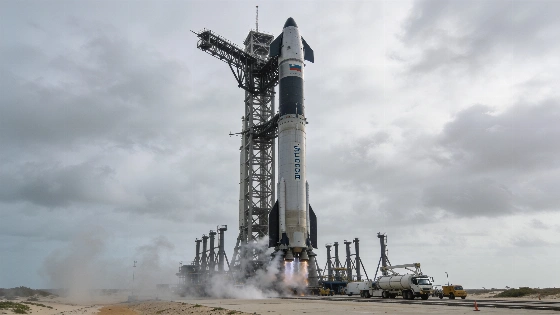
SpaceX's Starship Flight 13 test launch was halted seconds before liftoff, highlighting ongoing technical challenges as the company expands its role in US military and scientific space operations
SpaceX's Starship program experienced a last-second launch abort during its thirteenth test attempt, underscoring the technical hurdles that remain for the company's next-generation launch system. The incident comes as SpaceX deepens its involvement in both scientific and defense-related space activities, with new contracts and mission milestones shaping the landscape of commercial spaceflight.
Starship Test Launch and Technical Setbacks
The most recent Starship test, designated Flight 13, was halted just before ignition at SpaceX's Boca Chica facility in Texas. According to reporting from Space.com, the abort occurred in the final moments of the countdown, with onboard systems detecting an anomaly that prevented liftoff. While the precise cause has not been publicly detailed, such aborts are not uncommon in the development of complex launch vehicles, especially those intended for heavy-lift and deep-space missions.
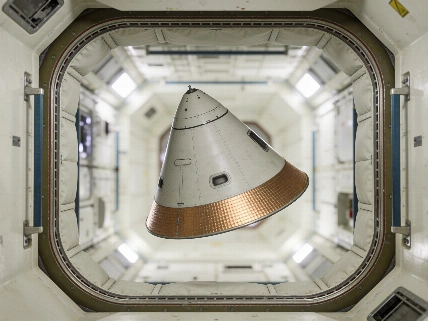
Starship is central to NASA's Artemis program, with the vehicle selected as the Human Landing System (HLS) for future lunar missions. The repeated delays and technical issues place pressure on SpaceX to demonstrate reliable performance, as the Artemis III mission timeline depends on Starship's readiness for crewed lunar landings. The vehicle's full-stack configuration, combining the Super Heavy booster and Starship upper stage, is designed to deliver over 100 metric tons to low Earth orbit, but has yet to complete a fully successful orbital flight and recovery sequence.
Expanding Role in Defense and Science
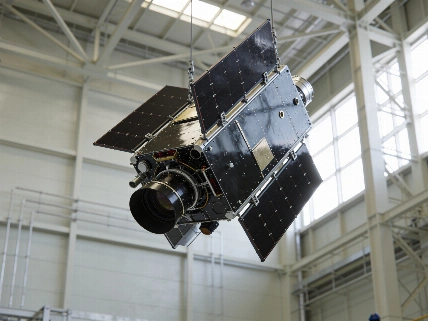
Beyond its civil space ambitions, SpaceX is increasingly engaged in US defense operations. The company recently launched 21 data transport satellites for the US military, supporting secure communications and rapid data relay in orbit. SpaceX's Starlink network has also been tapped by NASA to provide high-bandwidth imagery transmission for the Artemis III Orion spacecraft, reflecting the growing reliance on commercial infrastructure for both scientific and operational needs.
In parallel, other commercial and governmental actors are advancing space science and technology. Blue Origin continues work on lunar landers despite setbacks with its New Glenn rocket, while new initiatives in space-based solar power and orbital surveillance are attracting attention from agencies such as the Defense Innovation Unit and the Federal Communications Commission. These developments highlight the increasingly intertwined nature of commercial, scientific, and defense priorities in space.
Recent Discoveries and Planetary Science
Several notable scientific findings have emerged alongside these mission updates. Astronomers have reported the detection of an atmosphere around a rocky exoplanet in the habitable zone, using transmission spectroscopy to analyze starlight filtered through the planet's atmosphere. Meanwhile, a meteorite that crashed through a New Jersey home is being studied for clues to prebiotic chemistry, and researchers have identified complex sugars-sometimes called "space candy"-in interstellar clouds, offering new insights into the chemical pathways that may precede life.
Within the Solar System, evidence of large landslides on Pluto has been documented through analysis of New Horizons data, expanding our understanding of geological activity on distant icy worlds. These discoveries rely on a combination of remote sensing, laboratory analysis, and advanced modeling to interpret faint signals and rare events across vast distances.
Commercial Models and Public Engagement
Public interest in space exploration is also reflected in the growing market for educational and hobbyist models. Companies such as Estes have released detailed scale models of the Falcon 9 rocket, allowing enthusiasts to simulate launches and engage with the engineering challenges of rocketry. At the same time, telescope manufacturers continue to offer accessible instruments for amateur astronomers, supporting broader participation in observational science.
As commercial and governmental actors pursue increasingly ambitious missions, the intersection of technical achievement, scientific discovery, and public engagement continues to shape the trajectory of space exploration. The balance between reliability, innovation, and safety remains central as new vehicles and missions move from test phases toward operational status.
Understanding the distinction between a launch attempt and a completed mission is essential in spaceflight. A launch abort, such as the one experienced by Starship Flight 13, typically occurs when onboard or ground-based systems detect a parameter outside safe limits-such as engine performance, fuel pressure, or guidance alignment-triggering an automatic halt to prevent damage or loss. These events are a routine part of the iterative testing process for new launch vehicles, allowing engineers to diagnose issues and refine systems before committing to flight. Only after a vehicle achieves successful launch, stage separation, and payload deployment can a mission be considered operational, and each phase introduces its own technical risks and verification steps.