
Exoplanets
23 reportsRadial velocity and planetary mass are considered together as the evidence changes. The resulting analysis addresses how planet mass is measured and which planets may be habitable, showing how sparse measurements or incomplete records limit certainty.
Hubble Data Point to a Possible Planet Born After Its Star Died
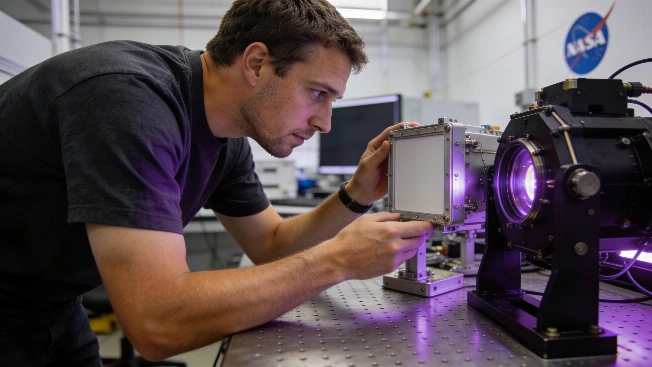
Reanalyzed NASA Hubble spectroscopy and archival FUSE ultraviolet data reveal extreme niobium enrichment around the white dwarf HS 0209+0832, while TESS detected a 4.4-day brightness cycle consistent with-but not proving-the presence of a close-orbiting gas-giant candidate.
Youngest exoplanet yet found emerges from archival telescope data
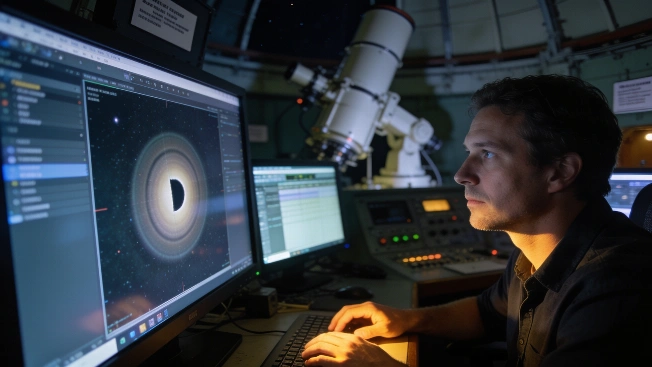
Astronomers have identified Elias 2-24 b, the youngest known exoplanet, using direct imaging techniques and archival data from the Keck Observatory. The planet is less than a million years old and still sits within its birth disk.
Falcon Heavy Launches NASA's Roman Telescope Toward Deep Space Science
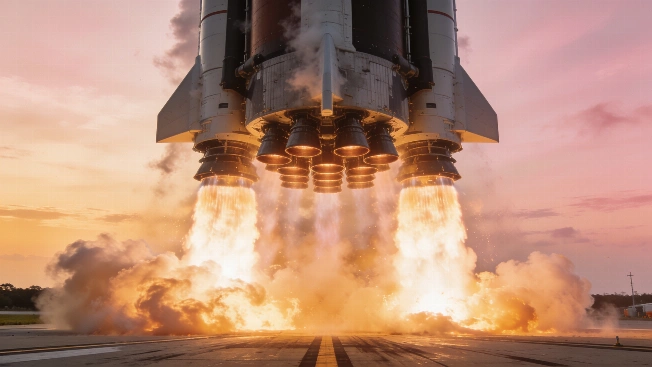
SpaceX's Falcon Heavy rocket has launched NASA's Nancy Grace Roman Space Telescope, sending the observatory on a million-mile journey to its operational orbit beyond Earth
Fermi Explorer Mission Targets 2029 Launch Toward Alpha Centauri
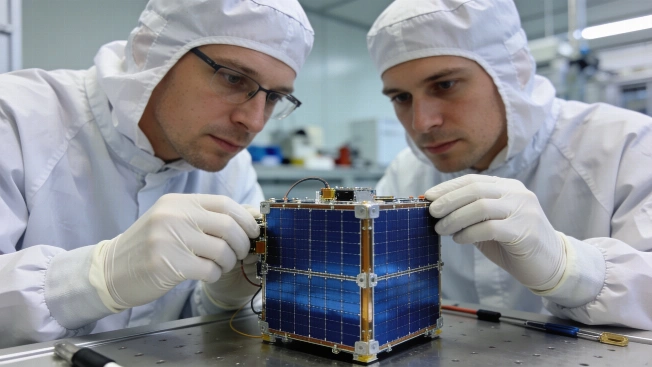
A nonprofit group aims to send a low-cost probe to Alpha Centauri by 2029, marking the first directed interstellar mission. The journey would last 80,000 years, raising new questions about the feasibility and purpose of such long-term exploration.

Roman Space Telescope Launch Draws Attention Amid Policy Reversal
NASA's Nancy Grace Roman Space Telescope launched successfully, marking a milestone for infrared astronomy after years of budget uncertainty and political debate over its funding and future
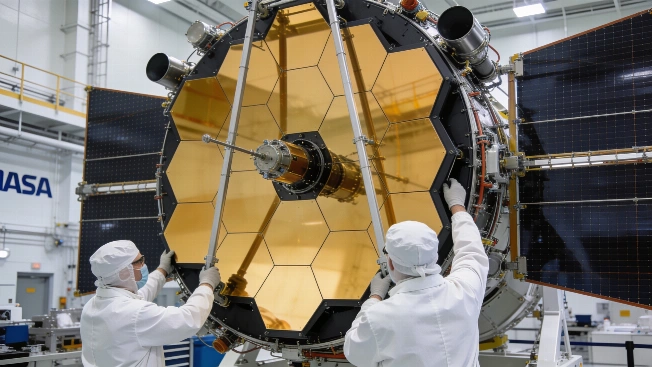
Nancy Grace Roman Space Telescope Prepares for Launch and Legacy
NASA's Nancy Grace Roman Space Telescope, named for the agency's first chief astronomer, is nearing launch. The mission aims to investigate dark matter, dark energy, and exoplanets with advanced infrared instruments
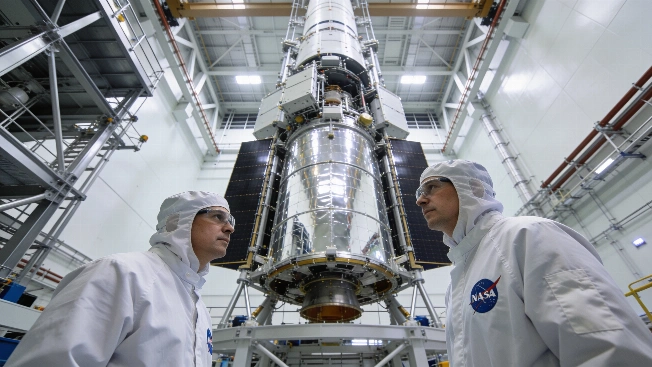
NASA's Roman Space Telescope Set for Launch to Map Distant Cosmos
NASA's Nancy Grace Roman Space Telescope is scheduled to launch from Florida, aiming to investigate exoplanets, dark matter, and distant galaxies with a wide-field infrared observatory. Its first science images are not expected until 2027
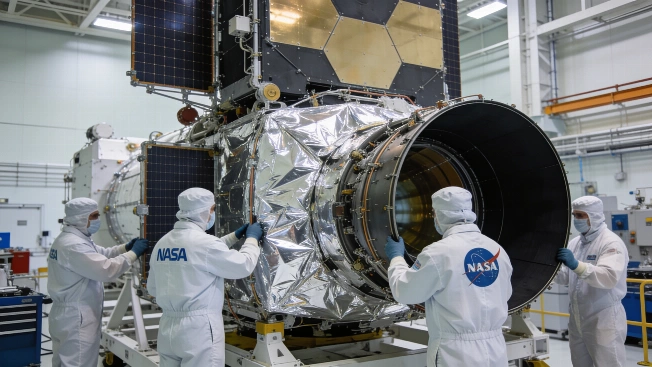
NASA's Roman Space Telescope Nears Launch After Budget Uncertainty
NASA's Nancy Grace Roman Space Telescope is set for launch after nearly two decades of development, overcoming a threatened cancellation and major funding cuts to become the agency's next flagship observatory for dark energy, exoplanets, and cosmic structure
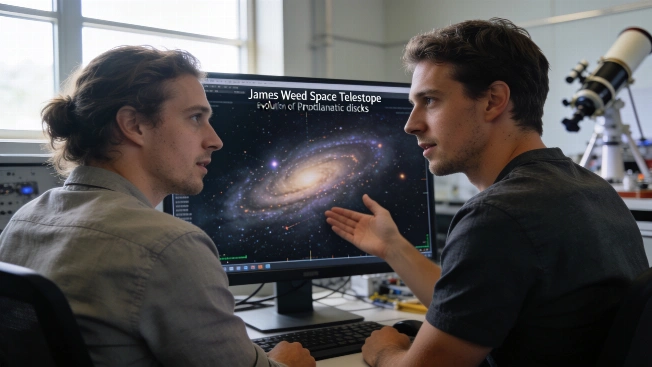
Webb Telescope Reveals Planet Formation Depends on Rapid Disk Evolution
Astronomers using the James Webb Space Telescope have tracked how gas and dust escape from disks around 72 young sun-like stars, showing that planet formation must compete with the rapid dispersal of raw material
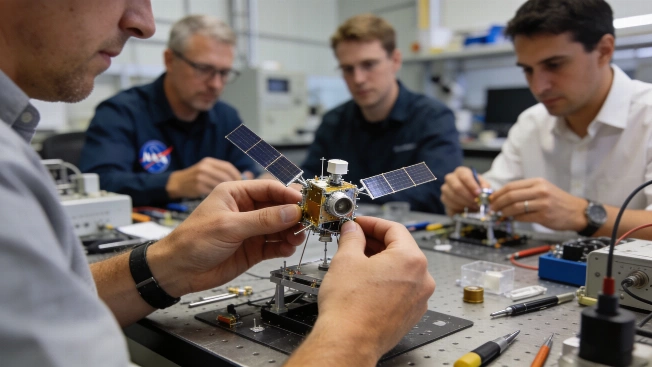
NASA Backs 18 Advanced Concepts for Future Space Missions
NASA has awarded funding to 18 early-stage technology proposals, supporting research into new mission concepts including lunar cave exploration, exoplanet imaging, and distributed probes for Saturn's rings
Discovery of GJ 523b Challenges Theories of Rocky Planet Formation
Astronomers have identified GJ 523b, a rocky exoplanet over 23 times Earth's mass, using TESS and ground-based spectroscopy, raising new questions about how such dense worlds form and retain-or lose-their atmospheres
Trillion-Mile Gas Streamer Tilts Planet-Forming Disk in GW Orionis
Astronomers using ALMA have observed a massive gas streamer disrupting the planet-forming disk around the young triple-star system GW Orionis, offering new insight into the origins of misaligned planetary orbits
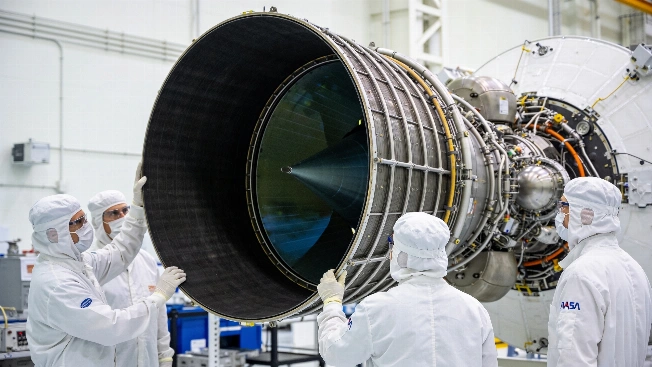
NASA's Roman Space Telescope Targets Dark Energy and Exoplanets
NASA's Nancy Grace Roman Space Telescope, set for launch in 2026, will use infrared instruments to investigate dark energy, dark matter, and exoplanets from a stable orbit 1.5 million kilometers from Earth
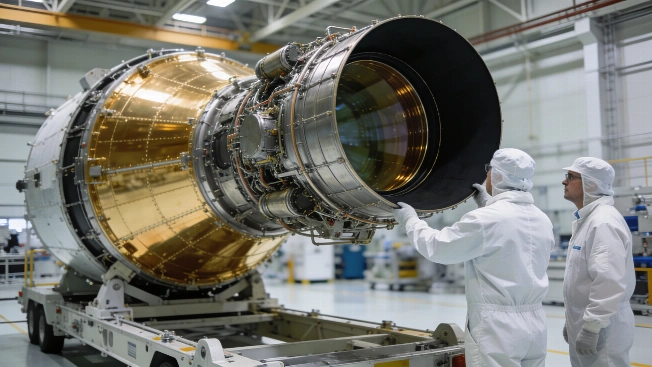
NASA Prepares Roman Space Telescope for Early Launch to L2 Orbit
NASA's Nancy Grace Roman Space Telescope is set for launch on August 30, aiming to deliver wide-field infrared surveys and exoplanet imaging from a stable orbit beyond the Moon
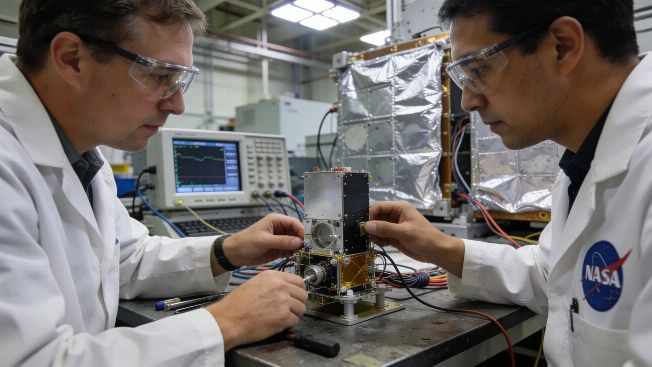
NASA Funds 18 Early-Stage Space Technology Concepts for 2026
NASA has selected 18 new Phase I projects under its Innovative Advanced Concepts program, providing $3.2 million to support early-stage studies of technologies for future space exploration and astrophysics missions
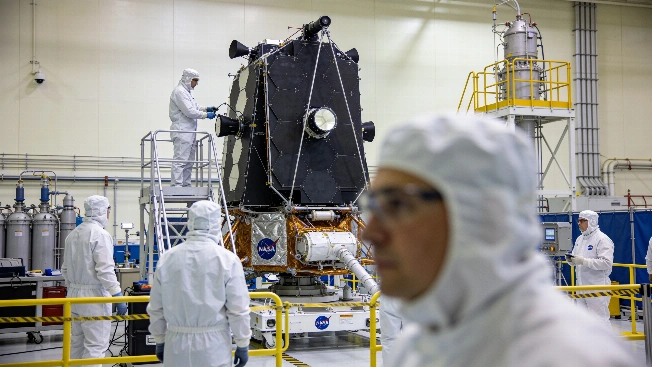
NASA Prepares Roman Space Telescope for 2026 Launch to L2 Orbit
NASA has fueled the Roman Space Telescope, a next-generation infrared observatory scheduled for launch in August 2026, aiming to collect hundreds of terabytes of cosmic data annually and expand studies of dark matter, dark energy, and exoplanets
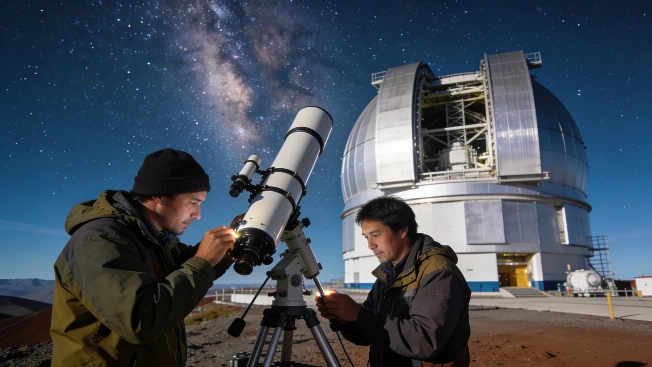
Possible Exomoon Candidate Challenges Definitions in Distant Star System
Astronomers using the Very Large Telescope have detected a moon-like object orbiting a brown dwarf in the CD-35 2722 system, raising questions about how to classify such bodies beyond our solar system
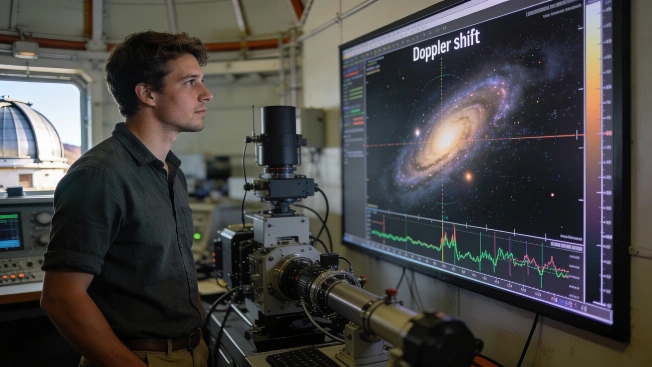
Giant Exosatellite Discovery Redefines Boundaries of Planetary Systems
Astronomers have identified a Jupiter-sized exosatellite orbiting a brown dwarf, itself in orbit around the star CD-35 2722. The finding, made using high-resolution spectroscopy, challenges current definitions of moons and planets.
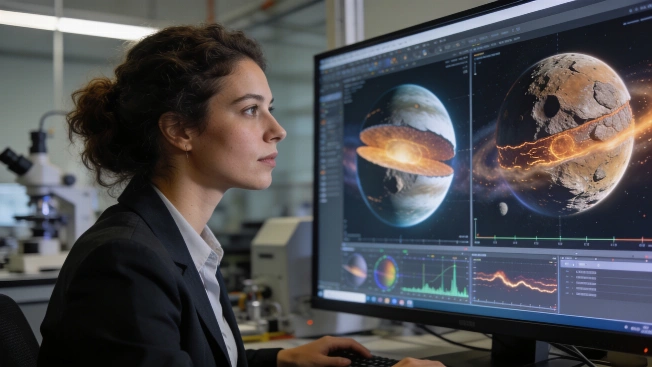
Exoplanets Smaller Than Mars May Lose Atmospheres Too Quickly for Life
A new planetary modeling study suggests rocky exoplanets must be at least 80% the width of Earth to retain atmospheres for billions of years, narrowing the search for potentially habitable worlds around sun-like stars
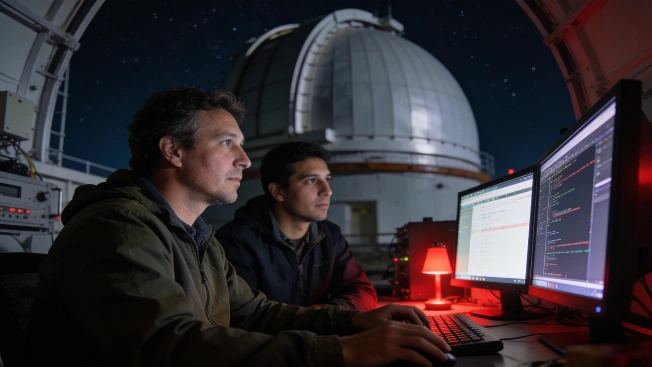
Atmosphere detected on rocky exoplanet in habitable zone
Astronomers have identified helium escaping from LHS 1140 b, a super-Earth orbiting in its star's habitable zone, using infrared spectroscopy. The finding offers the strongest evidence yet that a rocky exoplanet can retain an atmosphere for billions of years
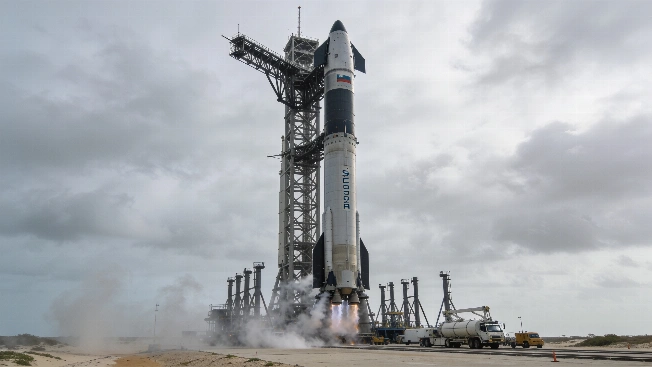
SpaceX Starship Test Aborted as Defense and Science Missions Advance
SpaceX's Starship Flight 13 test launch was halted seconds before liftoff, highlighting ongoing technical challenges as the company expands its role in US military and scientific space operations
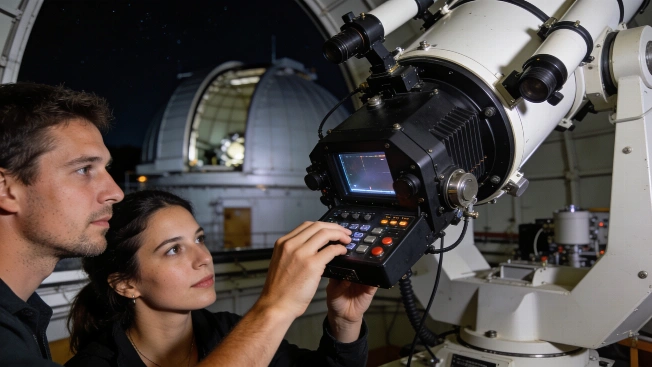
Atmosphere Detected on Rocky Exoplanet in Habitable Zone
Astronomers have directly detected helium in the atmosphere of LHS 1140 b, a rocky exoplanet orbiting within its star's habitable zone, using infrared spectroscopy. The finding raises new questions about atmospheric survival and planetary habitability.
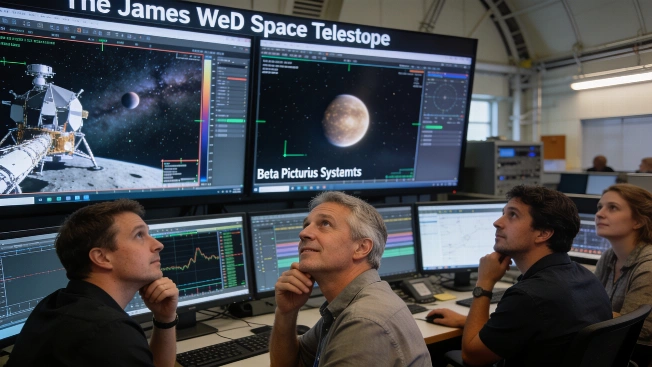
Webb Telescope Detects Hidden Giant Planet in Beta Pictoris System
Astronomers have identified a third giant exoplanet in the Beta Pictoris system using the James Webb Space Telescope's spectroscopic capabilities, revealing a world previously concealed by the system's bright debris disk