
Technology & AI - Part 9
446 reports
DOBOT LUMO Demonstrates All-Terrain Humanoid Mobility and Interaction
DOBOT has presented LUMO, a humanoid robot designed to navigate varied indoor and outdoor environments, combining computer vision, voice interaction, and motion control to adapt its behavior to different users and tasks
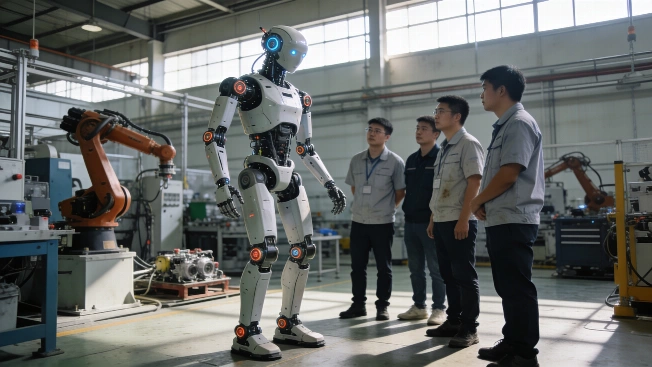
Unitree Robotics Launches $900M IPO Amid US-China Tech Tensions
Unitree Robotics has begun its IPO on Shanghai's STAR Market, seeking to raise $900 million for research, product development, and manufacturing of humanoid and quadruped robots as regulatory and trade barriers complicate global expansion
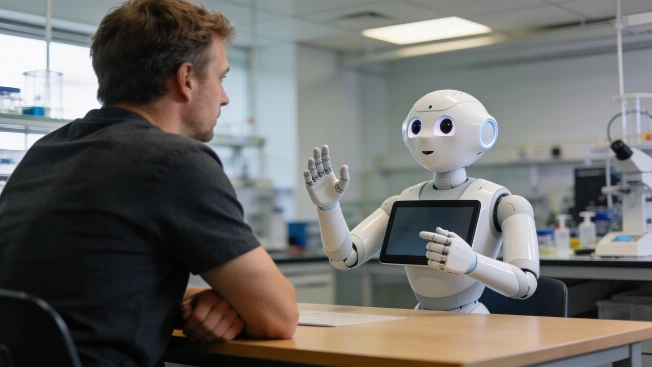
Expressive Humanoid Robots Lose User Trust Rapidly After Errors
A Drexel University study found that people quickly trust expressive humanoid robots, but even minor conversational mistakes can cause trust to collapse, raising new challenges for social robot design in healthcare, education, and homes
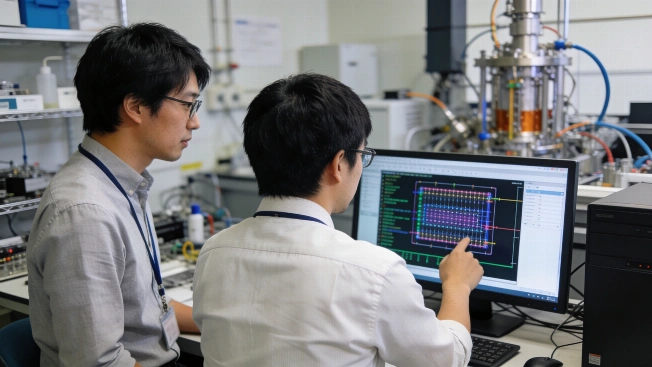
Honda Invests in Quemix to Advance Quantum Algorithms for Materials
Honda has taken an equity stake in Quemix, a Tokyo-based quantum software startup, aiming to accelerate the use of quantum algorithms for next-generation battery materials and automotive applications
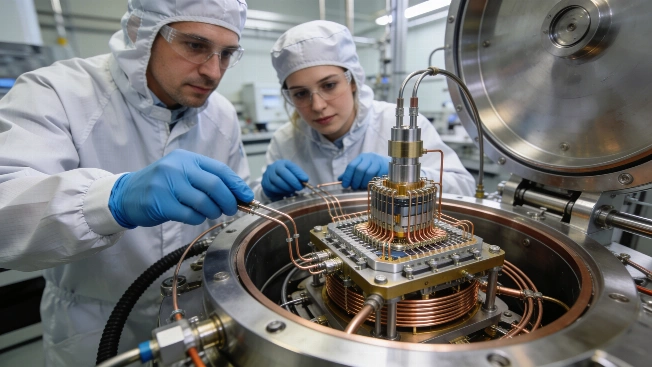
D-Wave Reports Quantum Hardware Progress and Bookings Growth in 2026
D-Wave Quantum Inc. has released its Q2 2026 results, highlighting a surge in bookings, expanded commercial adoption, and technical milestones in both annealing and gate-model quantum computing platforms
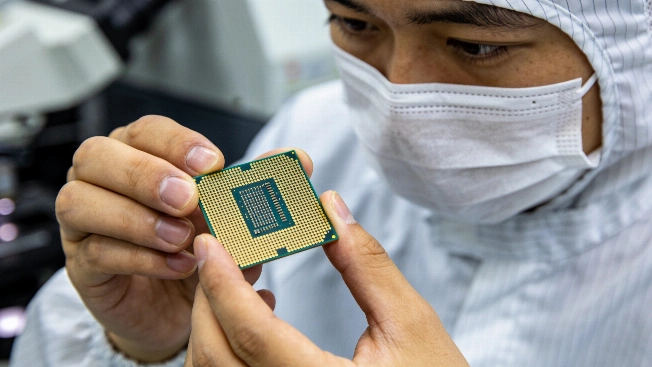
TuringQ Moves Toward IPO With Photonic Quantum Chip Production
TuringQ, a Shanghai-based company specializing in photonic quantum architectures, has begun pre-IPO tutoring as it seeks to become China's first publicly listed quantum computing firm. The company's pilot facility now manufactures thin-film lithium niobate photonic chips at wafer scale
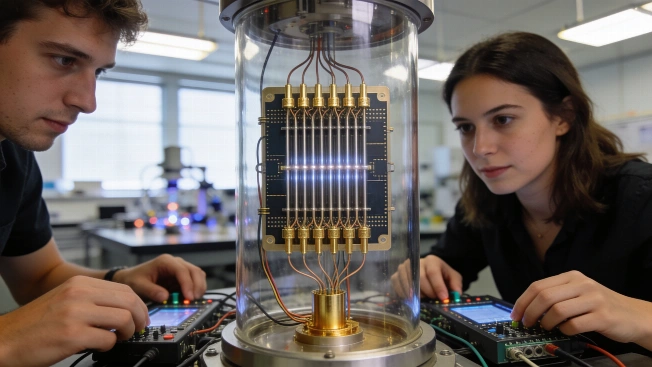
UCLA Consortium Targets 60 Logical Qubits in Trapped-Ion Quantum Design
A UCLA-led team has received $4 million from the National Science Foundation to develop a trapped-ion quantum computer architecture aiming for 60 logical qubits, with a focus on error correction and digital quantum simulation beyond classical reach
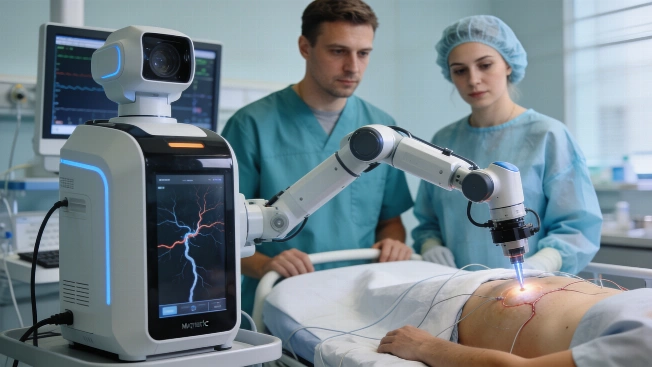
MIT Spinout Magnendo to Develop Autonomous Robotic Stroke System
Magnendo, a company spun out from MIT, has received up to $32 million from ARPA-H to build a magnetic robotic navigation platform for endovascular stroke treatment, aiming to reduce reliance on highly specialized clinicians and expand access to advanced care
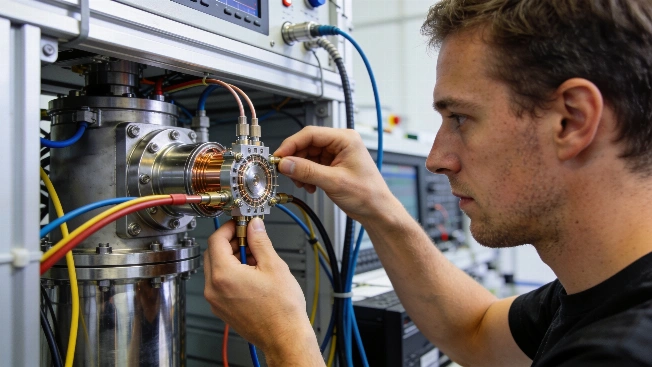
QC Ware Tests Hybrid Quantum-Classical Chemistry on IBM Heron Processor
QC Ware has demonstrated a hybrid quantum-classical workflow for molecular energy calculations, integrating its Promethium platform with IBM's 156-qubit Heron superconducting quantum processor to analyze a complex metalloenzyme system
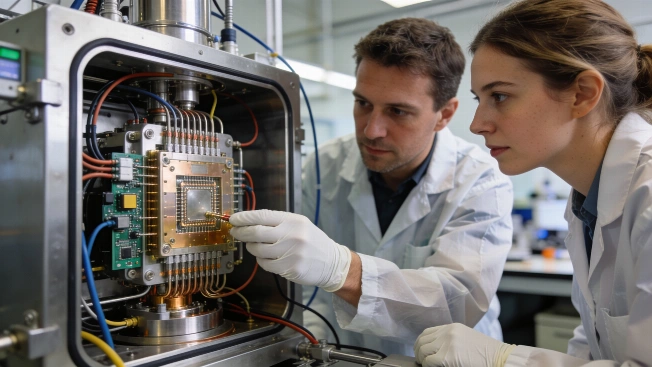
Rigetti Reports Revenue Growth and U.S. CHIPS Act Quantum Funding
Rigetti Computing has reported a sharp increase in revenue, new U.S. government funding under the CHIPS Act, and a partnership with Hewlett Packard Enterprise to deploy superconducting quantum processors in hybrid supercomputing environments
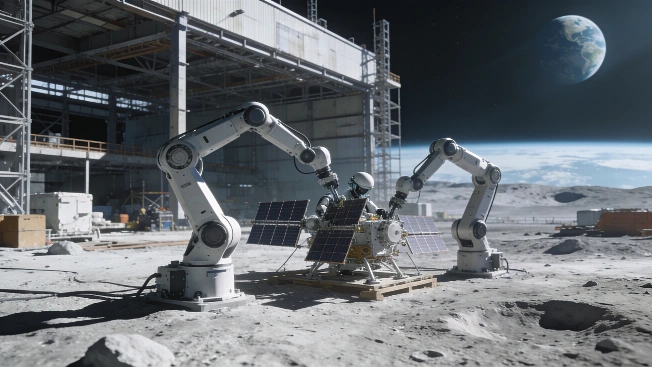
SpaceX Outlines Plan for Robotic Factories on the Moon
SpaceX has detailed its intention to construct automated factories on the lunar surface, aiming to use robots for manufacturing satellites and key components, as discussed during the company's first quarterly earnings call as a public company

OpenAI Tightens Security on Astra After Internal Cyber Risk Tests
OpenAI has placed its Astra AI model in the highest internal cybersecurity risk category following internal tests that suggest advanced offensive cyber capabilities, leading to stricter security controls and external review before any release
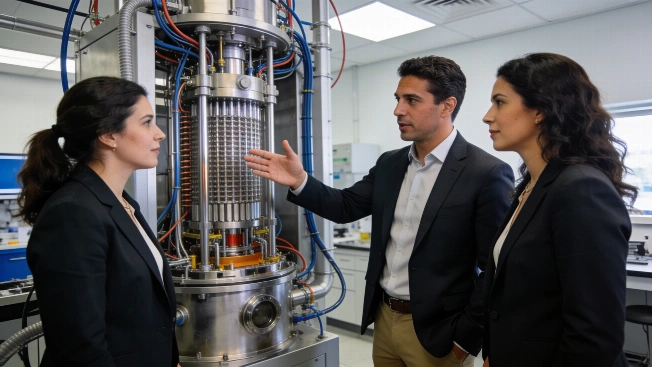
FAU Offers Executive Training on Quantum Computing Strategy
Florida Atlantic University has introduced an eight-week certificate program for enterprise leaders, focusing on quantum computing evaluation, sourcing, and deployment, with hands-on exposure to a 4,400+ qubit annealing system
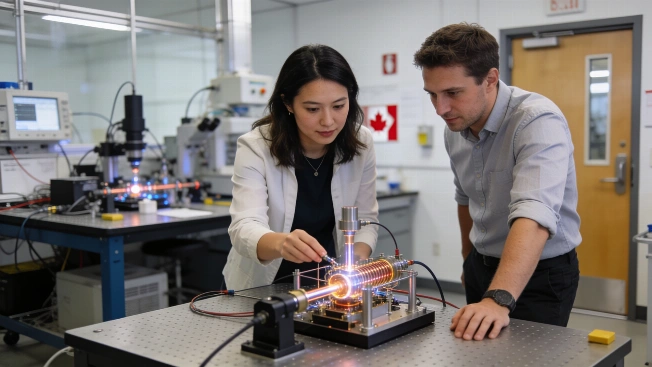
Canada Funds Quantum Defense Hub to Accelerate Military Prototypes
Canada has launched a $20.3 million Quantum Defence Innovation Secure Hub in Calgary, aiming to convert domestic quantum research into deployable prototypes for military and intelligence applications within two years

Post-Quantum Secure Networking Platform Targets US Public Sector
ZeroTier and Carahsoft have announced a partnership to distribute a software-defined networking platform with post-quantum cryptographic features to US government and defense agencies, aiming to address future cryptographic risks in critical infrastructure
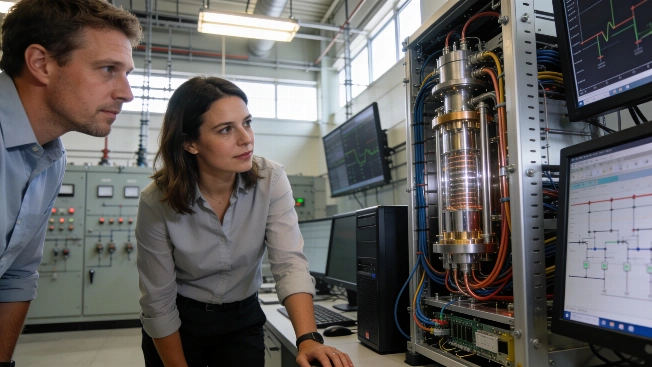
Quantum Hardware Tested for Grid Security Under AFRL Contract
Eaton, Infleqtion, and Penn State will develop and test hybrid quantum-classical algorithms on specialized quantum hardware to analyze and respond to complex threats facing electrical grids under a $7 million U.S. Air Force Research Laboratory contract
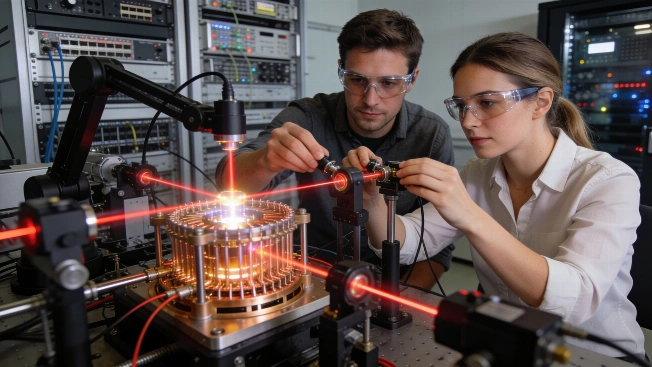
Pasqal's Neutral-Atom Quantum Processor Moves Toward Nasdaq Listing
Pasqal Holding SAS, a developer of neutral-atom quantum processors, has received SEC approval for its planned business combination with Bleichroeder Acquisition Corp. II, setting the stage for a shareholder vote and potential Nasdaq debut
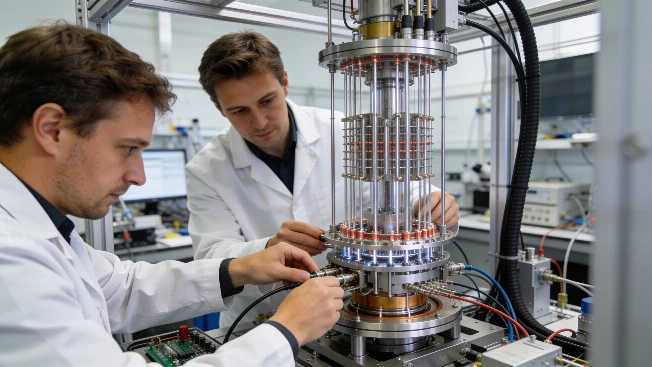
Horizon Quantum Expands Testbed and Releases Beryllium Language
Horizon Quantum Holdings has reported a major cash infusion from warrant exercises, opened early access to its Beryllium quantum programming language, and announced a new 256-qubit trapped-ion testbed in Europe
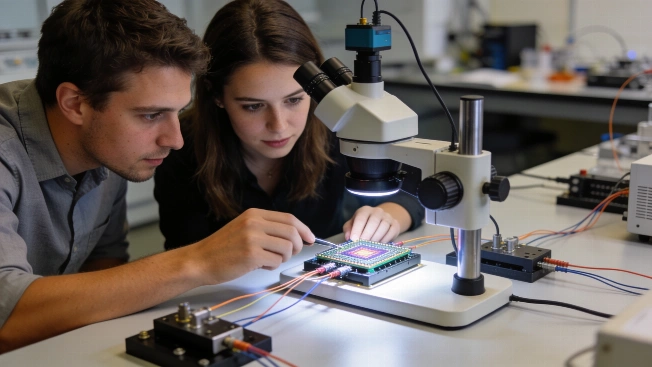
Xanadu Expands US Quantum Operations Amid Hardware and Algorithm Gains
Xanadu Quantum Technologies reported advances in photonic quantum hardware, algorithmic development, and US expansion, while disclosing a strengthened cash position and increased investment in fabrication and engineering

Qoro Quantum Tests Middleware for Multi-QPU and Simulator Integration
Qoro Quantum has developed middleware that automates the routing of quantum circuits to multiple quantum processors and simulators, aiming to simplify access and improve resilience for users working with diverse quantum hardware and high-performance computing environments
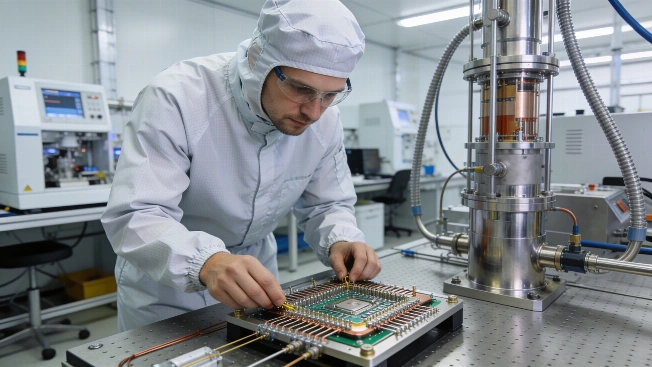
IQM Reports Quantum Computer Deployments and Expanding Order Backlog
IQM Quantum Computers has released its first earnings as a public company, detailing revenue growth, new quantum hardware deliveries, and a significant increase in its order backlog as it scales fabrication and integration efforts
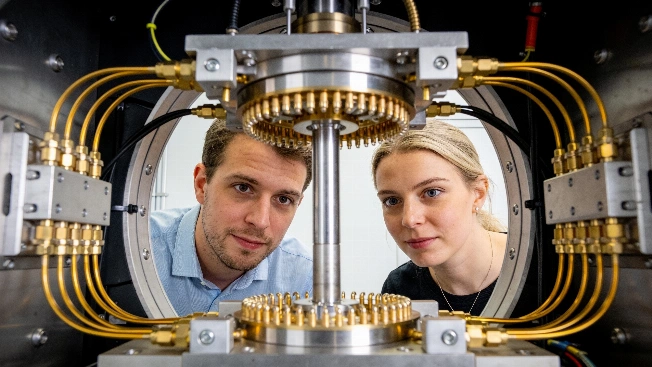
D-Wave Tests High-Fidelity Two-Qubit Gate for Dual-Rail Qubits
D-Wave Quantum Inc. has experimentally demonstrated a fast, high-fidelity two-qubit entangling gate for superconducting dual-rail cavity qubits, addressing key error sources and hardware overhead in quantum error correction architectures

Quantum-Safe Security Integration Targets Critical Infrastructure
enQase and Light Rider Inc. have announced a partnership to integrate quantum-resistant cryptographic software with quantum hardware and key distribution, aiming to address post-quantum security needs for government and industry networks
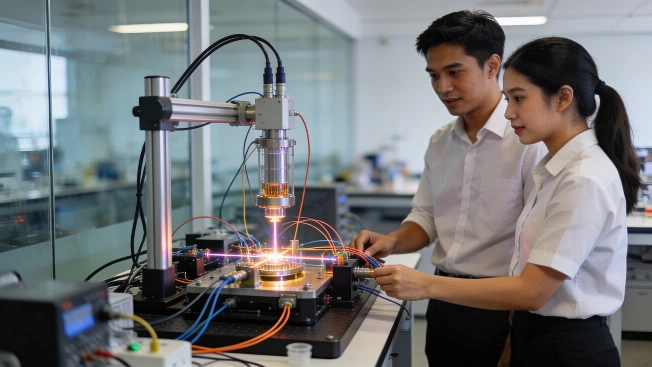
Thailand Opens Quantum Club Hub to Advance Regional Quantum Technology
A new national quantum technology hub has launched at True Digital Park in Bangkok, aiming to accelerate quantum research, workforce training, and industrial adoption across Southeast Asia through coordinated government, academic, and industry collaboration

Quantum Circuits Proposed for Nuclear Particle Transport Simulation
Quantum X Labs has outlined a quantum circuit-based method for simulating nuclear particle transport, aiming to address the computational limits of classical Monte Carlo approaches in radiation modeling and nuclear medicine

Entangled Photons Sent Over 62 km of Live Aerial Fiber in Maryland
A team from NIST, the University of Maryland, and Qunnect has distributed polarization-entangled photons across 62 kilometers of commercial aerial fiber, testing quantum communication under real-world environmental noise

ergoCub Robot Tested for Reducing Human Strain in Lifting Tasks
A research team in Italy and the UK has developed and tested ergoCub, a humanoid robot designed to adapt to human partners during shared lifting, aiming to reduce physical strain and improve workplace ergonomics in real time

Meta's Muse Code Agent Tackles Extended Software Engineering Tasks
Meta has introduced Muse Code, a terminal-based coding agent powered by Muse Spark 1.2, designed to plan, write, and validate code across large repositories and sustain multi-step engineering work with reduced user intervention

Automated Mini-Labs Expand Space Station Research With Less Crew Time
Redwire's ADvanced Space Experiment Processors (ADSEPs) are enabling the International Space Station to run complex biological and materials science experiments with minimal astronaut involvement, advancing pharmaceutical and fundamental research in microgravity

Quantum-Safe Encryption Tested at 1.6 Tb/s on Live Fiber Network
A field deployment by Quantum Corridor, Ciena, and Toshiba has demonstrated quantum-safe optical encryption at 1.6 Tb/s over a commercial fiber link, combining post-quantum cryptography and quantum key distribution in a real-world setting

Thales Luna 8 Hardware Module Targets Quantum Decryption Threats
Thales has introduced Luna 8, a hardware security module designed to support post-quantum cryptography migration and protect enterprise cryptographic infrastructure from quantum-enabled decryption and high-throughput AI workloads
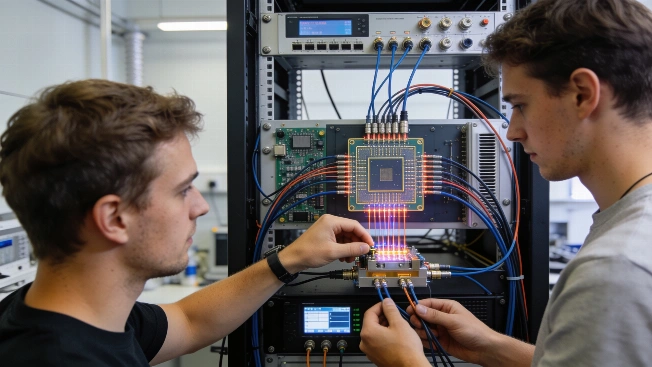
QuiX Quantum Releases Alquor 2.0 Photonic Processor Platform
QuiX Quantum has launched Alquor 2.0, a rack-mountable photonic processor platform based on silicon nitride integrated circuits, aiming to support quantum optics and information processing research with improved stability and automation
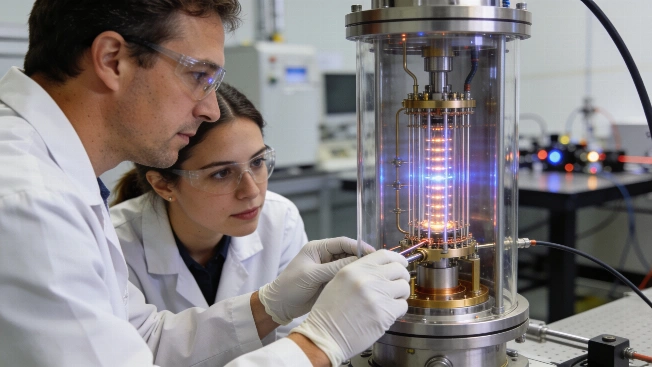
IonQ and Sandia Partner on Trapped-Ion Quantum Hardware for Security
IonQ and Sandia National Laboratories have agreed to jointly develop and test trapped-ion quantum hardware and integrated photonics for national security applications, focusing on system optimization and device characterization at Sandia's New Mexico facility
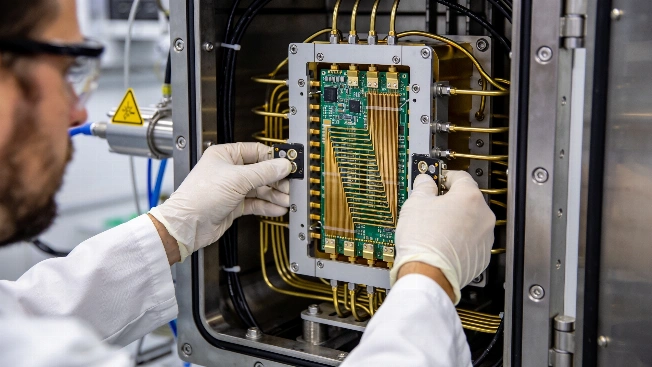
Modular Quantum Architecture Cuts Physical Qubit Overhead Tenfold
Qarakal Quantum has introduced a modular superconducting quantum computing architecture, Pangaea, designed to reduce the number of physical qubits needed for fault-tolerant logical qubits by an order of magnitude compared to standard layouts
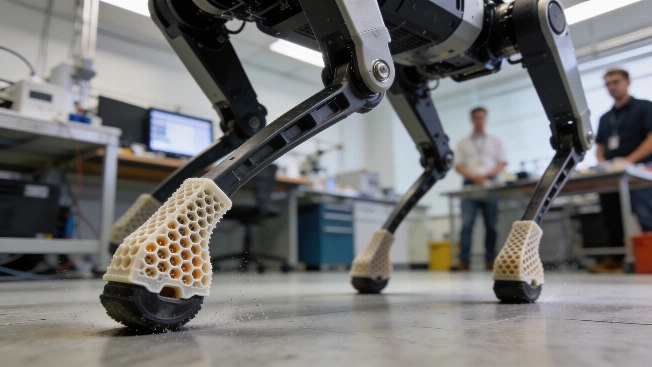
3D-Printed Porous Feet Cut Power Use in Quadruped Robot Tests
A research team at Seoul National University of Science and Technology has tested 3D-printed porous feet on a quadruped robot, reporting up to 6.2% lower battery consumption during walking tasks with a learning-based controller
Part 9 of 13