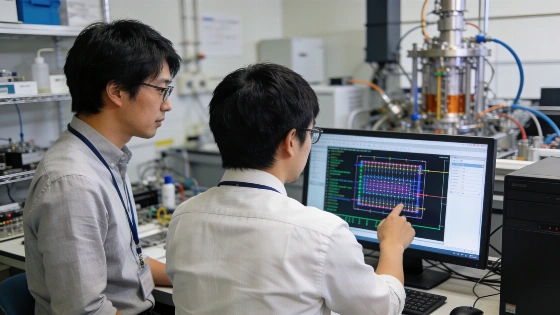
Honda has taken an equity stake in Quemix, a Tokyo-based quantum software startup, aiming to accelerate the use of quantum algorithms for next-generation battery materials and automotive applications
Honda Motor Co., Ltd. has made a direct investment in Quemix Inc., a Japanese quantum software and algorithm developer, as part of its strategy to accelerate the integration of quantum computing into automotive materials research. Quemix, established in 2019 and now a subsidiary of TerraSky Co., Ltd., specializes in quantum algorithms for computational materials science, with a focus on methods that could eventually support fault-tolerant quantum computing.
Quantum Algorithms for Materials Simulation
The collaboration between Honda and Quemix has already produced several technical milestones. In May 2025, the two companies jointly developed a quantum state readout technique, followed in June 2026 by a new quantum algorithm designed to accelerate Density Functional Theory (DFT) calculations. DFT is a widely used computational method in chemistry and materials science, but its classical implementation is limited by scaling and resource requirements. The new algorithm, according to the companies, offers exponential acceleration for certain DFT tasks, though independent benchmarking and peer-reviewed validation remain necessary to confirm the claimed speedup and practical impact.
Focus on Battery Materials and Carbon Goals
Honda's investment is intended to move quantum computing from exploratory research into practical industrial workflows, with an initial emphasis on battery materials for electric vehicles. The company has set a long-term target of achieving carbon neutrality by 2050, and advanced battery chemistries are a critical component of that strategy. Quemix holds patents on its Probabilistic Imaginary-Time Evolution algorithm, which is mathematically proven to accelerate specific quantum chemistry calculations. The company aims for full commercial applicability of its simulation tools by 2030, but current results are primarily at the research and prototype stage.
Technical Evidence and Industry Context
Automotive manufacturers have emerged as early adopters of quantum computing for electrochemistry and battery simulation, seeking to address the limitations of classical modeling in complex materials systems. Honda's equity stake in Quemix signals a shift from joint research toward deeper technical integration, but the transition from laboratory algorithms to robust, scalable industrial tools remains a significant engineering challenge. The practical deployment of quantum algorithms in real-world automotive materials development will depend on advances in quantum hardware, error correction, and software reliability.
Comparisons and Remaining Challenges
Quemix's approach is part of a broader trend in Japan and internationally, where quantum software startups are partnering with hardware providers and industrial users to benchmark hybrid quantum-classical algorithms. For example, Tokyo-based JIJ Inc. recently expanded its quantum software platform and began integrating with Quantinuum's trapped-ion hardware, as described in this related report on quantum software benchmarking. While these collaborations highlight growing interest, the field still faces unresolved questions about algorithmic scalability, hardware error rates, and the cost-benefit balance compared to advanced classical simulation methods.
In quantum computing, the distinction between physical and logical qubits is central to understanding progress toward practical applications. Physical qubits are the actual quantum systems-such as superconducting circuits, trapped ions, or spins-used to encode information. However, these systems are highly sensitive to noise and errors. Logical qubits are constructed by encoding information redundantly across multiple physical qubits using error-correcting codes, allowing for the detection and correction of certain errors. Achieving fault-tolerant quantum computation requires not only high-fidelity physical qubits but also robust error correction and stable logical qubit operation. Most current quantum algorithms for chemistry and materials science are tested on small numbers of physical qubits, and scaling these methods to industrially relevant problems will require substantial advances in both hardware and software engineering.