Magnendo, a company spun out from MIT, has received up to $32 million from ARPA-H to build a magnetic robotic navigation platform for endovascular stroke treatment, aiming to reduce reliance on highly specialized clinicians and expand access to advanced care
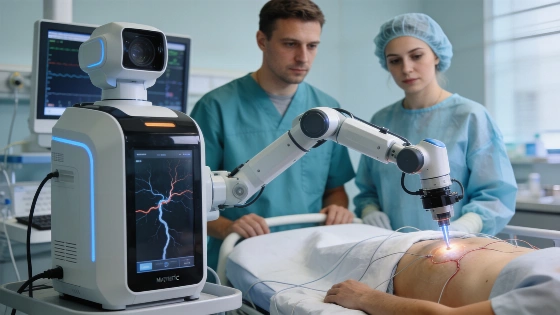
Magnendo, a Massachusetts Institute of Technology spinout, has secured up to $32 million in funding from the Advanced Research Projects Agency for Health (ARPA-H) to develop a robotic system intended to automate key steps in endovascular stroke intervention. The five-year project targets ischemic strokes caused by large vessel occlusions, where rapid restoration of blood flow is critical but currently depends on the availability of highly trained specialists and advanced hospital infrastructure.
The company's approach centers on magnetic robotic navigation, a technique that uses controlled magnetic fields to steer wires and catheters through the body's vascular system. According to Magnendo, preclinical testing has shown that this method can improve navigation speed and procedural consistency, even among physicians with varying levels of experience. However, these results have not yet been independently verified in clinical settings, and the system remains in the development phase.
Technical and Clinical Challenges
Mechanical thrombectomy, the current standard for treating severe ischemic strokes caused by large vessel occlusions, is effective but limited by the complexity of navigating tortuous blood vessels and the need for specialized expertise. Magnendo's proposed platform aims to reduce direct physician input by automating navigation tasks, potentially enabling more hospitals to offer advanced stroke interventions. The ARPA-H award will support the creation of a next-generation system that integrates magnetic robotics with medical imaging and artificial intelligence (AI) to interpret vascular anatomy and guide instruments autonomously.
The project is part of ARPA-H's AIR initiative, which seeks to develop robotic systems capable of performing endovascular procedures with progressively less human control. Program manager Ileana Hancu has highlighted the unmet need: hundreds of thousands of patients experience large vessel occlusions annually, but many cannot access thrombectomy due to geographic and resource constraints. The Magnendo system is intended to address this gap, but its effectiveness and safety will require rigorous validation before clinical deployment.
Integrating Robotics, Imaging, and AI
Magnendo plans to collaborate with academic, clinical, and industry partners to combine its magnetic navigation technology with advanced imaging and AI-based interpretation. The goal is to create a unified platform that can autonomously interpret complex vascular structures and execute navigation tasks that currently require expert human judgment. The company argues that achieving meaningful autonomy in endovascular intervention will require more than simply automating existing manual procedures; it will demand new approaches to perception, planning, and control within the vascular environment.
While the company has reported improvements in preclinical navigation speed and consistency, no peer-reviewed clinical trial data have been published to date. The system's ability to handle anatomical variability, unexpected complications, and real-world workflow integration remains untested. Regulatory approval and clinical adoption will depend on demonstrating not only technical performance but also safety, reliability, and clear protocols for human oversight and intervention.
Access, Oversight, and Safety
One of the central promises of the Magnendo project is to reduce dependence on a small pool of highly specialized physicians, potentially expanding access to advanced stroke care in hospitals that currently lack such expertise. However, the transition from automated navigation to true autonomy raises significant questions about safety, liability, and the role of human supervision. The system will need to address how clinicians can monitor, intervene, or override robotic actions in the event of unexpected anatomical challenges or device failures.
For context, the integration of robotics into physically demanding or high-stakes environments has been explored in other domains, such as workplace ergonomics. For example, research teams have tested humanoid robots like ergoCub to assist with shared lifting tasks, aiming to reduce human strain and improve safety, as described in this related study on collaborative robotics in lifting. These efforts highlight both the potential and the complexity of deploying robots in environments where human safety and judgment remain paramount.
According to Magnendo, the ARPA-H funding will also support foundational work to establish technical and clinical protocols for autonomous endovascular intervention. The company's long-term objective is to enable advanced stroke treatment in a wider range of hospitals, but this will depend on resolving open questions about system reliability, regulatory compliance, and the boundaries of human oversight.
In robotic surgery and intervention, the distinction between automation and autonomy is critical. Automated systems can perform predefined tasks or follow programmed routines, but true autonomy requires the ability to interpret complex, variable environments and make independent decisions within safety constraints. Most current medical robots operate under direct or supervisory human control, with clinicians responsible for critical decisions and able to intervene at any point. As research efforts like Magnendo's move toward greater autonomy, the design of robust oversight mechanisms and clear protocols for human intervention will be essential to ensure patient safety and maintain clinical trust.