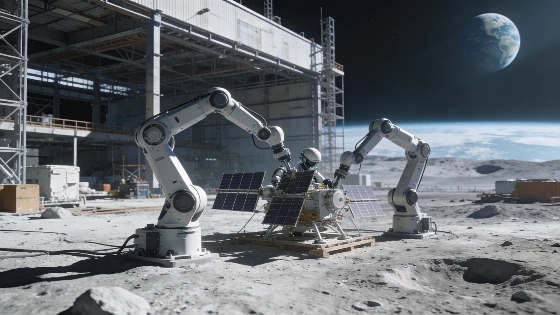
SpaceX has detailed its intention to construct automated factories on the lunar surface, aiming to use robots for manufacturing satellites and key components, as discussed during the company's first quarterly earnings call as a public company
SpaceX has presented new details of its ambition to establish manufacturing facilities on the Moon, with the goal of using robotic systems to assemble satellites and infrastructure directly on the lunar surface. The plan, discussed during SpaceX's inaugural quarterly earnings call as a publicly traded company, marks a significant expansion of the company's off-Earth industrial vision.
Lunar Manufacturing Ambitions
The proposed lunar factories are intended to produce Starmind AI satellites, which SpaceX aims to deploy in large numbers in Earth orbit and, eventually, beyond. According to the company, robots would handle much of the assembly and heavy lifting required for lunar construction, reducing the need for direct human involvement in the early phases. This approach is consistent with earlier statements from SpaceX leadership, who have previously described the use of advanced robotics as essential for scaling up manufacturing in space environments where human labor is limited by cost, risk, and logistics.
SpaceX's plan includes the use of electromagnetic mass drivers-essentially, railgun-like launchers-to send completed satellites from the Moon into space. This would allow for the deployment of satellites without relying on conventional chemical rockets, leveraging the Moon's lower gravity and the potential for in-situ resource utilization. The company has not yet provided a detailed technical roadmap or timeline for these developments, and the feasibility of large-scale lunar manufacturing remains unproven.
Robotic Workforce and Starship Integration
While specifics about the robotic systems have not been disclosed, SpaceX is expected to draw on technology developed by Tesla, another company led by Elon Musk. Tesla's Optimus humanoid robot, which has been discussed as a candidate for future Mars missions, may play a role in lunar operations as well. The robots would be delivered to the Moon using SpaceX's Starship launch system, a fully reusable heavy-lift vehicle currently undergoing flight testing. Starship is designed to transport large payloads and infrastructure to the lunar surface, and its development is central to SpaceX's broader ambitions for off-Earth industry.
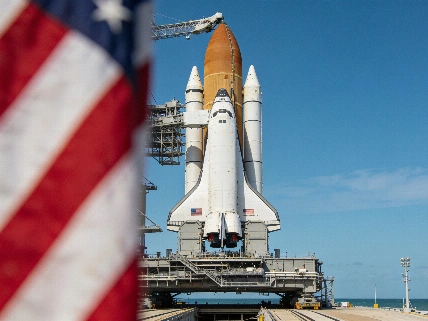
During the earnings call, SpaceX's Chief Financial Officer highlighted ongoing efforts to expand Starship's launch infrastructure, including the construction of new launch pads and increased production of Raptor engines. The company aims to support thousands of Starship launches per year in the future, though this target remains aspirational and will depend on technical progress and regulatory approval.
Financial Context and Market Position
The announcement comes as SpaceX transitions into its new role as a public company. The company's initial public offering in June 2026 raised $86 billion, valuing SpaceX at $1.77 trillion-placing it among the most valuable companies in the United States. In the second quarter of 2026, SpaceX reported revenues of $7.8 billion, a 92% increase over the same period in 2025. Despite this growth, the company posted a net loss of $541 million for the quarter, a reduction from the $1.0 billion loss reported a year earlier.
SpaceX's lunar manufacturing proposal arrives amid broader discussions about the regulatory and environmental challenges facing commercial spaceflight. For example, recent proposals to ease environmental rules for rocket launches have raised questions about the balance between rapid mission deployment and oversight, as discussed in a recent Science Report analysis of FAA regulatory changes.
Technical and Scientific Uncertainties
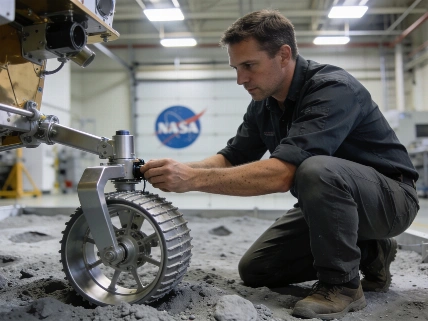
While the concept of lunar factories is technologically ambitious, significant uncertainties remain. The challenges of operating robotic systems in the lunar environment-including extreme temperature swings, abrasive dust, and radiation-are substantial. The development of electromagnetic mass drivers for satellite launch from the Moon is also at an early conceptual stage, with no demonstrated large-scale prototypes to date. Additionally, the economic case for manufacturing satellites on the Moon, rather than on Earth, will depend on advances in in-situ resource utilization and the ability to produce key components such as solar panels and radiators from lunar materials.
SpaceX has not yet published peer-reviewed technical studies or detailed engineering plans for its lunar manufacturing initiative. As with many ambitious space projects, the transition from concept to operational reality will require overcoming both technical and financial hurdles, as well as securing international cooperation and regulatory approval for lunar industrial activity.
Understanding the challenges of lunar manufacturing requires familiarity with the unique conditions on the Moon. The lunar surface is exposed to vacuum, wide temperature fluctuations, and high levels of solar and cosmic radiation. Dust particles are sharp and electrostatically charged, posing risks to machinery and electronics. Robotic systems must be designed for autonomy and resilience, as real-time remote control is limited by communication delays. The development of electromagnetic mass drivers would involve accelerating payloads to high velocities using magnetic fields, a process that has been demonstrated in laboratory settings but not yet at the scale required for lunar launches. These factors collectively define the technical frontier for any attempt to build and operate factories beyond Earth.