TuringQ, a Shanghai-based company specializing in photonic quantum architectures, has begun pre-IPO tutoring as it seeks to become China's first publicly listed quantum computing firm. The company's pilot facility now manufactures thin-film lithium niobate photonic chips at wafer scale
TuringQ, a Shanghai-based developer of photonic quantum computing hardware, has formally started the pre-IPO tutoring process with the Shanghai branch of the China Securities Regulatory Commission. This step positions TuringQ as a leading candidate to become China's first publicly traded quantum computing company, reflecting a broader shift in the country's quantum sector from early-stage research funding to commercial-scale manufacturing and deployment.
Photonic Quantum Architecture
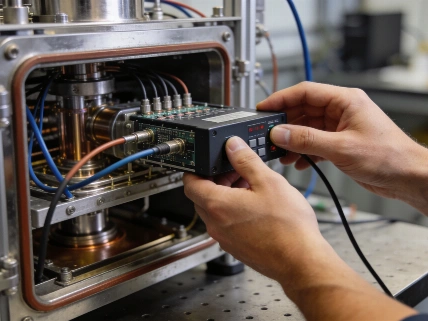
Unlike most quantum computing efforts that focus on superconducting or trapped-ion qubits, TuringQ's approach centers on photonic quantum architectures. Photonic systems encode quantum information in individual photons, which can be manipulated and measured using integrated optical circuits. The company's devices are based on thin-film lithium niobate, a material that enables high-speed, low-loss optical modulation and is compatible with established optical communications infrastructure. Photonic quantum systems offer potential advantages such as room-temperature operation and direct integration with fiber networks, but they also face significant challenges in photon loss, source quality, and scalable entanglement generation.
Pilot Manufacturing and Technical Milestones
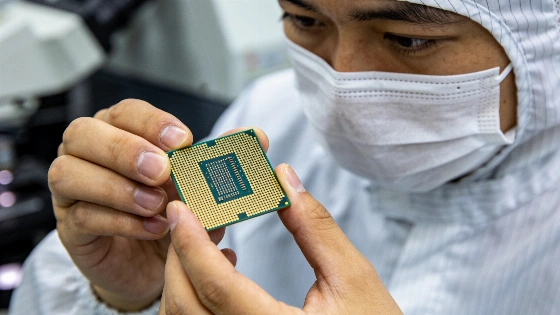
In June 2025, TuringQ's pilot production facility in Wuxi, Jiangsu Province, began manufacturing thin-film lithium niobate photonic chips at wafer scale. According to the company, this facility is capable of integrating thousands of optical components on a single chip, a step intended to bridge the gap between laboratory prototypes and industrial-scale quantum hardware. The move to wafer-scale fabrication is significant for photonic quantum computing, where device yield, reproducibility, and integration density remain major engineering hurdles. The company's reported progress follows a trend of increased investment in quantum infrastructure across Asia, as seen in initiatives such as the launch of a national quantum technology hub in Bangkok, which aims to accelerate regional research and industrial adoption through coordinated collaboration between government, academia, and industry. (regional quantum technology hub in Bangkok).
Financial Scale and Policy Context
TuringQ's financial activity has accelerated, with the company raising nearly 1 billion yuan (approximately $148 million USD) in 2026. Its Series C funding round in April 2026 reportedly pushed the company's valuation above 7 billion yuan ($1.04 billion USD). The capital is earmarked for advancing practical photonic quantum computers, developing a broader quantum algorithm ecosystem, and expanding quantum-enabled computing infrastructure. The company's IPO ambitions are supported by recent policy changes: in April 2026, the Shanghai Stock Exchange designated quantum technology as a strategic emerging industry under its STAR Market listing rules, providing a clearer regulatory pathway for quantum startups seeking public investment.
Commercialization and Industry Competition
TuringQ is not alone in pursuing a public listing. Other Chinese quantum technology firms, including Origin Quantum, Ciqtek, and QBoson, have also advanced through listing preparation stages in the past year. While the symbolic value of becoming the "first quantum stock" is high, industry analysts caution that early public listings do not guarantee technological maturity or commercial viability. Near-term revenue for quantum hardware companies is still expected to come primarily from specialized device sales and cloud-based quantum services, rather than from large-scale enterprise adoption. The key test for industrial viability will be whether enterprise customers are willing to pay for quantum applications at scale, a challenge that remains unresolved for all current quantum computing platforms.
Photonic quantum computing relies on the ability to generate, manipulate, and detect single photons with high fidelity and low loss. Unlike superconducting or trapped-ion qubits, photonic qubits can operate at room temperature and are naturally compatible with optical fiber networks. However, scaling up photonic quantum processors requires overcoming significant challenges in photon source quality, loss management, and circuit integration. Device yield and reproducibility at wafer scale are critical for moving from laboratory demonstrations to practical quantum hardware. As the field advances, the distinction between physical qubits-individual controllable quantum systems-and logical qubits-error-corrected units built from many physical qubits-remains central to evaluating progress toward useful, fault-tolerant quantum computers.