IQM Quantum Computers has released its first earnings as a public company, detailing revenue growth, new quantum hardware deliveries, and a significant increase in its order backlog as it scales fabrication and integration efforts
IQM Quantum Computers has published its first financial results since listing on Nasdaq and Nasdaq Helsinki, providing a detailed look at the company's progress in quantum hardware deployment, fabrication capacity, and commercial momentum. The report covers the first half of 2026, a period marked by increased revenue, expanded technical operations, and a growing order pipeline for quantum computing systems.
Hardware Deliveries and Technical Expansion
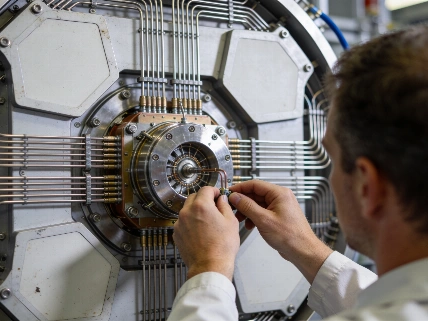
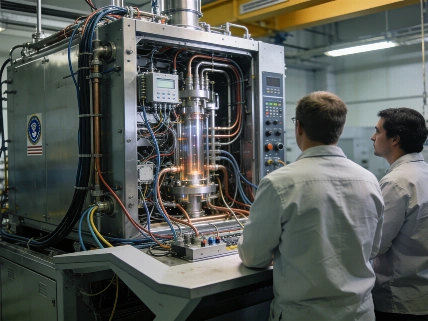
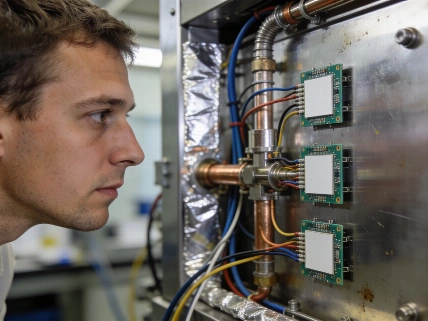
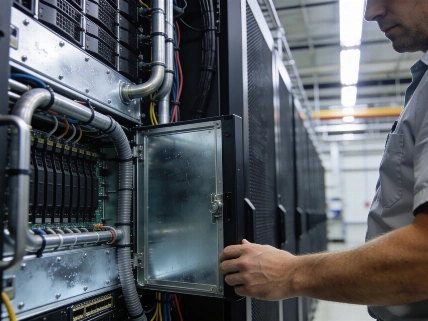
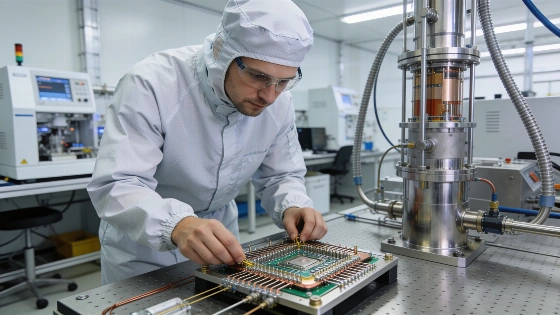
IQM's core business centers on the design, fabrication, and delivery of full-stack quantum computers, primarily based on superconducting qubit architectures. As of June 2026, the company had sold 26 quantum computing systems and completed 17 deliveries worldwide. Notably, IQM finalized its first U.S. system delivery to Oak Ridge National Laboratory, marking a step toward international deployment of European-built quantum hardware. The company is investing over €40 million to double the cleanroom capacity at its Espoo, Finland fabrication facility, aiming to support annual production of up to 30 quantum computers. This expansion is intended to address both current backlog and anticipated demand for larger, more complex systems.
Financial Performance and Order Backlog
For the first half of 2026, IQM reported revenue of €8.87 million, a 47% increase compared to the same period in 2025. Gross profit rose to €3.60 million, while operating expenses nearly doubled year-on-year, reflecting increased research and development activity and transaction costs associated with the company's dual listing and business combination. The operating loss for H1 2026 reached €60.54 million, with a net loss of €74.90 million, influenced by non-cash finance costs and one-time charges. At the end of June, IQM's cash and short-term investments stood at €118.88 million, but following the completion of its business combination and PIPE financing in early July, the pro-forma cash balance increased to €309.4 million, providing a projected funding runway into 2028.
IQM's order backlog accelerated sharply, reaching €69.1 million by the end of June. In July, the company secured a €33 million contract to integrate a quantum computer into the LUMI AI Factory at CSC, pushing the total backlog above €102 million by early August. This backlog reflects both standardized system deliveries and milestone-based custom projects, with scheduled customer acceptance of larger, higher-qubit-count systems expected to drive future revenue.
Error Correction and System Integration
On the technical front, IQM introduced a new family of quantum error correction codes, termed "barbell codes," designed for its proprietary Constellation qubit topology. These quantum Low-Density Parity-Check (qLDPC) codes are intended to improve error resilience in multi-qubit superconducting processors, though the company has not yet reported logical error rates or full fault-tolerant operation. IQM also announced partnerships with NVIDIA for AI-driven qubit calibration and with HPE to integrate its quantum systems with high-performance computing infrastructure, reflecting a broader industry trend toward hybrid quantum-classical workflows. The acquisition of selected assets from Quantistry GmbH is expected to enhance IQM's capabilities in cloud-based quantum chemistry and materials simulation, an area of active competition among hardware and software providers.
Guidance and Industry Context
IQM has issued formal guidance for full-year 2026, targeting revenue between €42 million and €47 million and order intake of €65 million to €75 million. These projections are based on scheduled deliveries, including the company's first 150-qubit system, and ongoing customer projects. While IQM's reported figures reflect growing commercial interest in quantum hardware, the company's operating losses and high R&D expenditure highlight the continued engineering and financial challenges of scaling quantum processors to useful sizes. The company's approach-combining in-house fabrication, error correction research, and integration with classical supercomputing-mirrors strategies seen across the sector, as quantum hardware developers seek to demonstrate practical utility and differentiate their platforms.
IQM's progress comes amid a broader wave of quantum hardware announcements and integrations. For example, recent developments by other quantum computing firms, such as the expansion of quantum software platforms and benchmarking on new hardware, have been covered in Science Report's analysis of hybrid quantum-classical algorithm benchmarking efforts. The competitive landscape remains dynamic, with technical milestones, system integration, and commercial contracts all serving as key indicators of progress toward scalable, error-corrected quantum computing.
Quantum error correction is a central challenge for all quantum computing platforms. Physical qubits-such as the superconducting circuits used by IQM-are highly sensitive to noise, decoherence, and control errors, which limit the depth and reliability of quantum circuits. Error correction codes, including surface codes and emerging qLDPC codes, encode logical qubits across many physical qubits to detect and correct errors. Achieving fault-tolerant operation requires not only high-fidelity gates and measurements but also real-time decoding and low enough physical error rates that logical errors decrease as code size increases. Demonstrating practical error correction at scale remains a major engineering hurdle, and progress in this area will determine when quantum computers can move beyond laboratory demonstrations to solve classically intractable problems.