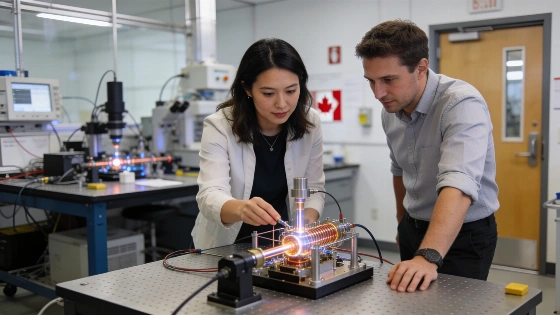
Canada has launched a $20.3 million Quantum Defence Innovation Secure Hub in Calgary, aiming to convert domestic quantum research into deployable prototypes for military and intelligence applications within two years
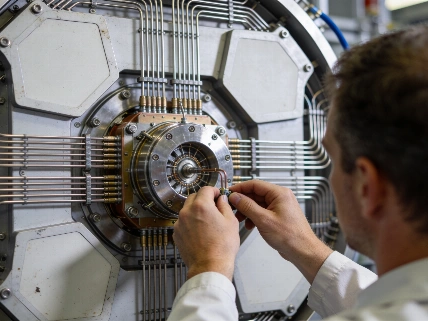
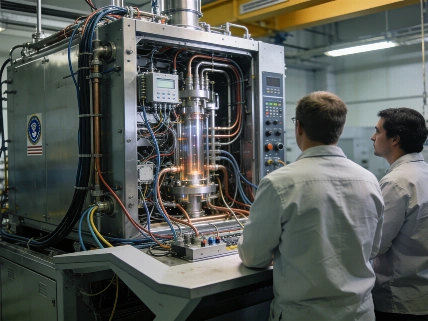
Canada's Department of National Defence has established its first Quantum Defence Innovation Secure Hub (DISH) in Calgary, Alberta, with the stated goal of translating quantum research into operational prototypes for the Canadian Armed Forces and Communications Security Establishment. The initiative, led by the University of Calgary's Quantum City and supported by a 13-member consortium, will receive $20.3 million CAD over two years. The hub is designed to provide a secure, classified-ready environment for collaborative development between academic researchers and major defense contractors.
Consortium and Technical Streams
The Calgary DISH brings together Prairie-region universities-including the University of Calgary, University of Alberta, University of Lethbridge, and University of Saskatchewan, with support from the Sylvia Fedoruk Canadian Centre for Nuclear Innovation and the quanTA center-alongside defense and enterprise partners such as Lockheed Martin Canada, General Dynamics Mission Systems-Canada, CAE, Dell Canada, and Calian. The program is structured around four technical work streams: quantum sensing and positioning, quantum-secure communications, quantum algorithms for decision support, and hardware assurance for quantum devices.
Prototype Targets and Measurement Focus
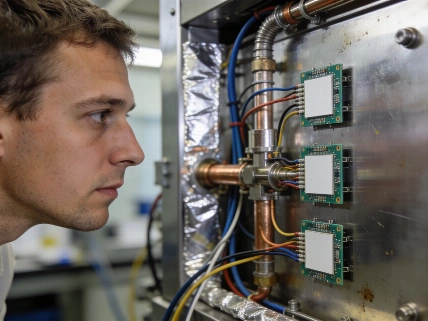
Within a two-year window, the hub aims to deliver validated prototypes in several areas. The quantum sensing and positioning stream targets satellite-independent Positioning, Navigation, and Timing (PNT) hardware capable of operating in environments where Global Navigation Satellite Systems (GNSS) are unavailable or compromised. This includes the development of electronic counter-countermeasures to detect and neutralize GPS spoofing. The quantum communications stream focuses on entanglement-based key distribution and optical clock synchronization for tactical networks, while the algorithms stream seeks to implement quantum-hybrid machine learning and optimization for logistics. Hardware assurance efforts are directed at verifying the physical integrity and supply chain provenance of quantum devices before military deployment.
Procurement Barriers and National Strategy
The DISH operates under the Department of National Defence's BOREALIS framework, which was established to address traditional procurement barriers that slow the adoption of emerging technologies. By embedding defense primes directly into academic research centers, the program aims to shorten acquisition cycles and secure domestic supply chains for high-assurance quantum systems. The Calgary hub joins other BOREALIS initiatives, such as the Maritime DISH and Uncrewed Systems DISH, as part of a broader effort to formalize sovereign capability priorities under Canada's Defence Industrial Strategy.
Comparison with International Initiatives
Canada's approach reflects a growing trend among national governments to integrate quantum research with defense and security objectives. Similar efforts are underway in other regions, including Southeast Asia, where a new national quantum technology hub has launched at True Digital Park in Bangkok to accelerate research and industrial adoption through coordinated government, academic, and industry collaboration. For context on international quantum hub strategies, see this overview of Thailand's recent initiative: Thailand's national quantum technology hub launch.
Quantum sensing and secure communications are among the most actively pursued applications in defense-oriented quantum research. Quantum sensors exploit quantum coherence and entanglement to achieve measurement sensitivities beyond classical limits, enabling navigation and detection in environments where conventional signals are degraded or denied. Quantum key distribution leverages the fundamental properties of quantum states to detect eavesdropping and secure communications, but practical deployment requires robust hardware, error correction, and integration with existing infrastructure. The transition from laboratory demonstration to field-ready systems remains a significant engineering challenge, with device reliability, environmental robustness, and supply chain assurance as ongoing concerns.