enQase and Light Rider Inc. have announced a partnership to integrate quantum-resistant cryptographic software with quantum hardware and key distribution, aiming to address post-quantum security needs for government and industry networks
On August 4, 2026, enQase and Light Rider Inc. announced a technology partnership intended to address the growing demand for quantum-resistant security in government, defense, critical infrastructure, and enterprise networks. The collaboration brings together enQase's cryptographic software platform, which includes a FIPS 140-3 validated module (Certificate #5346) and a crypto-agile management layer, with Light Rider's quantum hardware and optical networking technologies. The companies aim to provide a unified architecture that combines post-quantum cryptography (PQC) with physical quantum key distribution and entropy generation, reflecting the need for layered defenses as quantum computing advances threaten current cryptographic standards.
Integrated Security Architecture
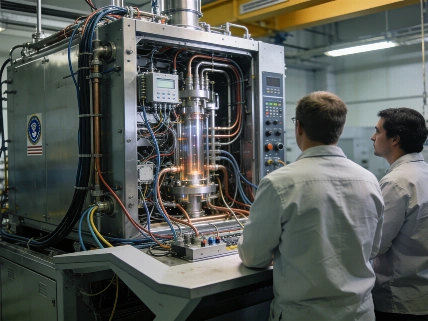
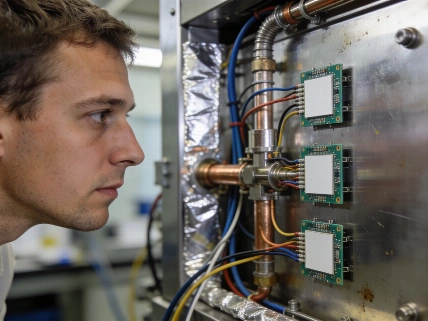
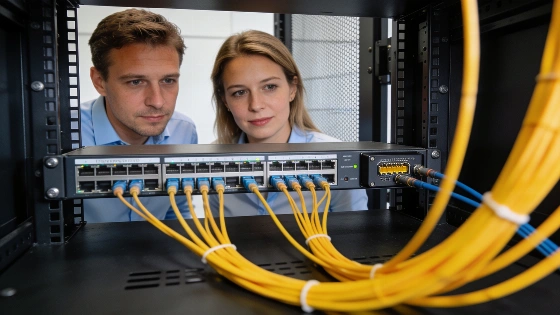
The partnership is structured to bridge software, hardware, entropy generation, key management, and optical transmission layers. Light Rider's portfolio includes the Quantum Light hardware platform, a physical quantum random number generator (Entropy Management System), digital quantum key distribution (dQKD), and secure optical communications infrastructure. By integrating these components with enQase's software, the companies propose an end-to-end system designed to mitigate "Harvest Now, Decrypt Later" risks, where encrypted data intercepted today could be decrypted in the future by quantum computers. The initial phase focuses on developing joint reference architectures, technical interoperability testing, and proofs-of-concept for regulated sectors.
Technical Scope and Measurable Features
enQase's cryptographic module is certified under FIPS 140-3 (Certificate #5346), a U.S. government standard for cryptographic security, and is designed to support algorithm agility for PQC migration. Light Rider's hardware supports quantum random number generation and digital quantum key distribution, both of which are critical for generating high-entropy keys and distributing them securely over optical networks. The companies have not disclosed specific key rates, transmission distances, or error rates for the integrated system, and independent benchmarking or peer-reviewed evaluation of the combined architecture is not yet available. The partnership's technical roadmap includes joint quantum-readiness risk assessments and exploration of commercial channel opportunities.
Context and Industry Comparison
The integration of quantum-resistant cryptography with quantum key distribution reflects a broader industry trend toward hybrid security architectures. While post-quantum cryptography can be implemented on conventional hardware, quantum key distribution leverages quantum states to detect eavesdropping and enhance key security. However, practical deployment of QKD remains limited by distance, loss, and the need for trusted nodes or repeaters. The enQase and Light Rider partnership is positioned as a modular approach for organizations seeking to modernize legacy networks ahead of large-scale quantum computing threats. Similar efforts to address quantum decryption risks have been reported elsewhere, such as the introduction of hardware modules designed for PQC migration and quantum-era cryptographic protection, as discussed in recent coverage of new hardware security modules.
Engineering and Deployment Challenges
Despite the promise of integrated quantum-safe architectures, several engineering and operational challenges remain. Quantum key distribution systems require precise optical alignment, low-loss channels, and robust synchronization between endpoints. Entropy generation hardware must be validated for true quantum randomness, and the management of cryptographic keys across hybrid systems introduces complexity in interoperability and lifecycle management. The companies have not yet published detailed technical documentation or independent security analyses of the combined platform. As with other quantum security initiatives, the transition from laboratory demonstration to scalable, field-deployable infrastructure will require further engineering, standardization, and independent evaluation.
Quantum key distribution (QKD) is a protocol that uses quantum states-typically single photons-to distribute cryptographic keys between parties. The security of QKD relies on the fundamental property that measuring a quantum state disturbs it, allowing legitimate users to detect eavesdropping attempts. However, QKD does not replace all aspects of cryptographic infrastructure; it is typically used to distribute symmetric keys, which are then used in conventional encryption algorithms. Post-quantum cryptography (PQC), by contrast, refers to new mathematical algorithms designed to resist attacks from quantum computers but can be implemented on existing hardware. Hybrid approaches that combine PQC with QKD aim to provide defense in depth, but their effectiveness depends on the reliability of both the quantum and classical components, as well as the practical constraints of deployment in real-world networks.