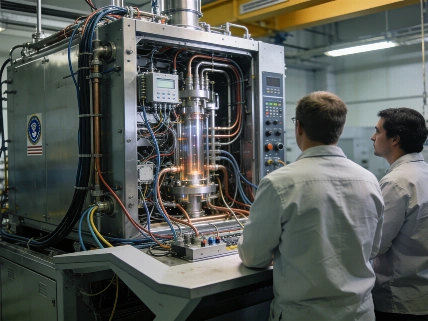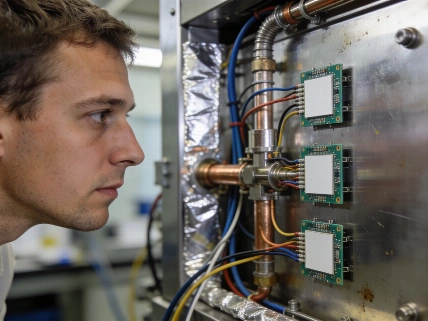
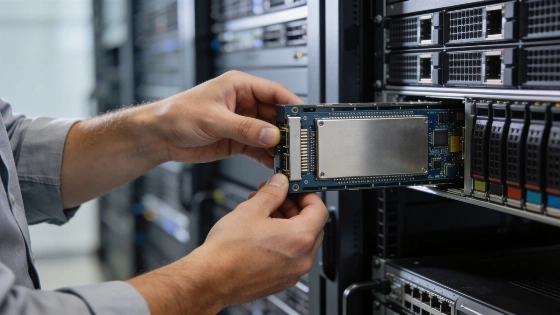
Thales has introduced Luna 8, a hardware security module designed to support post-quantum cryptography migration and protect enterprise cryptographic infrastructure from quantum-enabled decryption and high-throughput AI workloads
French technology company Thales has released Luna 8, a hardware security module (HSM) engineered to address the emerging risks posed by quantum computers to conventional cryptographic systems. The Luna 8 appliance is built around a custom Thales cryptographic processor and is intended to provide high-speed key management, digital signing, and Public Key Infrastructure (PKI) protection for enterprise environments. The device is positioned as a platform for organizations preparing to migrate to post-quantum cryptography (PQC) standards, which are being developed to withstand attacks from future quantum computers capable of breaking widely used public-key encryption.
Quantum Threats and Cryptographic Migration
The urgency for quantum-resistant cryptography is driven by concerns that adversaries may intercept and store encrypted data today, with the intention of decrypting it once sufficiently powerful quantum computers become available-a scenario known as "Harvest Now, Decrypt Later" (HNDL). According to the 2026 Thales Data Threat Report, which surveyed over 3,000 IT and security professionals worldwide, 61% identified HNDL as their primary quantum-related risk. In response, 59% of organizations reported active prototyping and evaluation of PQC algorithms, reflecting a broad industry shift toward quantum-safe standards.
Device Architecture and Performance
Luna 8 is designed with an upgradeable architecture that allows new post-quantum algorithms, including those finalized by the US National Institute of Standards and Technology (NIST), to be introduced via firmware updates. This approach aims to minimize hardware replacement and operational disruption during cryptographic transitions. The appliance supports accelerated cryptographic operations to meet the demands of high-density transaction processing, cloud infrastructure management, and automated AI data pipelines. Backwards compatibility with previous-generation Thales Luna HSM interfaces is maintained, providing a migration path for existing deployments. The device is undergoing independent security evaluations for certifications such as FIPS 140-3 Level 3 and European Union Common Criteria, with future software updates planned to extend support to payment transaction environments.
Integration and Industry Context
Thales positions Luna 8 as part of a broader ecosystem initiative, including collaborations with the Quantum-Safe 360 Alliance and joint post-quantum cryptography evaluation tools developed with Quantinuum. Early deployment partners, such as digital asset platform HKVAX, are using Luna 8 to isolate key management environments while transitioning to quantum-resistant security architectures. The launch reflects a growing trend among hardware and network providers to address quantum-era cryptographic risks at the infrastructure level. Related efforts to test quantum-secure communication and network protocols in real-world conditions have been reported, such as the deployment of entanglement-based quantum networks described in recent field trials in New Mexico.
While Thales has not published detailed technical specifications for Luna 8, the company states that the device is engineered for high-throughput cryptographic workloads and is compatible with both legacy and emerging PQC algorithms. Certification processes are ongoing, and the timeline for full support of finalized NIST PQC standards will depend on the outcome of international standardization and independent security evaluation. The effectiveness of Luna 8 and similar hardware modules in mitigating quantum-enabled decryption threats will ultimately depend on the pace of PQC adoption, the reliability of firmware updates, and the ability to maintain operational security during algorithm migration.
Post-quantum cryptography refers to cryptographic algorithms designed to be secure against attacks from both classical and quantum computers. Unlike quantum key distribution, which uses quantum physics to distribute encryption keys, PQC algorithms run on conventional hardware and are intended as drop-in replacements for current public-key systems. The transition to PQC involves not only selecting secure algorithms but also ensuring that hardware, software, and operational processes can be updated without introducing new vulnerabilities. The timeline for widespread PQC adoption is shaped by the progress of quantum computing research, the standardization process led by organizations such as NIST, and the readiness of critical infrastructure to support new cryptographic primitives.