Florida Atlantic University has introduced an eight-week certificate program for enterprise leaders, focusing on quantum computing evaluation, sourcing, and deployment, with hands-on exposure to a 4,400+ qubit annealing system
Florida Atlantic University (FAU) has announced a new executive education program designed to address the growing need for quantum technology literacy among non-technical business and technology leaders. The course, titled "Quantum Computing: Business and Sourcing Strategy," is structured as an eight-week, 24-hour certificate aimed at equipping participants with the skills to assess, procure, and integrate quantum computing capabilities within commercial and public sector organizations.
Quantum Hardware and Curriculum
The program is led by Dr. Mehran Basiratmand, Director of Innovation and Programs, and Dr. Daniel Gropper, Dean of the College of Business. It is scheduled to run from August 24 to October 12, 2026, and is available both on FAU's Boca Raton campus and through live virtual sessions. The curriculum covers four main areas: enterprise information systems and software licensing, evaluation of the quantum ecosystem-including platforms such as IBM Quantum, Google Quantum AI, D-Wave, IonQ, Quantinuum, AWS Braket, and Azure Quantum-Quantum-as-a-Service (QaaS) procurement strategies, post-quantum cryptography risk management, and practical laboratory exercises. The course is priced at $2,700 and is targeted at enterprise leaders, technology executives, procurement directors, and strategists who do not require a technical background in quantum physics or engineering.
On-Site Quantum Annealer
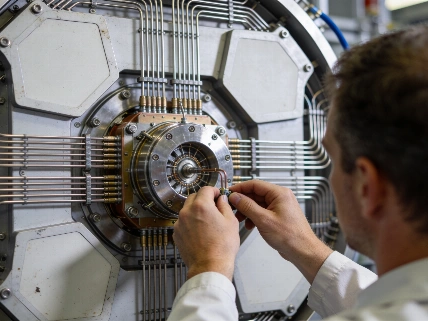
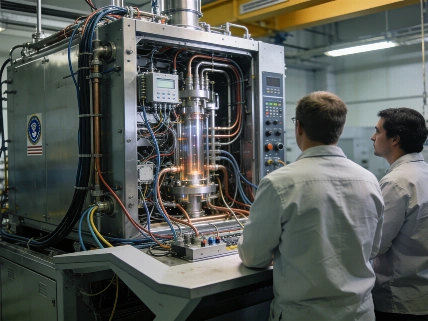
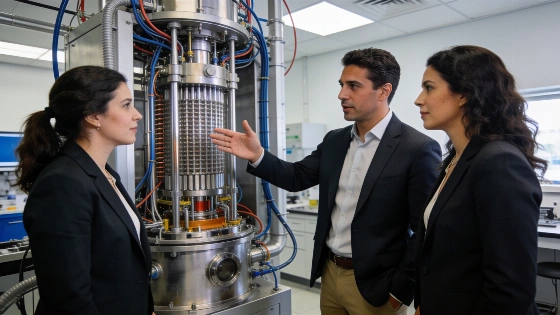
A central feature of the program is direct access to a D-Wave Advantage2(TM) annealing quantum computer, which FAU is installing on its Boca Raton campus under a $20 million agreement with D-Wave Quantum Inc. The system, with more than 4,400 physical qubits, is the first dedicated, on-premises quantum computer hosted by a Florida university. This installation is intended to support hands-on learning and to position South Florida as a regional center for hybrid quantum computing research, defense applications, and workforce development. The annealing architecture is optimized for combinatorial optimization problems, and the course will include laboratory sessions that allow participants to interact with the hardware and understand its operational constraints.
Procurement and Security Considerations
The curriculum places particular emphasis on the practicalities of sourcing quantum computing services and managing associated risks. Participants will examine procurement models for Quantum-as-a-Service, review software licensing agreements, and assess the implications of post-quantum cryptography for enterprise security. The program aims to provide a realistic understanding of the current capabilities and limitations of quantum hardware, as well as the challenges of integrating quantum solutions into existing IT infrastructure. This approach reflects a broader trend in quantum workforce development, as seen in other regions investing in quantum education and infrastructure, such as the recent launch of a national quantum technology hub in Bangkok, which is described in coverage of Southeast Asia's coordinated quantum research and training efforts.
Engineering and Scalability Challenges
While the installation of a 4,400+ qubit annealing system represents a significant infrastructure investment, it is important to recognize the distinction between physical qubit count and practical computational utility. Annealing quantum computers, such as the D-Wave Advantage2(TM), are specialized for certain classes of optimization problems and do not offer universal quantum computation. The course addresses these engineering realities, including device calibration, noise sources, error rates, and the gap between laboratory demonstrations and scalable, fault-tolerant quantum computing. Participants will gain insight into the technical and operational barriers that remain before quantum systems can deliver broad commercial value.
Understanding the difference between physical and logical qubits is essential for evaluating quantum computing claims. A physical qubit is a controllable quantum system, such as a superconducting loop or trapped ion, that can be manipulated and measured. However, physical qubits are prone to errors from noise, decoherence, and imperfect control. Logical qubits encode information redundantly across multiple physical qubits using error-correcting codes, allowing for detection and correction of certain errors. Achieving reliable logical qubits with low error rates is a major engineering challenge, and most current quantum computers-including annealing systems-operate primarily with physical qubits. The distinction is critical for understanding the limitations of today's hardware and the requirements for future fault-tolerant quantum computing.