Xanadu Quantum Technologies reported advances in photonic quantum hardware, algorithmic development, and US expansion, while disclosing a strengthened cash position and increased investment in fabrication and engineering
Xanadu Quantum Technologies Ltd. has released its financial and technical update for the second quarter of 2026, highlighting a period of intensified investment in photonic quantum hardware, algorithmic research, and US-based operations. The company, headquartered in Toronto and listed on NASDAQ and TSX, reported a cash and cash equivalents balance of $312.8 million as of June 30, 2026, following a $67.2 million capital raise through its synthetic at-the-market equity facility. This liquidity increase was achieved by issuing 5.5 million Class B shares at an average net price of $12.28 per share, supporting ongoing engineering and fabrication efforts.
Hardware Progress and Fabrication Metrics
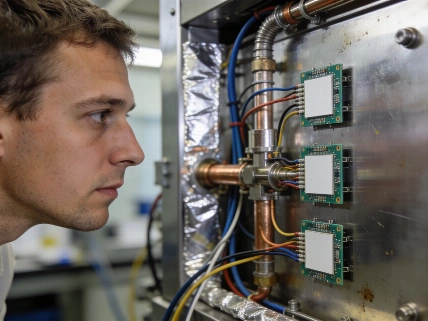
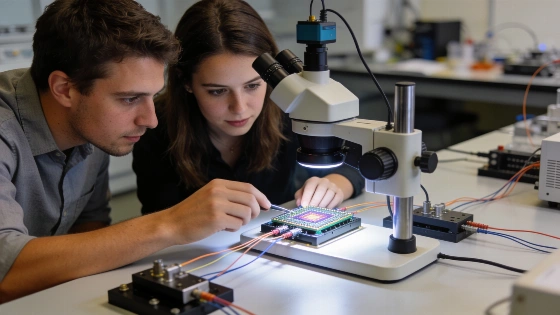
During the quarter, Xanadu reported a record low average edge-coupling loss of 0.085 dB per facet in its photonic devices, a metric relevant for efficient light transfer between chips and optical fibers. This result was attributed to internal packaging improvements and manufacturing collaborations with Corning and DISCO. The company also scaled up fabrication runs across its two main material platforms, increasing thin-film lithium niobate (TFLN) runs by approximately 75% and silicon nitride (SiN) runs by 50%. Capital expenditures rose sharply to $6.4 million, reflecting expanded foundry activity and laboratory infrastructure upgrades.
Financial Performance and Engineering Investment
Second-quarter revenue reached $1.51 million, up 42.5% year-over-year, primarily due to contract work such as the DARPA Stage B project. However, revenue declined sequentially from $2.83 million in Q1 2026. Operating expenses increased to $31.5 million, with research and development and engineering hires accounting for $19.72 million, up from $17.35 million in the previous quarter. General and administrative costs, including those associated with public company operations, reached $11.05 million. The company reported a GAAP net loss of $42.05 million, widened by a $10.6 million non-cash loss related to the remeasurement of earn-out share liabilities. On a non-GAAP basis, the adjusted EBITDA loss was $21.33 million.
Algorithmic and Software Developments
Xanadu announced a reduction in Toffoli gate requirements for quantum read-only memory (QROM) algorithms by roughly 50%, a result that has been patent-filed and integrated into the PennyLane software platform. The company also reported the successful training of a Fourier-based quantum machine learning model with over one million parameters, capable of learning the distribution of ribosomal RNA. PennyLane 0.45 and Catalyst 0.15 were released, and the foundational PennyLane research paper surpassed 2,000 academic citations. Notably, Xanadu partnered with Oak Ridge National Laboratory to deploy PennyLane on the Frontier exascale supercomputer, and renewed a multi-year collaboration with Rolls-Royce focused on quantum computational fluid dynamics. A joint initiative with Lockheed Martin was launched to support quantum machine learning and workforce training.
US Expansion and Ecosystem Partnerships
The company announced a major expansion of its US operations, centered in Albany, New York, with US headcount increasing more than five-fold since 2023. Engineering recruitment is expected to continue through the end of 2026. Xanadu also advanced collaborations with the Fidelity Center for Applied Technology, major banking institutions, Los Alamos National Laboratory, and joined the Unitary Foundation. These moves reflect a broader trend of quantum technology firms deepening US engagement, as seen in other industry developments such as recent international quantum software integrations.
In quantum hardware, edge-coupling loss quantifies the efficiency with which light is transferred between a photonic chip and an optical fiber or another chip. Lower coupling loss is essential for scaling photonic quantum processors, as it directly impacts the signal-to-noise ratio and the feasibility of integrating multiple chips or modules. Achieving sub-0.1 dB per facet coupling loss is considered a significant engineering milestone, but system-level performance also depends on total optical loss, fabrication yield, and the stability of packaging under operational conditions. While improved coupling efficiency supports larger and more complex photonic circuits, further advances in error rates, device reproducibility, and integration with control electronics remain necessary for practical quantum computing applications.