A new national quantum technology hub has launched at True Digital Park in Bangkok, aiming to accelerate quantum research, workforce training, and industrial adoption across Southeast Asia through coordinated government, academic, and industry collaboration
Thailand has formally launched Quantum Club Thailand, a national initiative headquartered at True Digital Park in Bangkok, with the stated goal of positioning the country as a regional center for quantum technology research, education, and industrial integration. The collaboration brings together the Ministry of Higher Education, Science, Research and Innovation (MHESI), Charoen Pokphand (CP) Group, True Corporation, Arise Ventures Group, the Quantum Technology Research Initiative Consortium (QTRic), and U.S.-based quantum software provider qBraid. The hub is designed to coordinate policy, research, and commercial activity to accelerate the adoption of quantum technologies in Southeast Asia.
Strategic Missions and Programs
The Quantum Club Thailand initiative is structured around four main missions: developing human capital, supporting applied research, enabling industrial adoption, and fostering commercial innovation. To address these objectives, the hub is launching three flagship programs: Quantum Academy Thailand, which will focus on workforce training and education; Quantum Industry Lab, aimed at supporting industrial experimentation and prototyping; and the Quantum Innovation Challenge, designed to stimulate new applications and startups. Through a partnership with qBraid, Thai researchers, startups, and enterprise teams will have cloud-based access to more than 26 international quantum hardware systems, spanning a range of quantum computing modalities.
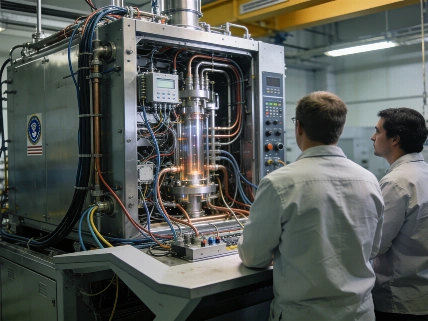
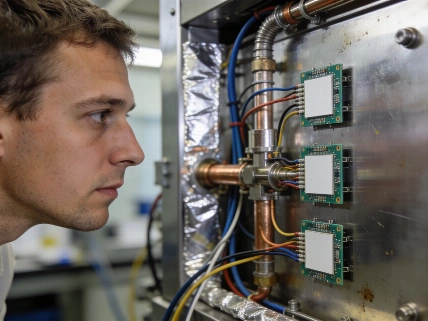
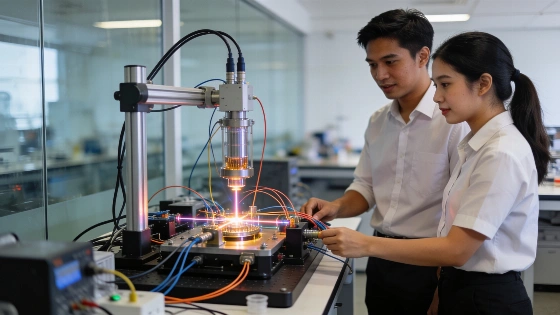
Physical Systems and Research Focus
The Quantum Club Thailand ecosystem integrates government policy, academic research, and industry support. MHESI and the Quantum Policy Committee oversee national strategy, while QTRic coordinates a network of over 120 researchers and 80 technology prototypes across 19 partner institutions. The technical focus is on photonics and optical quantum processing units (QPUs), leveraging Thailand's research base in physics, chemistry, and semiconductor photonics. Cloud access to international quantum hardware is intended to bridge the gap between local research and global quantum computing resources, while domestic efforts concentrate on developing optical quantum architectures and photonic integration.
Industrial Integration and Policy Coordination
CP Group and True Corporation plan to embed quantum software workflows into existing industry clusters at True Digital Park, including biotechnology, food technology, digital health, and space economy sectors. This approach is intended to allow local enterprises to develop and test quantum-hybrid applications within Thailand before scaling to broader Asian markets. Policy alignment is coordinated across ten government ministries through the Quantum Policy Committee, aiming to ensure that research, workforce development, and industrial adoption proceed in parallel. The initiative's structure is designed to address the persistent challenge of translating laboratory quantum research into practical, scalable technologies for industry.
Regional Context and Related Initiatives
While Thailand's program emphasizes photonic and optical quantum computing, other regional and international efforts are exploring alternative hardware platforms. For example, a recent collaboration between IonQ and Sandia National Laboratories has focused on trapped-ion quantum hardware and integrated photonics for security applications, highlighting the diversity of approaches in the global quantum landscape. Thailand's strategy of combining cloud-based access to international hardware with domestic photonic research reflects a pragmatic response to the current limitations of local fabrication and device yield, while aiming to build a skilled workforce and a pipeline of quantum-ready enterprises.
Understanding the distinction between physical and logical qubits is central to evaluating quantum computing progress. A physical qubit is a controllable quantum system-such as a trapped ion, superconducting circuit, or photonic mode-that can be manipulated and measured. However, physical qubits are prone to errors from noise, decoherence, and imperfect control. Logical qubits encode information redundantly across multiple physical qubits using error-correcting codes, allowing for detection and correction of certain errors. Achieving practical quantum computation requires not only increasing the number of physical qubits but also improving their fidelity and integrating robust error correction, so that logical qubits can perform useful algorithms reliably. Most current quantum processors, including those accessible via cloud platforms, operate in the noisy intermediate-scale quantum (NISQ) regime, where error rates and limited qubit counts constrain the depth and reliability of computations. The transition from laboratory prototypes to scalable, fault-tolerant quantum computers remains a major engineering and scientific challenge worldwide.