IonQ and Sandia National Laboratories have agreed to jointly develop and test trapped-ion quantum hardware and integrated photonics for national security applications, focusing on system optimization and device characterization at Sandia's New Mexico facility
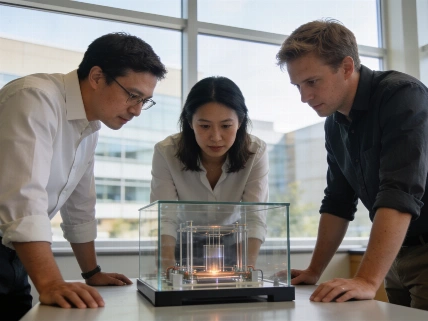
IonQ and Sandia National Laboratories have formalized a partnership to co-design quantum information science technologies for U.S. national security, with a focus on advancing trapped-ion quantum hardware and integrated silicon photonics. The collaboration, established through a Memorandum of Understanding, will operate from Sandia's Quantum Demonstration Facility in New Mexico, a site that serves as both a research hub and a platform for independent technical verification of quantum systems.
Trapped-Ion Hardware and Photonics Integration
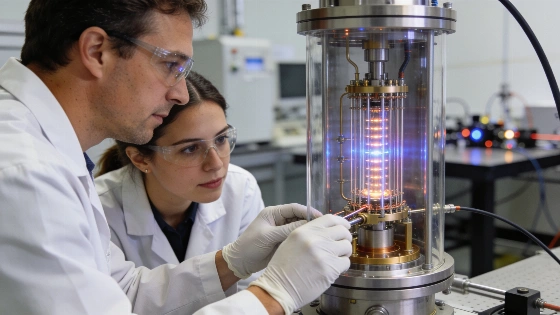
The partnership aims to align IonQ's trapped-ion quantum processing unit (QPU) architecture with Sandia's expertise in microfabrication and silicon photonics. Sandia previously fabricated the original trapped-ion chips used in IonQ's early QPUs, providing a foundation for the current initiative. The joint effort will target improvements in system scaling, device characterization, and the development of high-fidelity quantum networking interconnects, with the goal of supporting mission-relevant government use cases.
System Optimization and Testing Protocols
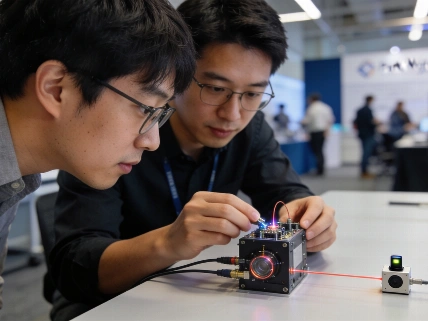
IonQ's hardware and application engineering teams will work alongside Sandia scientists to refine device performance and establish robust testing protocols. This includes optimizing the integration of photonic components with trapped-ion devices, a critical step for enabling scalable quantum networks. The Quantum Demonstration Facility offers an environment for third-party verification, allowing for independent assessment of technical progress and system reliability.
National Security and Regional Quantum Ecosystem
By establishing a direct presence at Sandia's New Mexico facility, IonQ is expanding its engagement with the region's growing quantum technology ecosystem, which includes defense and national laboratory stakeholders. The collaboration is intended to address federal priorities for maintaining domestic leadership in quantum computing, secure networking, and defense infrastructure. The partnership also reflects a broader trend of public-private cooperation in quantum research, as seen in recent deployments of quantum hardware on open-access networks in New Mexico. For example, several companies have recently tested entanglement-based quantum networking protocols on the ABQ-Net platform, as detailed in Science Report's coverage of quantum hardware field trials in Albuquerque.
While the MOU outlines an expanded scope for joint engineering and testing, specific technical milestones, such as qubit count, gate fidelity, or networked device performance, have not been disclosed. The partnership's progress will depend on the ability to integrate photonic and ion-trap technologies at scale, manage noise and error sources, and demonstrate reproducible system performance under conditions relevant to national security applications.
Trapped-ion quantum processors use individual ions confined by electromagnetic fields as physical qubits, with quantum information encoded in their internal states. These systems are valued for their long coherence times and high-fidelity gate operations, but scaling to larger, interconnected devices requires advances in microfabrication, photonic integration, and error management. Integrated silicon photonics can enable more efficient optical control and readout, as well as the development of quantum interconnects for networking multiple processors. Achieving reliable, scalable performance in these hybrid systems remains a central engineering challenge for the field.