Unitree Robotics has begun its IPO on Shanghai's STAR Market, seeking to raise $900 million for research, product development, and manufacturing of humanoid and quadruped robots as regulatory and trade barriers complicate global expansion
Unitree Robotics, a prominent developer of humanoid and quadruped robots based in Hangzhou, has opened subscriptions for its initial public offering (IPO) on the Shanghai Stock Exchange's STAR Market. The company aims to raise approximately $900 million by offering 40.45 million new shares at 150.80 yuan (about $22) each, representing 10 percent of its post-IPO share capital. The proceeds are earmarked for research and development of intelligent robot models, new product development, and the construction of a dedicated manufacturing base. According to the company's prospectus, nearly half of the funds will support R&D for new robot models, with additional allocations for robot body development and manufacturing infrastructure.
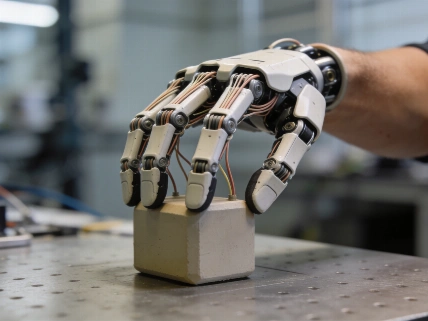
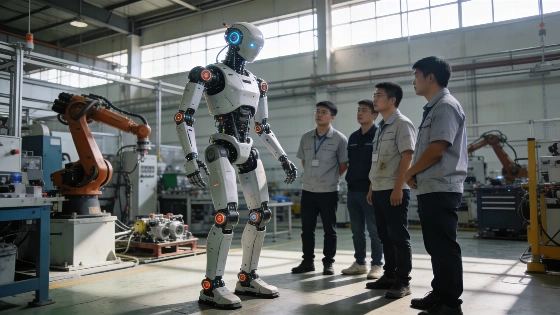
Unitree's product portfolio includes general-purpose humanoid and quadruped robots, as well as robot components and embodied intelligence models. The company recently introduced a modular humanoid robot with up to 31 degrees of freedom, priced from $4,290, targeting flexible deployment in commercial and research settings. The IPO follows strong investor interest during the preliminary offline price inquiry, with offline subscription requests exceeding the initial offering size by more than 2,700 times after adjustments for strategic placements. Chinese AI company DeepSeek is among the strategic investors participating in the offering, which is scheduled to open for public subscription on August 10.
Humanoid Robots Drive Unitree's Rapid Revenue Growth
From 2023 to 2025, Unitree reported sales of 33,294 quadruped robots and 5,632 humanoid robots, with shipments of humanoid robots alone surpassing 5,500 units in 2025. The company's revenue more than quadrupled to 1.7 billion yuan in 2025, with humanoid robots accounting for 867.8 million yuan and becoming its largest business segment. However, despite a 68.5 percent increase in revenue in the first quarter of 2026, profit excluding one-off items fell by 52.6 percent to 40.3 million yuan, highlighting the volatility and cost pressures in scaling advanced robotics manufacturing.
US-China Trade Tensions Add Risks to Global Expansion
Unitree's expansion comes as technology and trade tensions between the United States and China intensify. The US government has introduced new restrictions on the import and sale of foreign-made humanoid and quadruped robots, while China has responded with export controls and sanctions targeting selected US entities. Unitree has stated that its current robots have received US approvals, but future models may face additional regulatory barriers. The US market accounted for 13.3 percent of Unitree's revenue last year, making continued access to American buyers and imported components a significant risk factor. The company has warned that tariffs, export controls, and the potential loss of existing approvals could disrupt overseas growth and supply chains.
As competition in China's robotics sector accelerates, Unitree's IPO marks a significant step in scaling production and advancing technical capabilities. The company's focus on modular, lower-cost humanoid robots reflects a broader industry trend toward commercial deployment beyond laboratory demonstrations. For comparison, recent research on collaborative humanoid robots, such as the development of systems designed to reduce human strain during shared lifting tasks, has highlighted both the technical progress and the persistent challenges in real-world integration. One example is the testing of the ergoCub robot for workplace ergonomics, which underscores the importance of rigorous evaluation and user-centered design in robotics deployment.
Automation and Autonomy Remain Different Challenges
Understanding the distinction between automation and autonomy is essential when evaluating claims about advanced robots. While automation refers to the execution of predefined tasks with minimal human intervention, autonomy implies the ability to make context-dependent decisions and adapt to new environments without direct oversight. Most commercial robots, including those from Unitree, rely on a combination of programmed behaviors, sensor feedback, and, in some cases, remote human supervision. The degree of autonomy is shaped by hardware capabilities, software algorithms, safety requirements, and regulatory constraints. As robots move from controlled demonstrations to operational deployment, the limits of current technology and the need for robust human oversight become increasingly apparent.