
Astronomy - Part 6
236 reports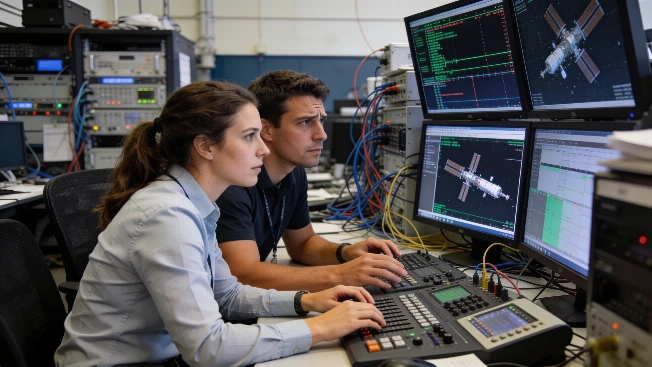
NASA's Swift Boost Mission Faces Setback After Spacecraft Malfunction
NASA's Swift Boost mission, launched to extend the life of the Neil Gehrels Swift Observatory, has encountered a critical control issue with its LINK spacecraft, raising uncertainty about the planned orbital rescue operation
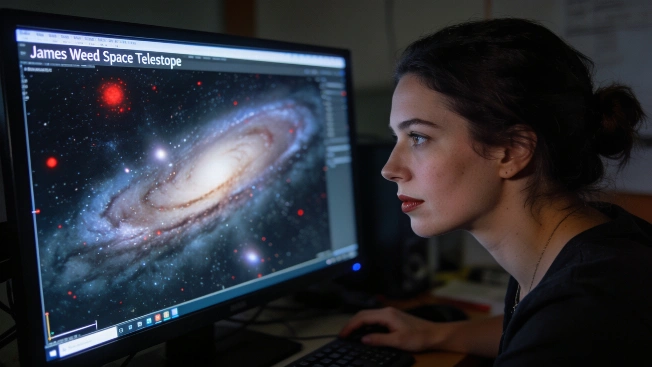
Webb Telescope Study Links Little Red Dots to Black Hole Activity
Astronomers using the James Webb Space Telescope have traced the origins of mysterious “little red dots” in deep space, suggesting that these compact sources are linked to phases of intense supermassive black hole activity.
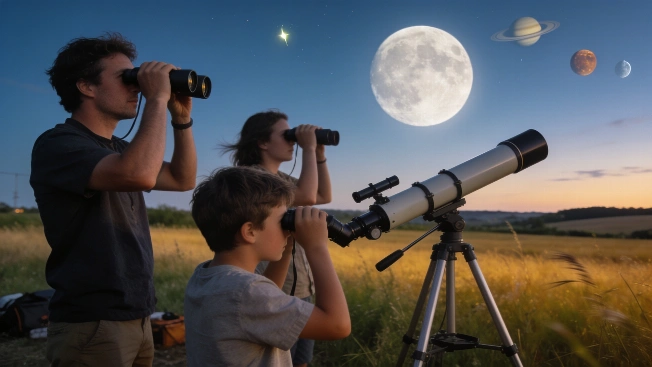
July's Buck Moon Aligns with Venus, Saturn, Mars, and Mercury
The full Buck Moon rises on July 29 alongside Venus, Saturn, Mars, and Mercury. As twilight fades, observers can watch the planetary parade with the naked eye or optical instruments.
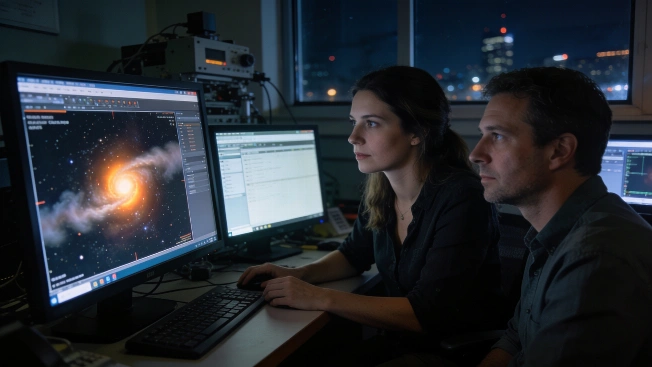
Chandra X-ray Observatory reveals hot gas from early quasar
NASA's Chandra X-ray Observatory has detected extremely hot gas surrounding a distant, radio-quiet quasar, offering new understanding into the formation of galactic cluster atmospheres in the early universe.
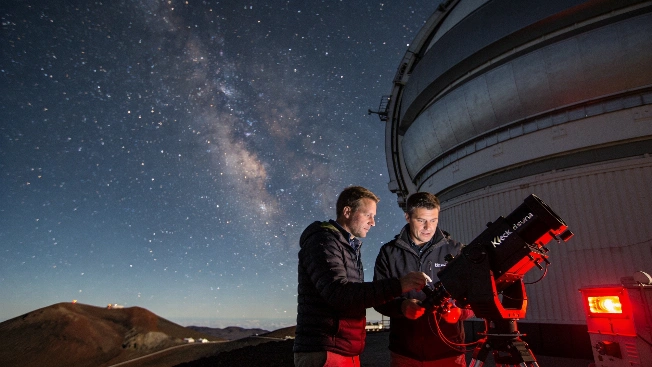
Dwarf Galaxy DF9 Found Without Dark Matter After Cosmic Collision
Astronomers using the Keck Cosmic Web Imager have identified a faint dwarf galaxy, DF9, that appears to lack dark matter, supporting the idea that galactic collisions can separate dark and visible matter.
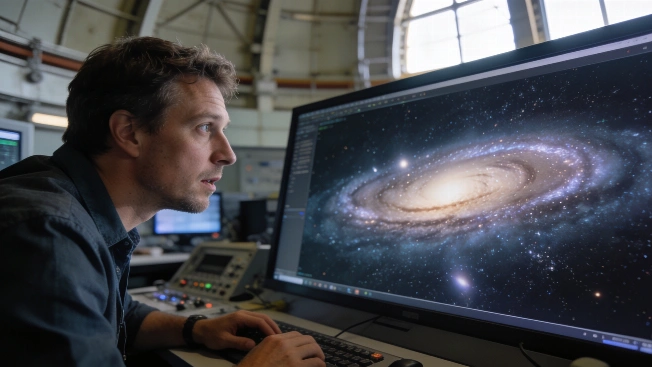
Milky Way Disk May Have Flipped, Altering Solar System's Orbit
Supercomputer simulations suggest the Milky Way's spiral disk may have rotated by 90 degrees in the distant past, potentially changing the solar system's path and explaining the galaxy's unusually slow stellar halo rotation
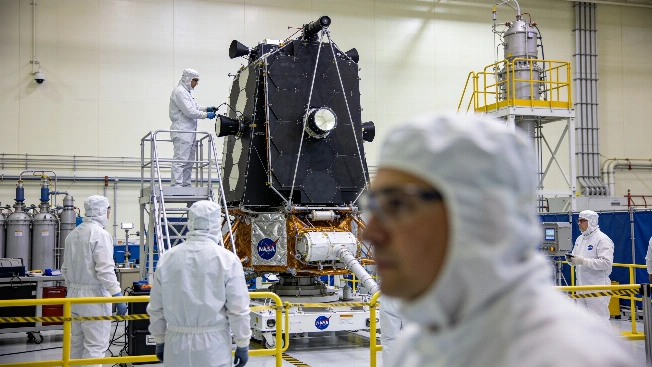
NASA Prepares Roman Space Telescope for 2026 Launch to L2 Orbit
NASA has fueled the Roman Space Telescope, a next-generation infrared observatory scheduled to launch in August 2026. It is expected to collect hundreds of terabytes of cosmic data annually and expand studies of dark matter and dark energy while probing exoplanets.
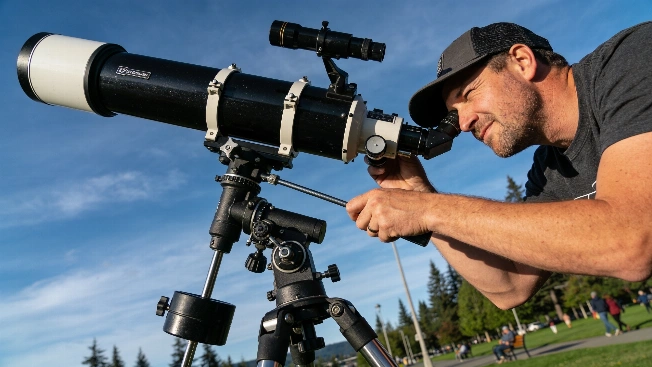
Astrophotographer Captures ISS Passing Venus in Daylight Sky
A rare daylight image shows the International Space Station appearing close to Venus, captured by AJ Smadi using a specialized telescope and camera setup in Washington state.
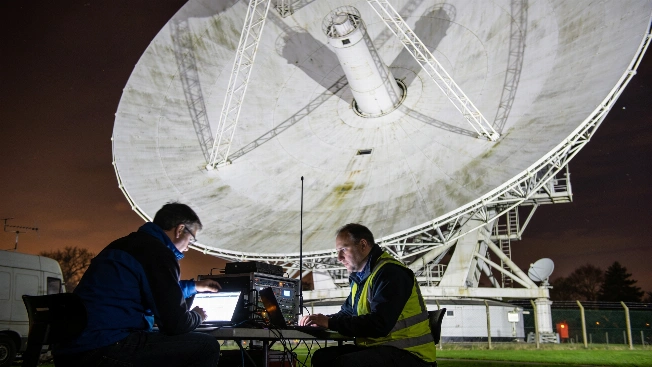
Radio Telescopes Track Space Debris in Geostationary Orbit
Engineers have demonstrated that radio telescopes can detect and monitor space debris in geostationary orbit using radar signals reflected from distant objects beyond the reach of conventional tracking methods.
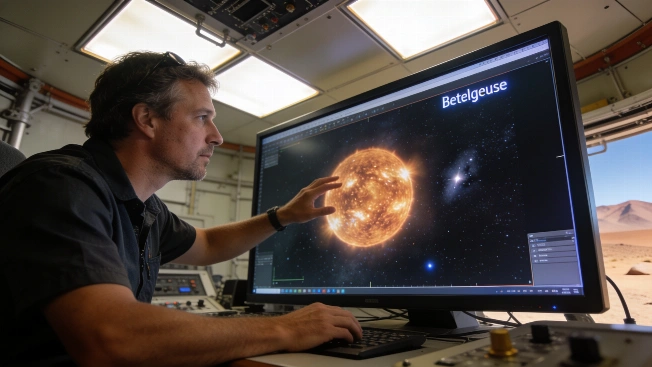
VLT Reveals Strongest Evidence Yet for Betelgeuse's Companion Star
Astronomers using the Very Large Telescope have obtained the clearest direct image to date of a faint companion star near Betelgeuse, advancing a century-long search for evidence that the red supergiant is part of a binary system
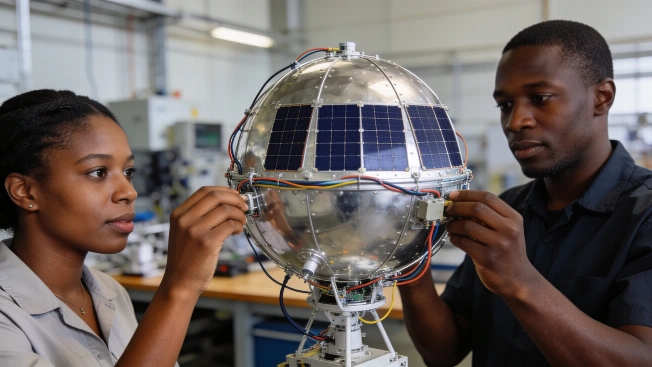
Africa's BALLS Radio Array to Ride Chang'e 8 to Lunar South Pole
A trio of spherical radio astronomy probes from Africa is set to launch aboard China's Chang'e 8 lander in 2029, aiming to deploy at the Moon's south pole and test low-frequency radio observations beyond Earth's atmospheric limits.
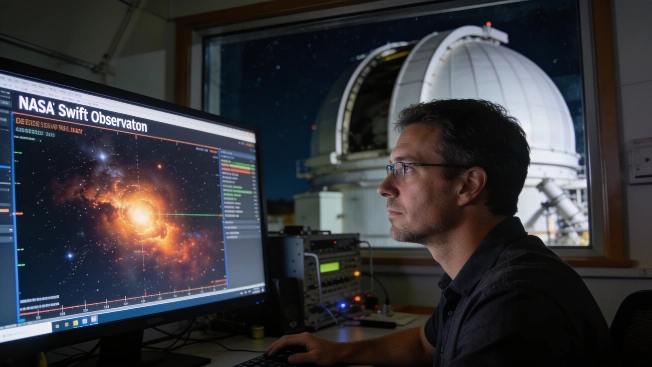
Swift Observatory Detects Black Hole Consuming Star Far From Galaxy Core
NASA's Swift Observatory has observed a rare tidal disruption event caused by a supermassive black hole devouring a star on the outskirts of a distant galaxy, challenging assumptions about where such events occur
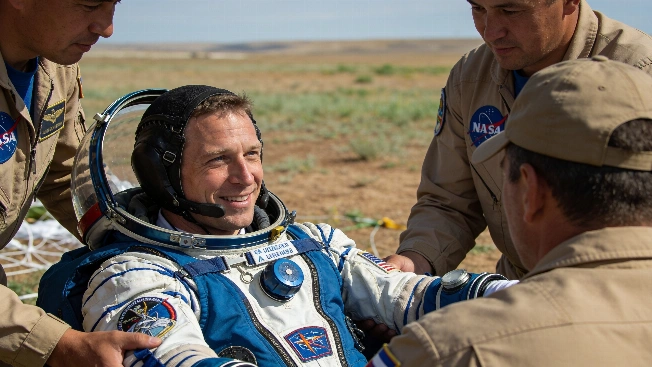
NASA Astronaut Chris Williams Completes First ISS Mission After Eight Months
NASA astronaut Chris Williams has returned to Earth after eight months aboard the International Space Station, where he supported scientific research and technology upgrades during Expedition 74.
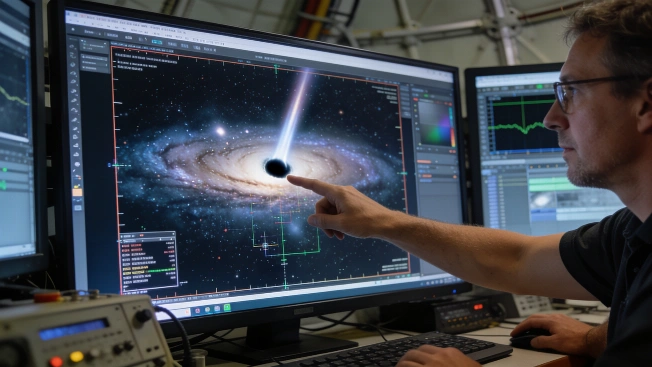
Chandra X-ray Data Reveal Black Hole Jet Disrupting Early Galaxy
Astronomers using the Chandra X-ray Observatory have detected a jet from a supermassive black hole disturbing gas in a distant galaxy known as the 'red potato,' offering new understanding into how black holes can suppress star formation in the early universe
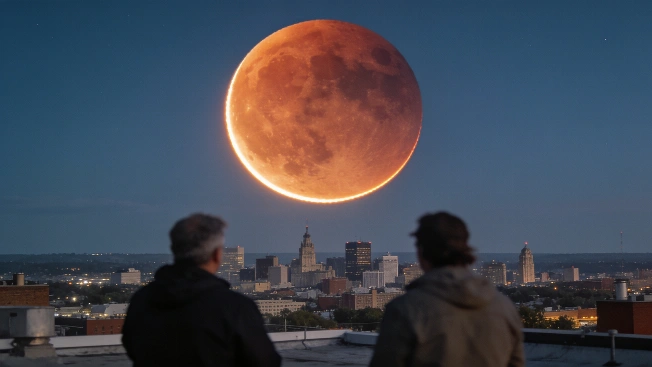
Deep Partial Lunar Eclipse to Create 'Almost Blood Moon' in August 2026
A rare deep partial lunar eclipse will occur on August 28, 2026, with an umbral magnitude of about 0.935, meaning 93.5% of the Moon’s diameter will lie within Earth’s umbra. The event will be visible across the Americas and Europe, with views also possible in Africa, offering a striking copper-red lunar display.
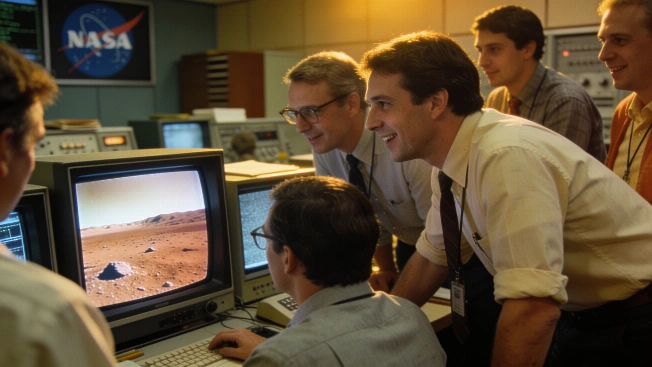
Viking 1's First Mars Surface Image Revisited on 50th Anniversary
NASA has released the original images captured by Viking 1 after its 1976 Mars landing, offering a detailed look at the Red Planet's surface and the mission's scientific legacy.
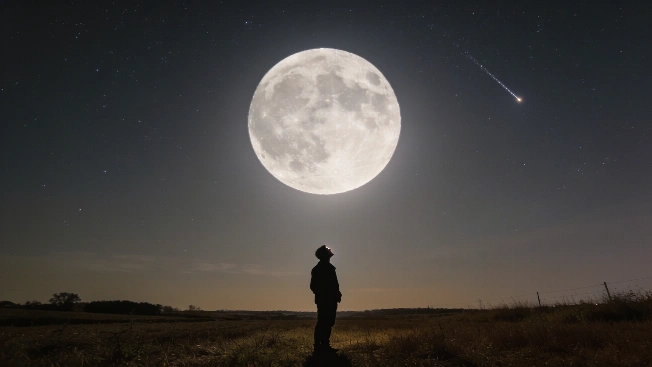
Bright Moonlight Limits Meteor Shower Viewing as Delta Aquariids Peak
The Southern Delta Aquariids and Alpha Capricornids meteor showers peak on July 30 to 31, but a nearly full moon will significantly reduce visibility of fainter meteors for observers across North America.
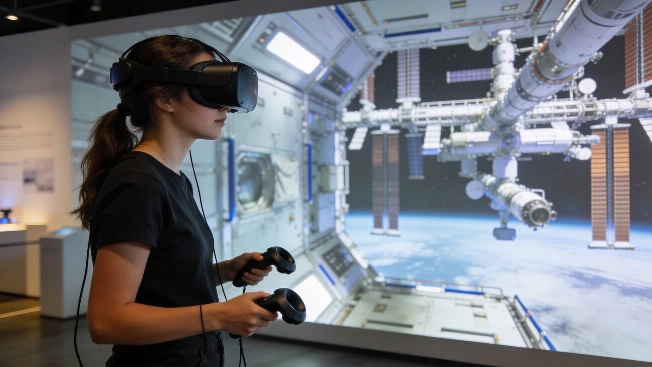
Virtual Reality Brings the International Space Station to Earth
A new VR experience, Space Explorers: The ISS Experience, uses real footage and astronaut collaboration to simulate life aboard the International Space Station, offering the public an immersive look at orbital science and daily routines.
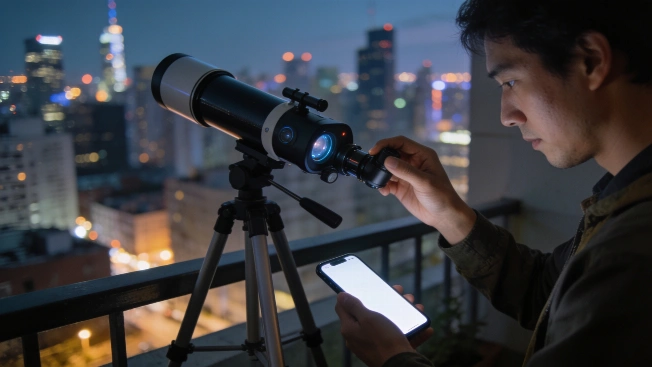
Seestar S30 Pro Smart Telescope Expands Urban Astrophotography Access
The Seestar S30 Pro pairs a high-resolution sensor with dual cameras and automated image processing in a compact, smartphone-controlled telescope, bringing deep-sky imaging within reach even from light-polluted locations.
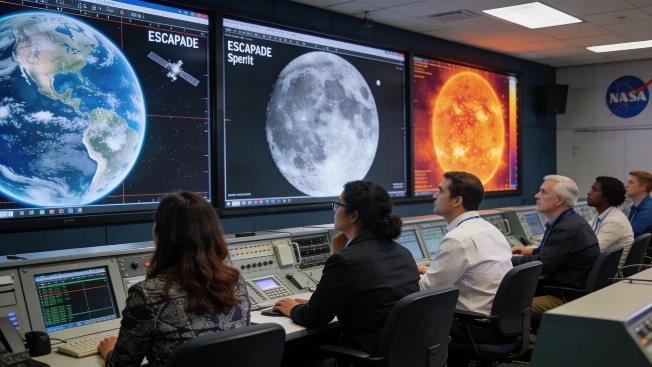
NASA's ESCAPADE Spacecraft Captures Earth and Moon in Dual Light
NASA's ESCAPADE mission has imaged Earth and the Moon in visible and thermal infrared light, offering a rare chance to calibrate its cameras as the spacecraft prepare for their journey to Mars.
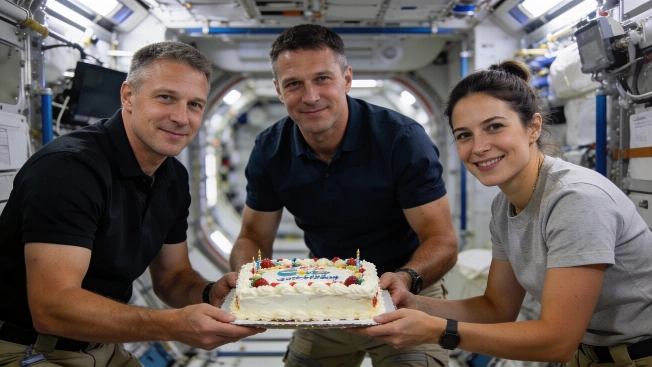
Expedition 74 Crew Begins Science Operations on International Space Station
Expedition 74 astronauts Anna Kikina, Pyotr Dubrov, and Anil Menon have joined the International Space Station, beginning an eight-and-a-half-month mission focused on microgravity research and operational adaptation.
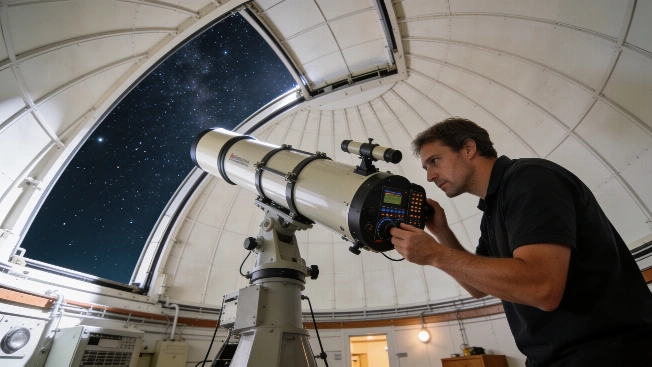
What a Parsec Really Measures in Astronomy and Why It Matters
Astronomers use the parsec to measure vast cosmic distances, relying on precise observations of stellar parallax to determine how far away stars are from Earth. The unit is central to mapping the Milky Way and beyond.
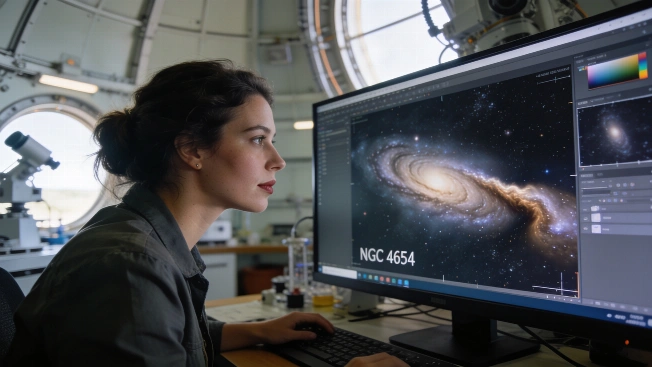
Hubble Reveals Asymmetric Spiral Galaxy Shaped by Cluster Forces
A new Hubble Space Telescope image captures NGC 4654, a spiral galaxy in Virgo, showing dramatic asymmetry caused by ram pressure stripping and past gravitational encounters
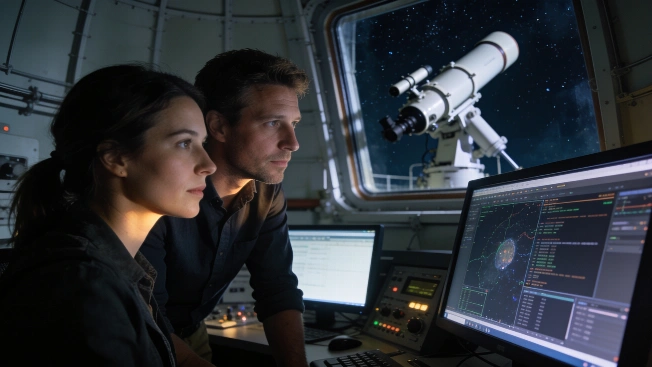
Hubble Reveals High-Speed Gas Bullets from Rare Helium Nova in Milky Way
Astronomers using Hubble and other observatories have observed V445 Puppis, the Milky Way's only known helium nova, ejecting dense gas clumps at speeds of up to 32 million kilometers per hour.
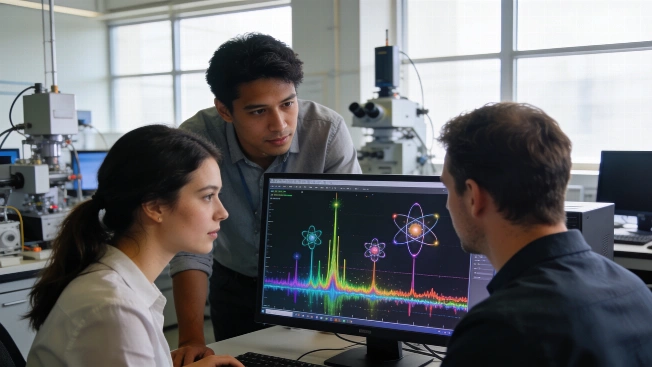
Sun's Silver Shortfall Explained by Advanced Atomic Modeling
Researchers examining solar spectra explain how atomic simulations affect estimates of the sun’s silver abundance and comparisons with meteorites, while emphasizing the limits of those measurements.
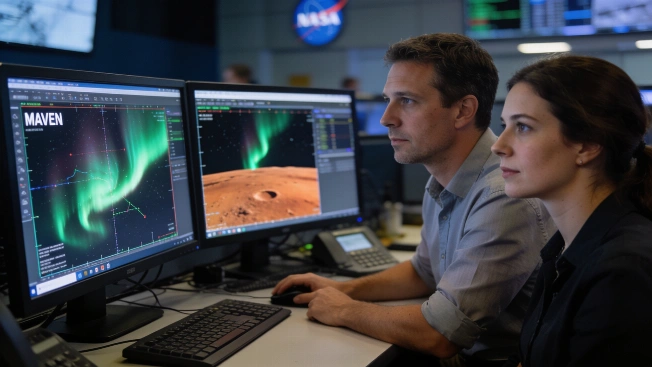
MAVEN Data Reveals Earth-Like Aurora Mechanism on Mars
NASA's MAVEN orbiter has found evidence that localized auroras on Mars are powered by a process similar to Earth's Dungey cycle, offering new understanding into Martian atmospheric loss and magnetic-field interactions.
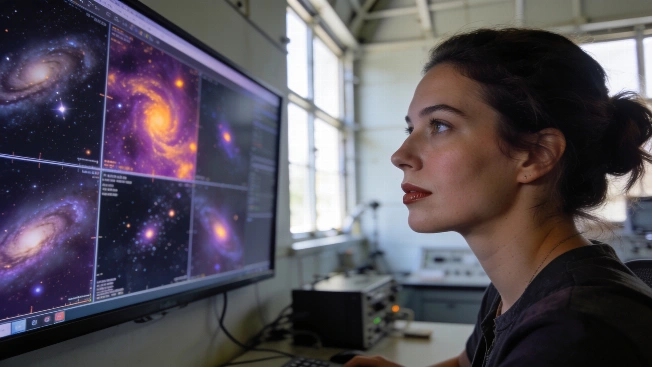
Webb Telescope Links 'Little Red Dots' to Ancient Star Clusters
Astronomers using the James Webb Space Telescope have traced mysterious 'Little Red Dots' in the early universe to the possible origins of globular clusters, offering new clues about how these dense stellar systems formed.
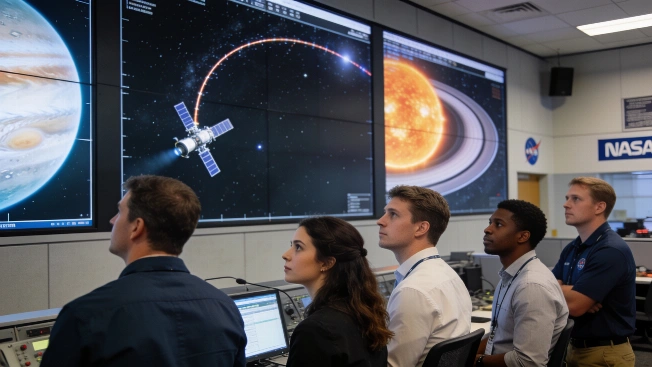
New Horizons Resumes Science at Solar System's Edge After Hibernation
NASA's New Opportunities spacecraft has emerged from a 321-day hibernation and is transmitting data from the outer solar system as it prepares to study the boundary between the Sun's influence and interstellar space with its advanced instruments.
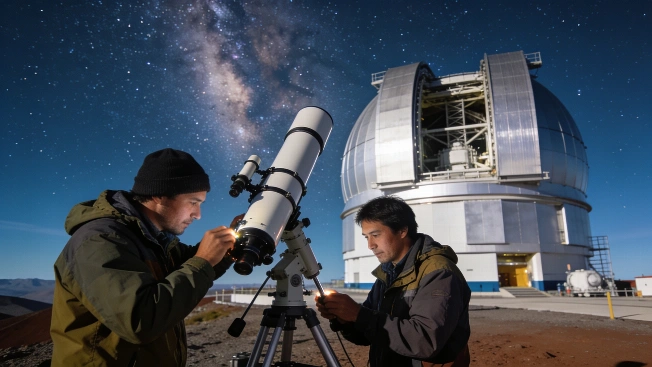
Possible Exomoon Candidate Challenges Definitions in Distant Star System
Astronomers using the Very Large Telescope have detected a moon-like object orbiting a brown dwarf in the CD-35 2722 system, prompting questions about how to classify such bodies beyond our solar system.
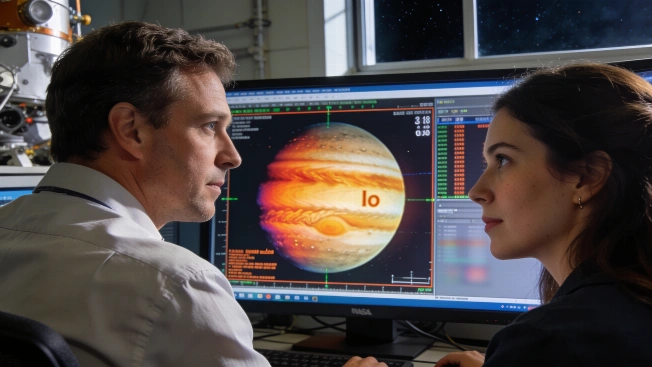
Juno Mission Probes Subsurface Heat on Jupiter's Volcanic Moon Io
NASA's Juno spacecraft has measured temperatures beneath Io's surface, revealing intense internal heating and unexpectedly smooth, low-density terrain. The findings, published in a peer-reviewed journal, offer new understanding into tidal heating on active moons
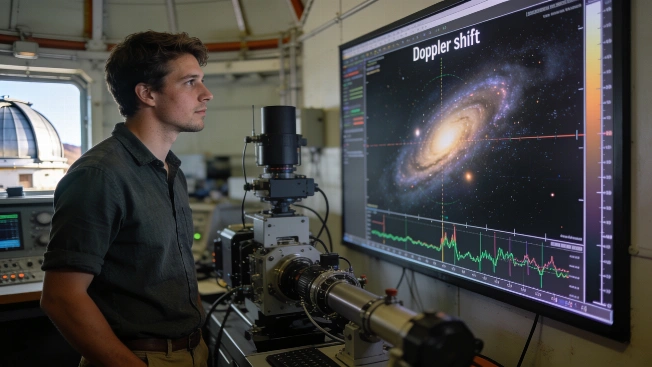
Giant Exosatellite Discovery Redefines Boundaries of Planetary Systems
Astronomers have identified a Jupiter-sized exosatellite candidate orbiting a brown dwarf, which itself orbits the star CD-35 2722. Detected using high-resolution spectroscopy, the candidate challenges current definitions of moons and planets.
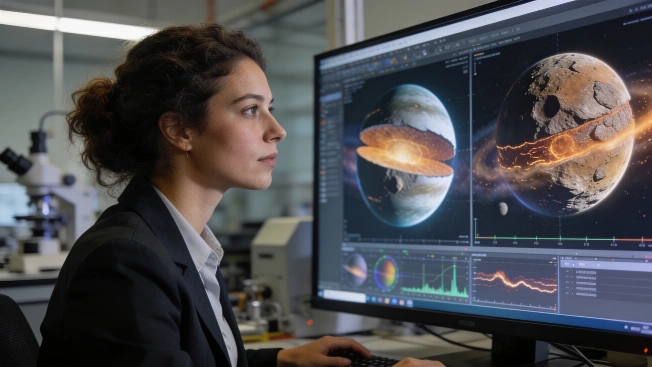
Exoplanets Smaller Than Mars May Lose Atmospheres Too Quickly for Life
A new planetary modeling study suggests rocky exoplanets must be at least 80% of Earth's width to retain atmospheres for billions of years, narrowing the search for potentially habitable worlds around sun-like stars.
Webb Telescope Reveals How Early Galaxies Produced Cosmic Dust
Astronomers used the James Webb Space Telescope to study a nearby dwarf galaxy, uncovering how ancient galaxies enriched the early universe with stardust impressive for star and galaxy formation.
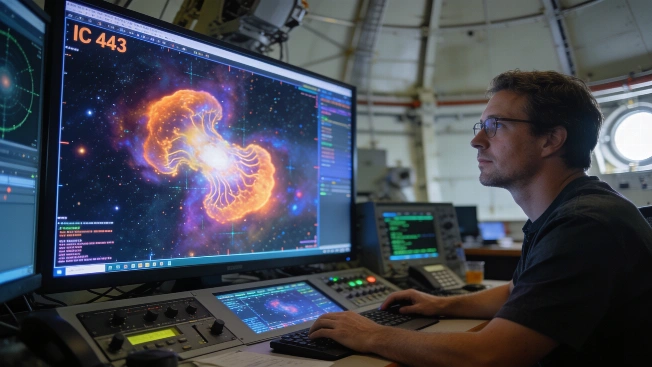
Possible Twin Supernova Remnants Identified in the Jellyfish Nebula
Astronomers analyzing data from NASA's Fermi Gamma-ray Space Telescope and other observatories have found evidence suggesting that both stars in a binary system exploded as supernovae, leaving overlapping remnants in the IC 443 region.
Webb Telescope Reveals 4.4-Billion-Year-Old Galaxy Cluster in Formation
The James Webb Space Telescope has imaged the young galaxy cluster MACS J0553.4-3342, capturing light that began its journey 4.4 billion years ago and offering new understanding into the assembly of large-scale cosmic structures.
Part 6 of 7