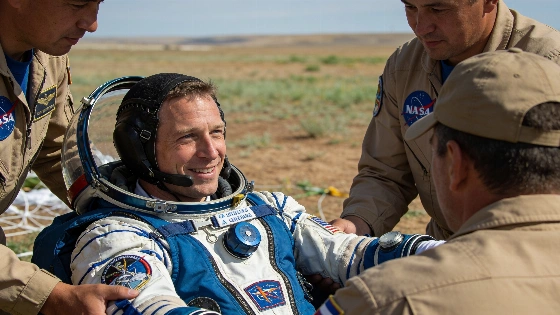
NASA astronaut Chris Williams has returned to Earth after spending eight months aboard the International Space Station, supporting scientific research and technology upgrades during Expedition 74
NASA astronaut Chris Williams has safely returned to Earth following his first mission aboard the International Space Station (ISS), marking the end of an eight-month period dedicated to scientific operations and station maintenance. Williams landed in Kazakhstan on July 26, 2026, alongside Roscosmos cosmonauts Sergey Kud-Sverchkov and Sergei Mikaev, concluding their participation in Expedition 74.
Expedition 74 Mission Overview
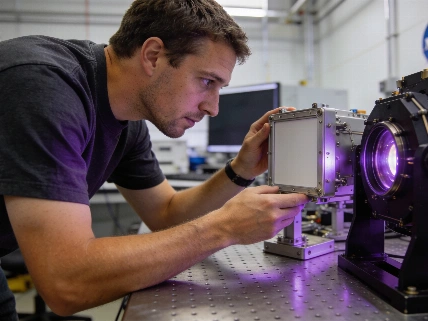
During his time on the ISS, Williams contributed to a broad portfolio of scientific investigations spanning biology, physics, and materials science. The mission's objectives included both fundamental research and the testing of new technologies intended to support future long-duration spaceflight. Williams' work was part of a coordinated international effort, with crew members from multiple agencies collaborating on experiments and station upkeep.
Expedition 74's science program built on previous missions, with a focus on microgravity's effects on living systems and the performance of advanced instrumentation in orbit. The crew also supported operational demonstrations designed to improve life-support systems and resource management aboard the station. For context, the arrival of the Expedition 74 crew and the start of their science operations were previously covered in Science Report's article on the mission's early phase, available at the start of Expedition 74's science activities.
Spacewalks and Technical Upgrades
Williams participated in two extravehicular activities (EVAs) during his mission. The first spacewalk focused on preparing the ISS power system for future upgrades, including the installation of hardware to support new solar arrays. The second EVA addressed a malfunction in the Canadarm2 robotic arm, with Williams and a crewmate replacing a faulty joint to restore full operational capability. Both spacewalks required extensive planning and coordination with ground teams, and their successful completion was essential for maintaining the station's scientific and operational readiness.
Technical upgrades performed during Expedition 74 are expected to extend the ISS's ability to support complex experiments and visiting spacecraft. The maintenance of critical systems, such as the robotic arm, is particularly important for ongoing cargo transfers and external payload operations.
Return and Post-Landing Procedures
The Soyuz descent module carrying Williams and his crewmates touched down in the Kazakh steppe under nominal conditions. After landing, the crew underwent standard medical checks and initial debriefings to assess their health and gather data on the physiological effects of extended microgravity exposure. Early post-landing images showed Williams in good spirits, interacting with recovery personnel and mission support staff.
Recovery operations following ISS missions are designed to ensure crew safety and to collect biomedical data that inform future mission planning. The transition from microgravity to Earth's gravity is closely monitored, with particular attention to cardiovascular, musculoskeletal, and vestibular adaptation.
Scientific and Operational Significance
Williams' mission contributes to the growing body of evidence on human adaptation to long-duration spaceflight and the reliability of station systems under continuous use. The data collected during Expedition 74 will inform both ongoing ISS research and the design of future missions beyond low Earth orbit. The successful completion of technical upgrades and scientific objectives demonstrates the continued value of international collaboration in space science.
As the ISS approaches three decades of continuous operation, each mission provides new insights into the challenges of sustaining human presence in orbit. The lessons learned from Williams' flight will support planning for upcoming missions, including those targeting the Moon and Mars.
Spacecraft returning from the ISS follow a carefully choreographed sequence of undocking, deorbit burn, atmospheric reentry, and parachute-assisted landing. The Soyuz descent module is engineered to protect its occupants from the intense heat and deceleration forces of reentry. After touchdown, rapid recovery and medical support are critical for crew health, while post-mission debriefings and biomedical sampling help researchers understand the cumulative effects of spaceflight on the human body. These procedures are essential for improving safety and mission design as human exploration extends farther from Earth.