
Astronomy - Part 7
236 reports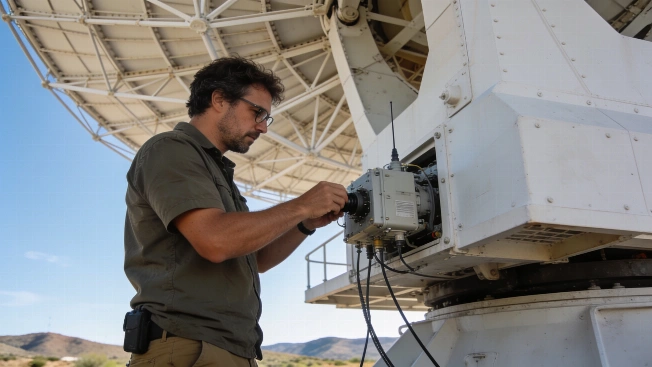
Detection of Four-Carbon Sugar Molecule in Interstellar Space
Researchers have identified the sugar molecule erythrulose in a molecular cloud near the Milky Way's center using radio telescopes, providing new evidence that complex organic compounds can form in interstellar environments under extreme conditions
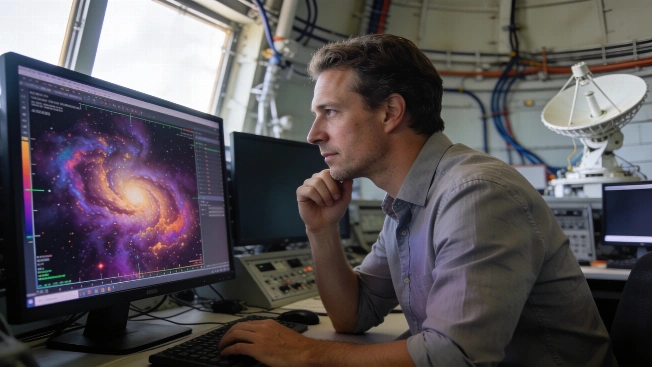
Magnetic Field of Galaxy Cluster Abell 2255 Mapped in Unprecedented Detail
Using deep radio observations from LOFAR, astronomers reconstructed the magnetic field structure of galaxy cluster Abell 2255, revealing how gas dynamics shape cosmic magnetism across millions of light-years.
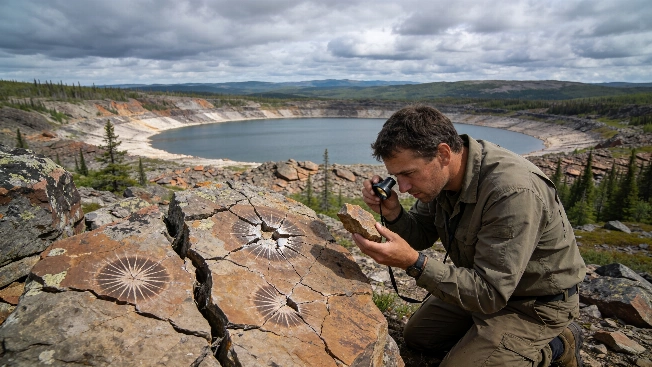
Possible Ancient Impact Crater Identified in Northern Quebec
A large circular structure in Quebec's Côte-Nord region, first spotted on Google Maps, may be a 390-million-year-old impact crater. Fieldwork and rock analysis are underway to confirm its extraterrestrial origin.
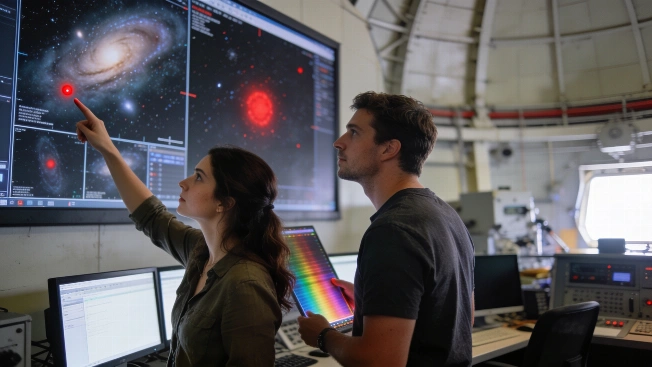
Webb data links early red dots to UV-bright companions and black hole seeds
A new analysis of James Webb Space Telescope images suggests that compact 'little red dots' in the early universe may form near ultraviolet-bright companions, offering a possible route to the rapid birth of supermassive black holes
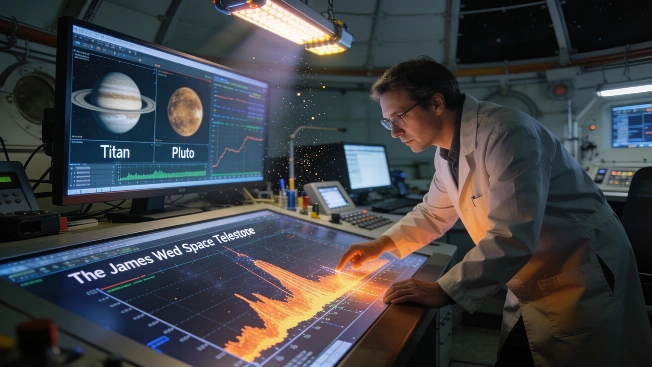
James Webb Telescope Detects Unidentified Infrared Signal on Titan and Pluto
The James Webb Space Telescope has recorded a mysterious infrared absorption feature on both Saturn's moon Titan and the dwarf planet Pluto, hinting at shared surface chemistry despite their contrasting environments.
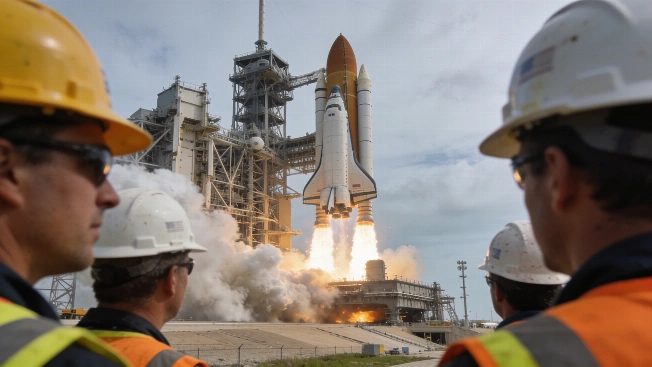
Rocket Launch Costs Plummet but New Barriers Emerge for Space Access
A new analysis of more than 4,400 launches finds that the average cost to send a kilogram to orbit has dropped by 96% since 1960. Future reductions could face constraints from orbital debris and market dominance, with geopolitical shifts adding pressure.
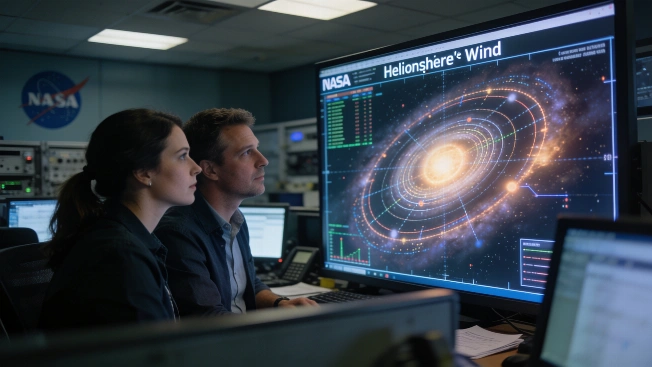
How the Heliosphere Shields the Solar System from Interstellar Space
Researchers are mapping the heliosphere, the vast bubble created by the solar wind that surrounds the Sun and planets, to understand how it protects the solar system from cosmic radiation and shapes planetary environments.
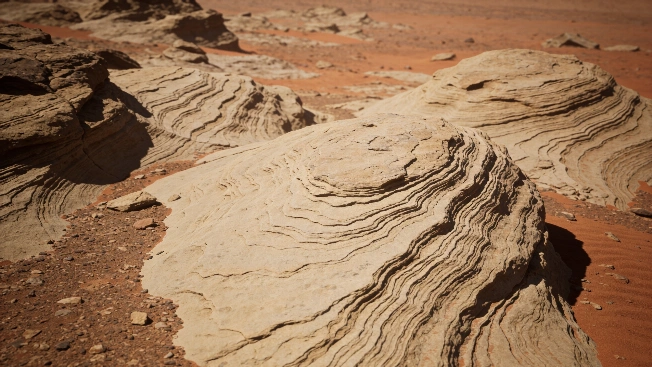
Curiosity Rover Reveals Ancient Sandstorm Evidence on Mars
NASA's Curiosity rover has imaged Martian rocks shaped by a powerful ancient sandstorm, offering new understanding into the Red Planet's dynamic past and the processes that once shaped its surface.
Atmosphere detected on rocky exoplanet in habitable zone
Astronomers have identified helium escaping from LHS 1140 b, a super-Earth orbiting in its star's habitable zone, using infrared spectroscopy. The finding offers the strongest evidence yet that a rocky exoplanet can retain an atmosphere for billions of years
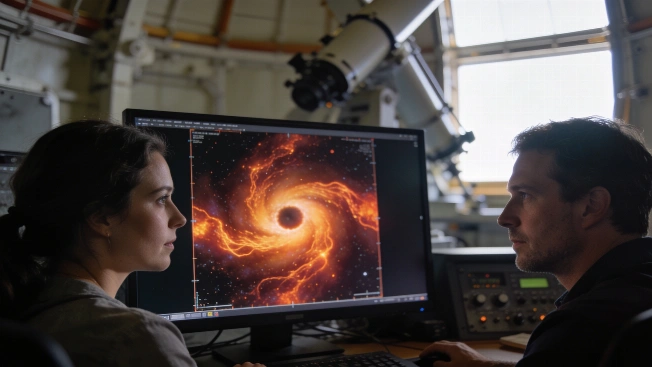
Webb Telescope Maps Gas Feeding a Supermassive Black Hole
Astronomers using the James Webb Space Telescope have studied gas clouds around Sagittarius A*, finding metal-rich gas whose local conditions shape cooling and may affect how material reaches the black hole.
Hayabusa2's Risky Asteroid Flyby Yields Unprecedented Close-Up Data
Japan's Hayabusa2 spacecraft has captured detailed images and thermal data of the near-Earth asteroid Torifune after a high-speed flyby, following intense debate over the mission's safety and scientific value.
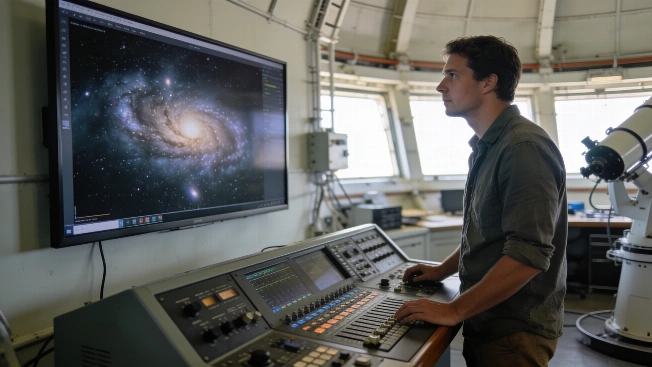
Webb Telescope Uses Gravitational Lensing to Reveal Ancient Galaxies
The James Webb Space Telescope has captured a detailed image of the galaxy cluster MACS J0553.4-3342, using gravitational lensing to magnify galaxies from the universe's first billion years
Astronomers Warn of Night Sky Risks From Sun-Reflecting Satellite
A private company has received regulatory approval to launch a satellite equipped with a large reflective surface, aiming to direct sunlight to Earth after dark. Astronomers and scientific organizations are raising concerns about the impact on astronomical observations and public safety.
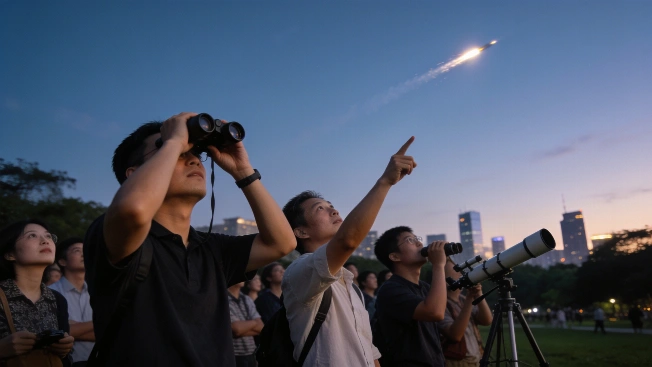
Asteroid Apophis to Make Exceptionally Close Approach in 2029
Researchers have mapped the 2029 flyby of asteroid Apophis, predicting that up to 90% of Earth's population could see the object with the naked eye as it passes closer than many satellites, offering a rare opportunity for direct observation
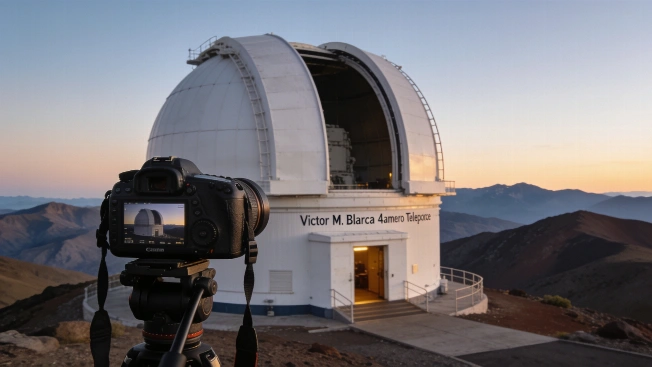
Dark Energy Camera Reveals Star Formation in Corona Australis Cloud
The Dark Energy Camera has imaged the Corona Australis Molecular Cloud, capturing intricate details of a nearby star-forming region and highlighting the interplay of gas, dust, and young stars in one of the closest stellar nurseries to Earth

Extreme Solar Storms May Exceed Previous Impact Estimates
A new analysis of solar wind data suggests that the most powerful solar storms could cause greater geomagnetic disturbances on Earth than previously calculated, with implications for satellites and power grids
Atmosphere Detected on Rocky Exoplanet in Habitable Zone
Astronomers have directly detected helium in the atmosphere of LHS 1140 b, a rocky exoplanet orbiting within its star's habitable zone, using infrared spectroscopy. The finding raises new questions about atmospheric survival and planetary habitability.
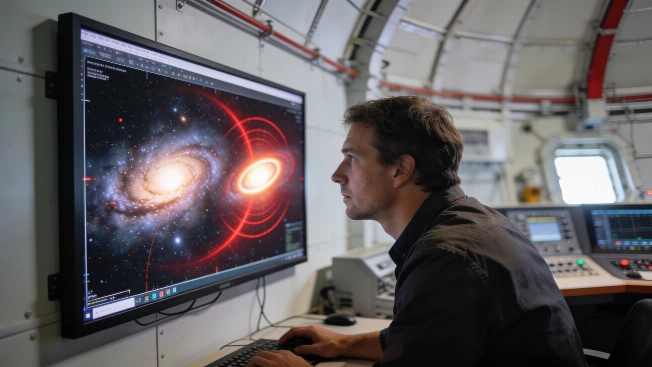
Webb Telescope Reveals Merging Young Galaxy Cluster 4.4 Billion Light-Years Away
NASA's James Webb Space Telescope has imaged galaxy cluster MACS J0553.4-3342 as it appeared 4.4 billion years ago, capturing two massive sub-clusters in the process of merging and showing the gravitational effects shaping distant galaxies

Soyuz MS-29 Launches NASA and Roscosmos Crew to Space Station
A Soyuz rocket has launched from Baikonur Cosmodrome, carrying NASA astronaut Anil Menon and Roscosmos cosmonauts Pyotr Dubrov and Anna Kikina to the International Space Station for a long-duration mission focused on scientific research
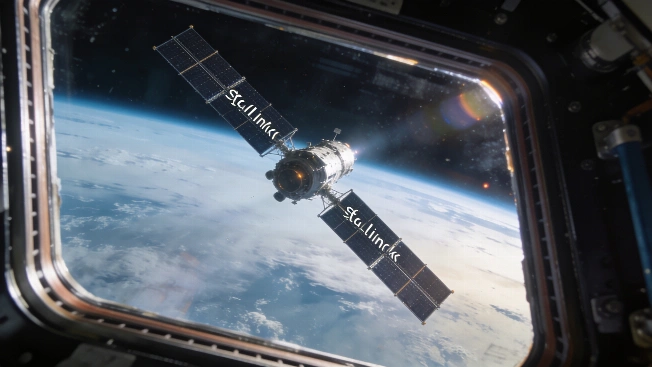
Starlink Satellites Face Near-Constant Collision Avoidance in Orbit
SpaceX's Starlink satellites have performed hundreds of thousands of collision avoidance maneuvers in the past year, highlighting the growing challenge of managing orbital traffic and the risks posed by increasing satellite numbers

Gravitational Wave Data Reveals Black Hole Event Horizon Properties
Researchers have extracted direct physical parameters from a black hole’s event horizon using an unusually strong gravitational wave signal, providing experimental access to a region previously studied only through theory.
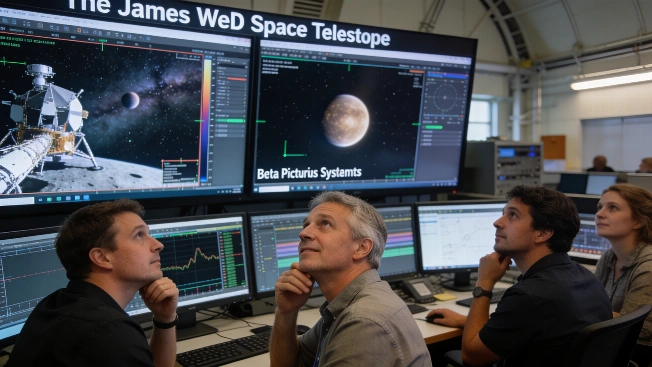
Webb Telescope Detects Hidden Giant Planet in Beta Pictoris System
The Beta Pictoris system contains three known giant exoplanets, while radio observations of β Pictoris b may offer clues to auroral activity and help investigate magnetic fields around distant planets.
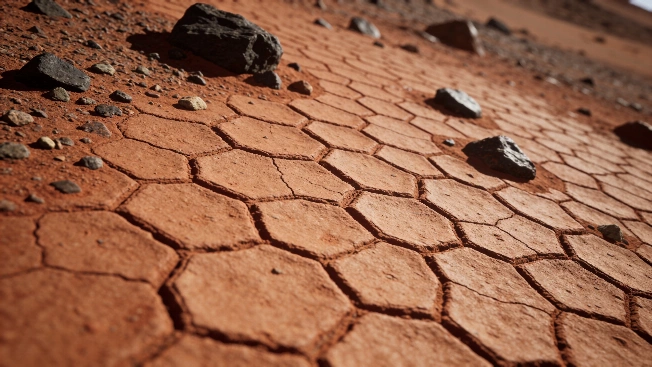
Curiosity Rover Images Unusual Honeycomb Patterns on Martian Surface
NASA's Curiosity rover has captured detailed images of a honeycomb-like texture on Mars, revealing polygonal surface patterns and scattered dark rocks. Scientists are investigating the origin of these features using in situ rover observations and orbital data
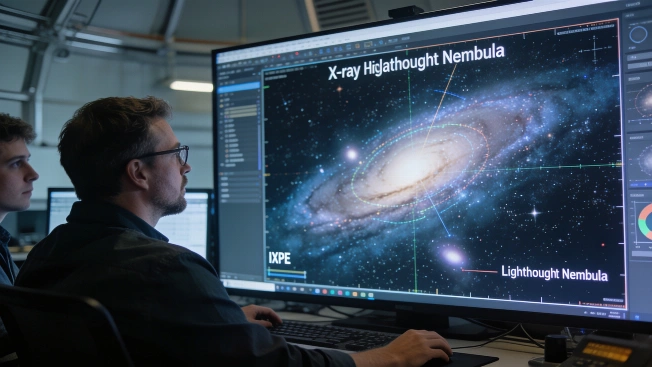
NASA's IXPE Maps Magnetic Field of Unusual Pulsar in Milky Way
Astronomers used NASA's Imaging X-ray Polarimetry Étudier to map the magnetic field around pulsar PSR J1101-6101, revealing how high-energy particles stream through the Milky Way and testing long-standing theoretical predictions.
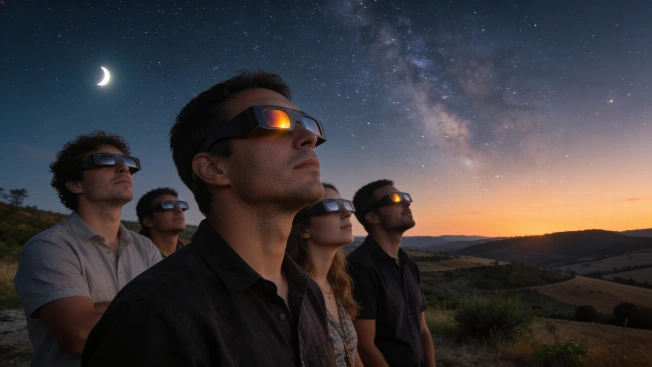
Total Solar Eclipse and Perseid Meteor Shower Align on 12 August 2026
On 12 August 2026, a total solar eclipse will cross eastern Greenland and Iceland before reaching Spain, coinciding with the Perseid meteor shower and a prominent evening appearance of Venus. Observers in North America and Europe will experience a rare overlap of astronomical events.
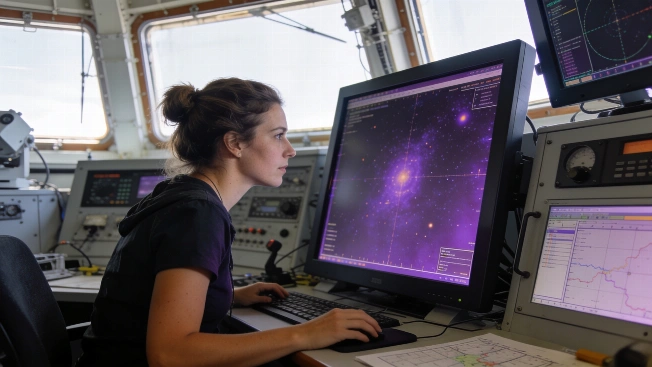
Hidden White Dwarfs Detected Near Earth in Red Dwarf Binaries
Astronomers have identified four white dwarfs concealed by red dwarf companions within 65 light-years of Earth. Ultraviolet observations from the Hubble Space Telescope revealed these elusive stellar remnants.
Part 7 of 7