NASA has fueled the Roman Space Telescope, a next-generation infrared observatory scheduled for launch in August 2026, aiming to collect hundreds of terabytes of cosmic data annually and expand studies of dark matter, dark energy, and exoplanets
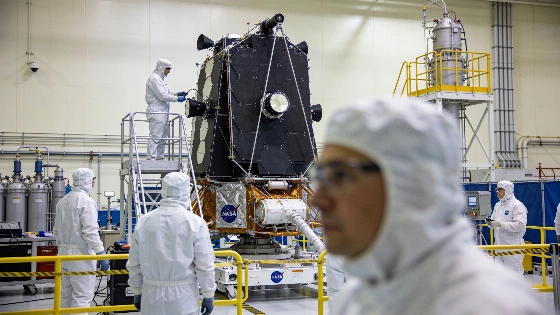
NASA has completed a major milestone in the preparation of the Nancy Grace Roman Space Telescope, fueling the spacecraft ahead of its planned launch on August 30, 2026. The observatory, designed to survey the infrared universe with unprecedented breadth, is now one step closer to joining the agency's fleet of space-based telescopes. The Roman mission is scheduled to launch aboard a SpaceX Falcon Heavy rocket from Kennedy Space Center, with the spacecraft targeting a stable orbit around the Sun-Earth Lagrange point 2 (L2), approximately 1.5 million kilometers from Earth.
Mission Status and Technical Milestones
The fueling operation, completed on July 25, involved loading the spacecraft with hydrazine-a propellant commonly used for spacecraft maneuvering and attitude control. Hydrazine is favored for its efficiency but is highly toxic and requires careful handling. NASA reports that the Roman mission remains ahead of schedule and under budget, with the team preparing for final integration and pre-launch testing. Once launched, Roman will use its propellant to operate thrusters that maintain its position at L2 and orient its solar arrays toward the Sun, ensuring a stable power supply throughout the mission.
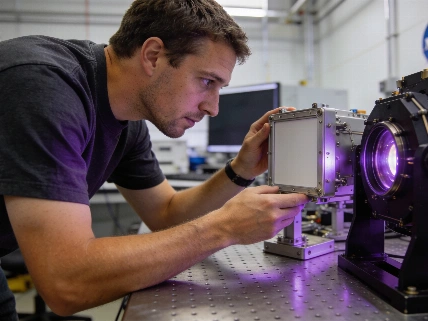
Roman's primary science phase will begin after a commissioning period at L2, where the observatory will undergo calibration and instrument checks. The mission's design emphasizes wide-field infrared imaging, enabling large-scale surveys of the cosmos. The Wide Field Instrument (WFI), Roman's main camera, will capture images covering areas of sky 50 times larger than those observed by the James Webb Space Telescope (JWST) in a single pointing, while maintaining comparable sensitivity in the near-infrared.
Scientific Objectives and Data Capabilities
The Roman Space Telescope is expected to generate more than 500 terabytes of data per year, a dramatic increase compared to the Hubble Space Telescope's total data return over its multi-decade mission. Roman's wide-field surveys will support investigations into the distribution and properties of dark matter and dark energy by mapping the positions and motions of millions of galaxies. The mission will also search for and characterize thousands of supernovae, including some at greater distances than previously observed, providing new constraints on cosmic expansion.
In addition to cosmology, Roman will contribute to the study of exoplanets through gravitational microlensing, a technique sensitive to planets orbiting distant stars. The observatory's broad field of view will allow it to detect transient events and compile target lists for follow-up by more specialized telescopes. While Roman's infrared vision is similar to JWST's, its survey speed and coverage are optimized for statistical studies rather than detailed examination of individual objects.
Context and Comparison with Other Missions
Roman's deployment at L2 will place it alongside JWST, enabling complementary observations of the infrared universe. While JWST excels at high-resolution imaging and spectroscopy of specific targets, Roman's strength lies in its ability to scan vast regions of sky efficiently. This synergy is expected to accelerate discoveries in fields ranging from galaxy evolution to the search for habitable worlds. The Roman mission's data volume and survey strategy represent a significant advance in space-based astronomy, building on the legacy of Hubble and other observatories.
NASA's approach to wide-field infrared surveys with Roman echoes the scientific goals of earlier missions, but with a scale and sensitivity not previously possible. The mission's progress comes as the agency prepares for other major astronomical events, such as the 2026 total solar eclipse, which will also involve coordinated observations from multiple platforms, as described in recent coverage of NASA's eclipse observation plans.
Roman's successful launch and commissioning will depend on the performance of its instruments, the stability of its orbit at L2, and the reliability of its data transmission systems. The mission's scientific return will be shaped by the quality of its calibration, the management of systematic uncertainties, and the ability of researchers to process and interpret the enormous data sets it will produce.
Space telescopes such as Roman rely on precise orbital insertion and station-keeping to maintain stable observing conditions. The L2 point is a gravitationally balanced location where the combined pull of the Sun and Earth allows a spacecraft to orbit the Sun in sync with Earth, minimizing fuel use for station-keeping. This stability is crucial for long-duration astronomical observations, as it reduces thermal fluctuations and enables continuous communication with ground stations. The commissioning phase following launch is essential for verifying instrument performance, calibrating detectors, and ensuring that the observatory meets its scientific requirements before routine operations begin.