
arXiv - Part 3
90 reports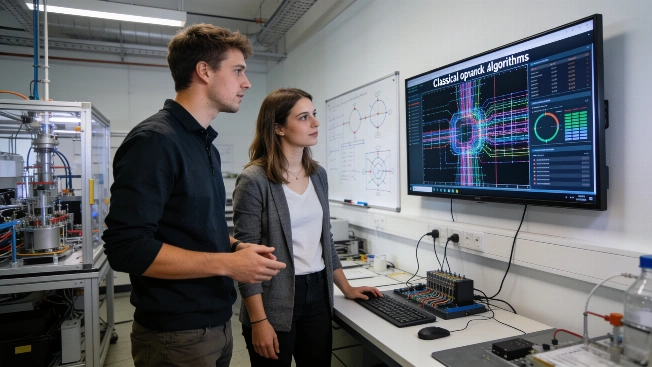
Quantum Optimization Benchmarking Library Sets New Standard for Fair Comparison
A global consortium has released the Quantum Improvement Benchmarking Library, a model-independent structure for comparing quantum, classical, and hybrid algorithms on hard combinatorial problems. The open-source platform aims to clarify claims of quantum advantage.
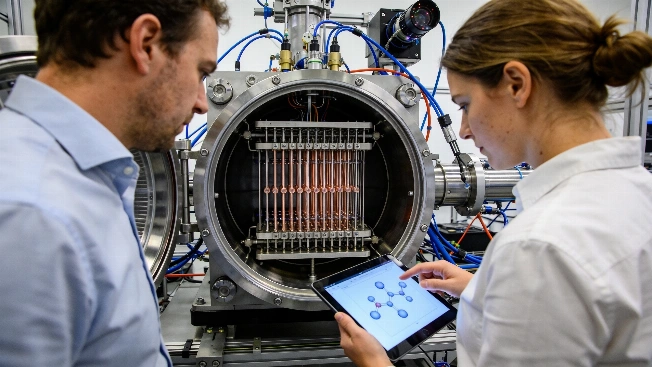
AI-Generated Quantum Circuits Tested on 98-Qubit Trapped-Ion Hardware
A collaboration involving Quantinuum and NVIDIA, with Pfizer, has demonstrated an AI-driven structure for generating quantum circuits and executing them on a 98-qubit trapped-ion processor to model pharmaceutical molecules.
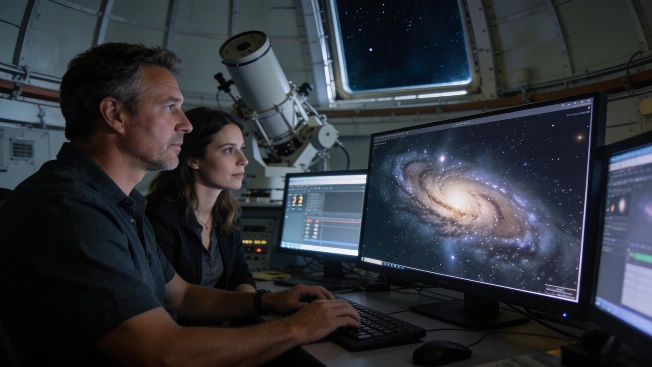
Webb Telescope Resolves Closest Black Hole Pair in Early Universe
Astronomers using the James Webb Space Telescope and ALMA may have identified two supermassive black holes just 4,900 light-years apart in a galaxy merger 1.3 billion years after the Big Bang, offering new understanding into rapid black hole growth.
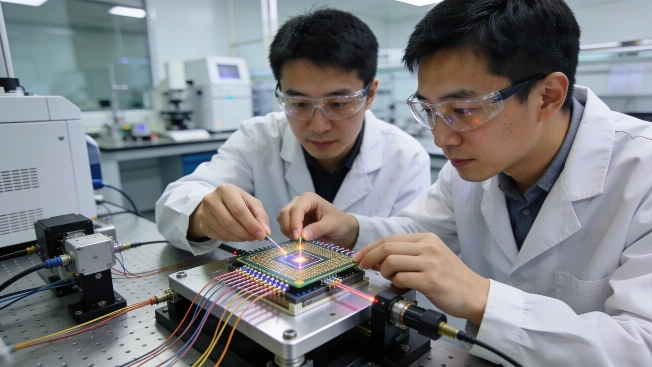
16-Qubit Photonic Quantum Processor Demonstrated on Silicon Chip
A team from Hefei Guizhen Chip Technology and USTC has built a 16-qubit measurement-based quantum computing system on a silicon photonic chip, achieving high-fidelity operation with high-dimensional path encoding.
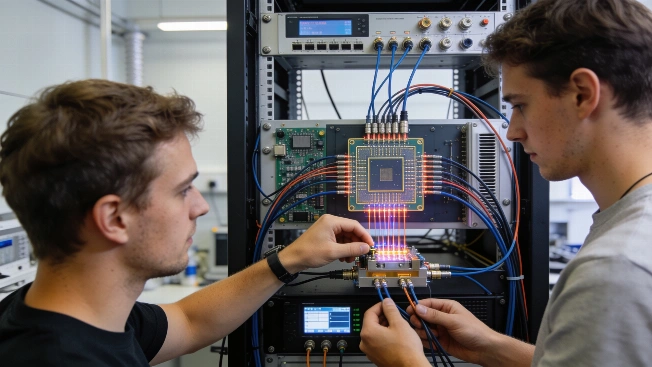
QuiX Quantum Releases Alquor 2.0 Photonic Processor Platform
QuiX Quantum has launched Alquor 2.0, a rack-mountable photonic processor platform based on silicon nitride integrated circuits. It is designed to support quantum optics and information-processing research with improved stability and automation.
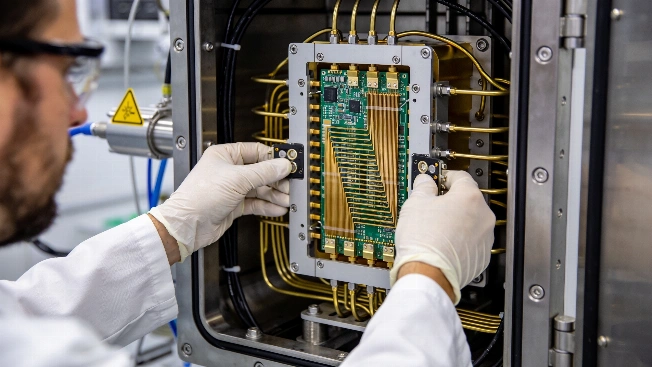
Modular Quantum Architecture Cuts Physical Qubit Overhead Tenfold
Qarakal Quantum has introduced Pangaea, a modular superconducting quantum computing architecture designed to reduce the number of physical qubits needed for fault-tolerant logical qubits by an order of magnitude compared with standard layouts.
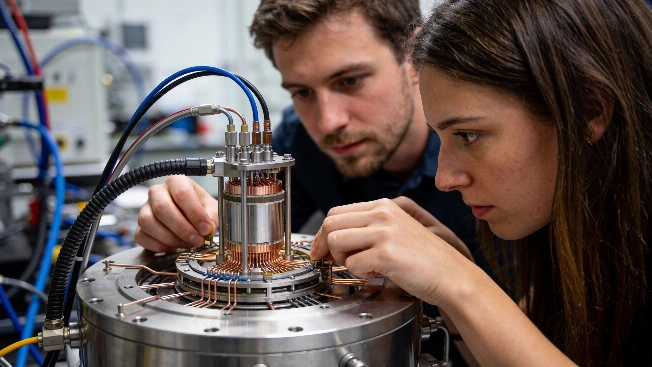
Mitten Codes Aim to Boost Logical Qubit Density in Quantum Processors
Caltech and Oratomic researchers have introduced mitten codes, a new family of non-abelian quantum LDPC codes targeting higher encoding rates and lower overhead for fault-tolerant quantum computing hardware
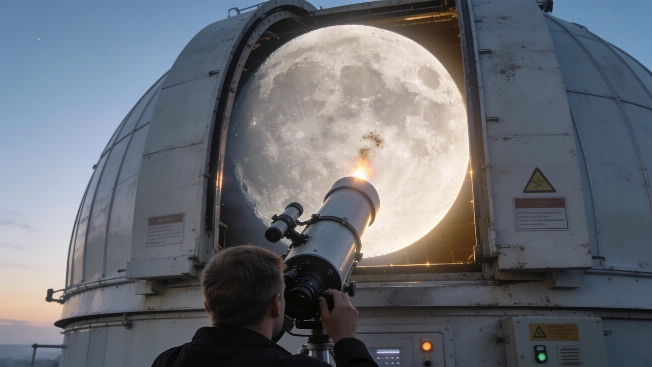
How a Falcon 9 Upper Stage Ended Up Bound for the Moon
A Falcon 9 upper stage abandoned in a high Earth orbit hit the Moon on August 5, 2026, after gravity and solar activity gradually altered its trajectory.
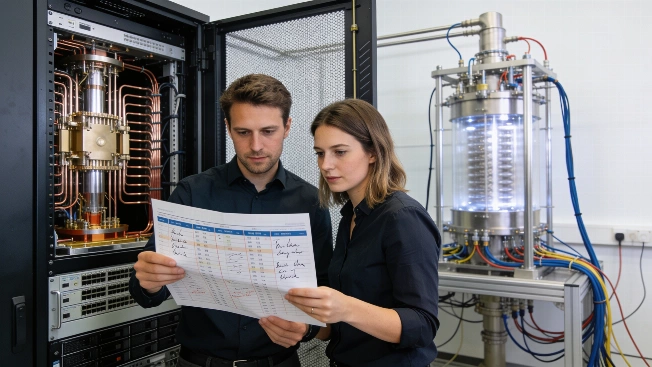
Hybrid Quantum Algorithm Tested on German Railway Scheduling Data
IQM Quantum Computers and Deutsche Bahn have demonstrated a hybrid quantum-classical algorithm for rolling stock scheduling, using a superconducting quantum processor to process real operational data from major German cities.
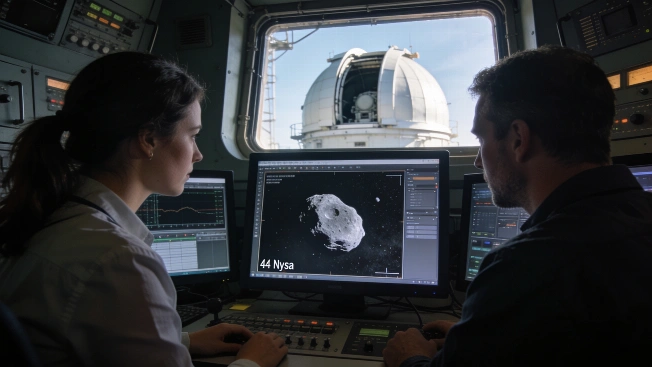
Triple-Lobed Asteroid 44 Nysa Imaged With Orbiting Moon in Asteroid Belt
Astronomers have resolved asteroid 44 Nysa as the first known triple-lobed body in the basic belt, using adaptive optics on major ground-based telescopes. The object also hosts a small moon, raising new questions about asteroid formation and evolution.
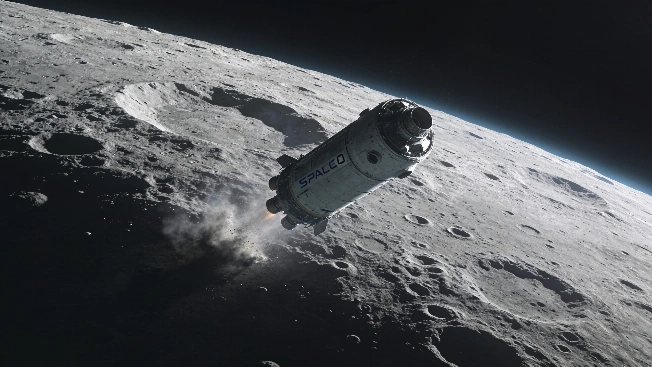
SpaceX Rocket Stage to Impact Moon, Raising New Scientific Questions
A spent SpaceX Falcon 9 upper stage has struck the lunar surface, giving researchers a rare chance to observe artificial impacts on the Moon with telescopes and orbital instruments.
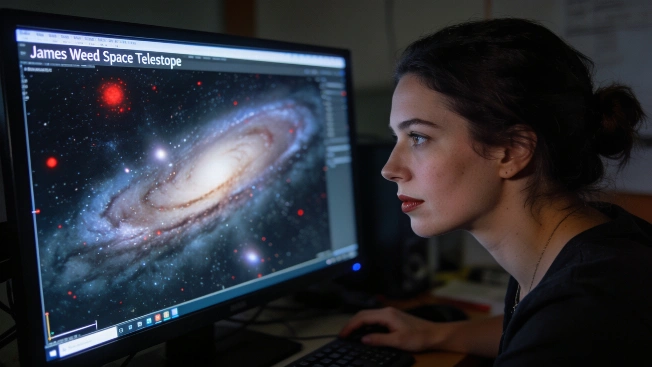
Webb Telescope Study Links Little Red Dots to Black Hole Activity
Astronomers using the James Webb Space Telescope have traced the origins of mysterious “little red dots” in deep space, suggesting that these compact sources are linked to phases of intense supermassive black hole activity.
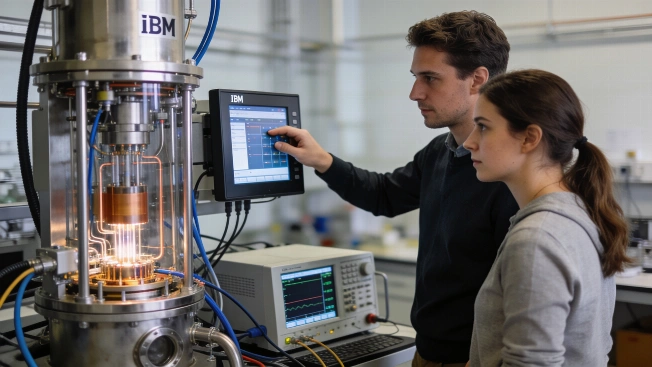
IBM Quantum Hardware Benchmarked for Smart Grid Energy Forecasting
Researchers tested hybrid quantum-classical machine learning algorithms on IBM Quantum hardware with over 100 qubits to forecast electricity demand across smart grids, comparing performance and noise sensitivity with classical methods
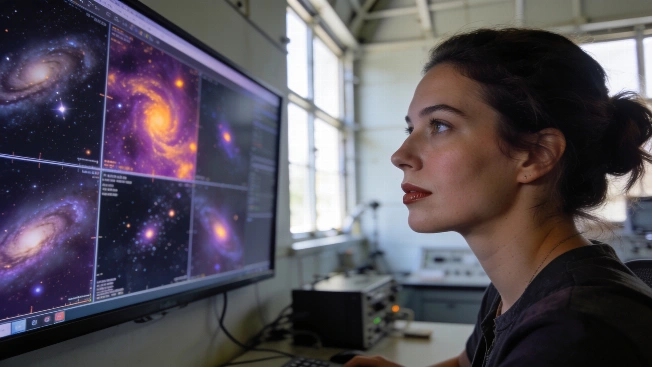
Webb Telescope Links 'Little Red Dots' to Ancient Star Clusters
Astronomers using the James Webb Space Telescope have traced mysterious 'Little Red Dots' in the early universe to the possible origins of globular clusters, offering new clues about how these dense stellar systems formed.
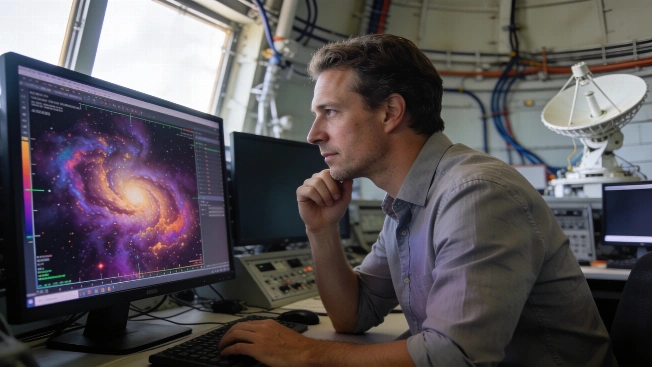
Magnetic Field of Galaxy Cluster Abell 2255 Mapped in Unprecedented Detail
Using deep radio observations from LOFAR, astronomers reconstructed the magnetic field structure of galaxy cluster Abell 2255, revealing how gas dynamics shape cosmic magnetism across millions of light-years.
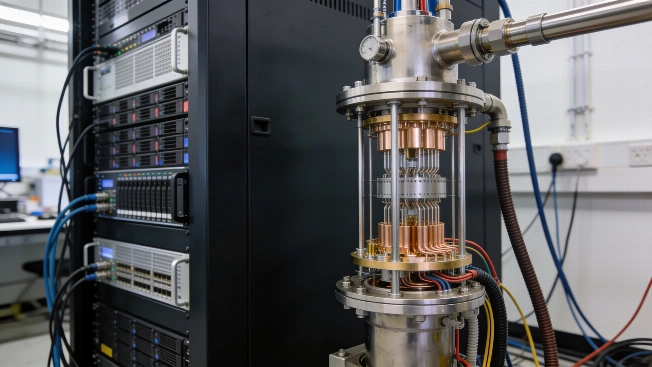
New Model Sets Limits for Quantum and HPC Integration Performance
A joint study by AWS, NVIDIA, LBNL, and NASA presents a quantitative model for deciding when quantum processors need physical integration with supercomputers and when remote cloud access can support hybrid quantum-classical algorithms
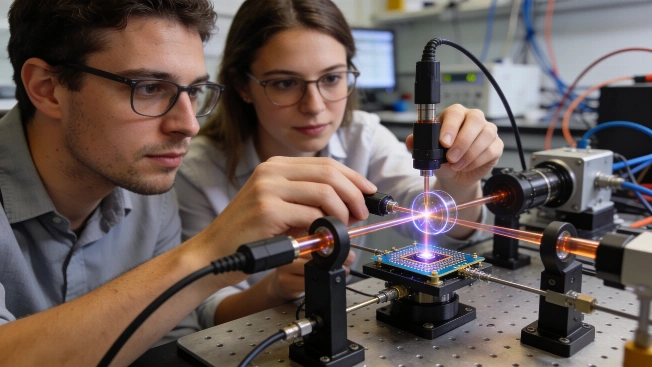
Hybrid Photon-Atom Quantum Blueprint Targets Error Correction Limits
Quantum Source Alpha Labs has published a detailed hardware proposal for a hybrid photon-atom quantum computing architecture aimed at addressing the scaling and error-correction challenges that limit current quantum processors.
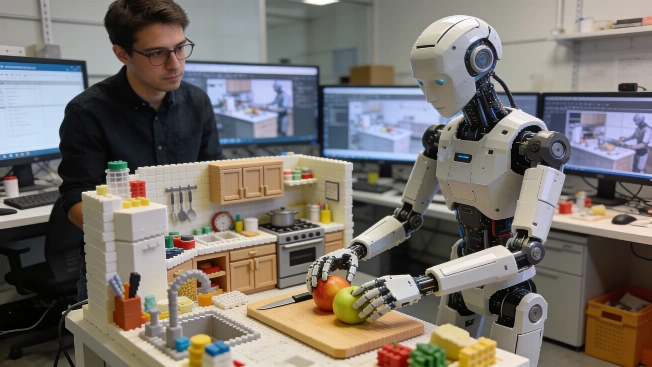
AI agents build complex 3D training worlds for robot learning
Researchers at MIT and Toyota Research Institute have developed SceneSmith, a system that uses collaborative AI agents and vision-language models to generate detailed 3D environments for robotics simulation and training.
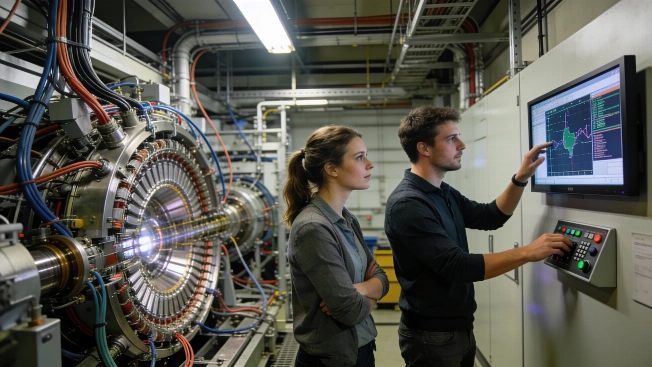
AI in Particle Physics: Discovery Without Full Understanding
Artificial intelligence is now central to particle physics, accelerating data analysis and experiment design. But as AI systems identify patterns beyond human intuition, researchers face new challenges in transparency, reproducibility, and scientific interpretation
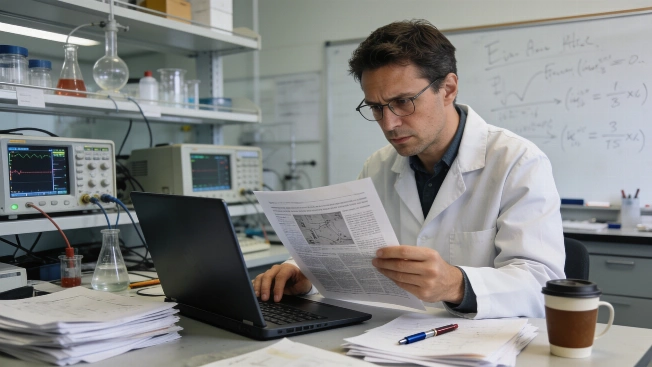
AI-Generated Content Challenges Scientific Integrity in Physics Publishing
The rise of large language models is bringing fabricated references and unverifiable data into scientific literature, forcing physicists to scrutinize sources and reinforce core research skills to maintain trust in published results.
Part 3 of 3