
Major Discoveries - Part 3
352 reports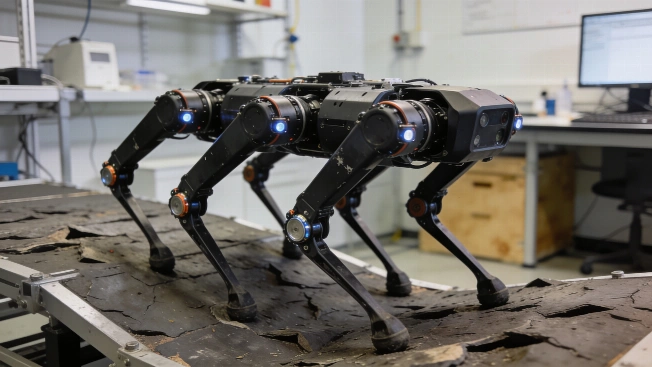
Six-Legged Robot Learns Adaptive Walking From Stick Insect Movements
A research team has developed a six-legged robot that uses AI to learn walking strategies from stick insect movement data, enabling it to adapt to uneven terrain and physical damage in laboratory tests.
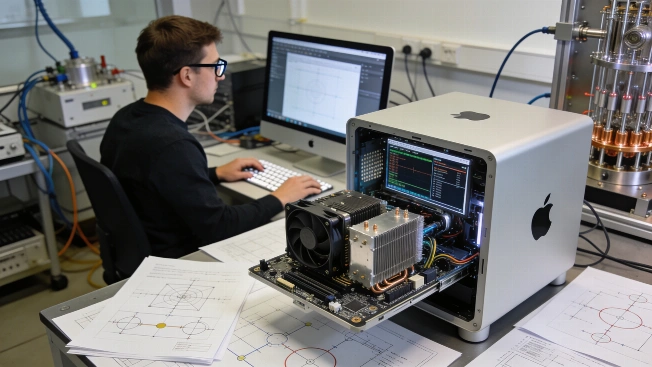
IonQ Runs Real-Time Quantum Error Correction on Apple M4 Max CPU
IonQ researchers have demonstrated a real-time quantum error correction decoding pipeline for large-scale trapped-ion quantum computers, processing MegaQuOp-scale workloads on a single Apple M4 Max CPU and addressing classical decoding bottlenecks.
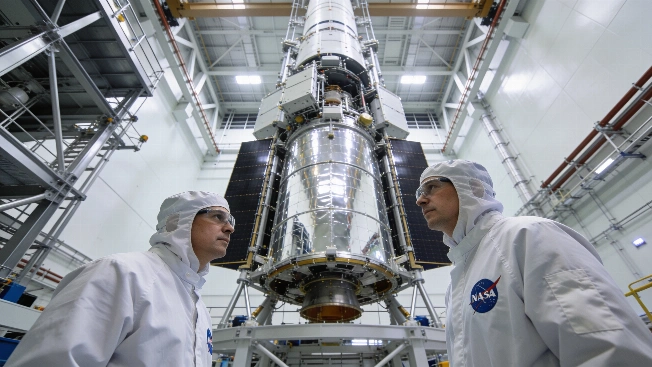
NASA's Roman Space Telescope Set for Launch to Map Distant Cosmos
NASA's Nancy Grace Roman Space Telescope is scheduled to launch from Florida to investigate exoplanets and distant galaxies with a wide-field infrared observatory, while probing dark matter. Its first science images are expected in 2027.
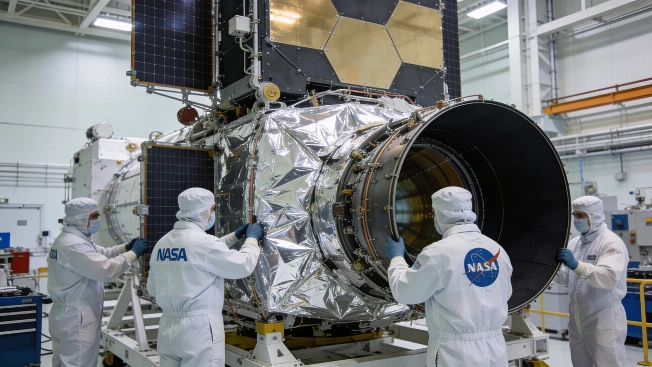
NASA's Roman Space Telescope Nears Launch After Budget Uncertainty
NASA's Nancy Grace Roman Space Telescope is set for launch after nearly two decades of development. It survived the threat of cancellation and major funding cuts to become the agency's next flagship observatory, focused on dark energy and exoplanets while also mapping cosmic structure.
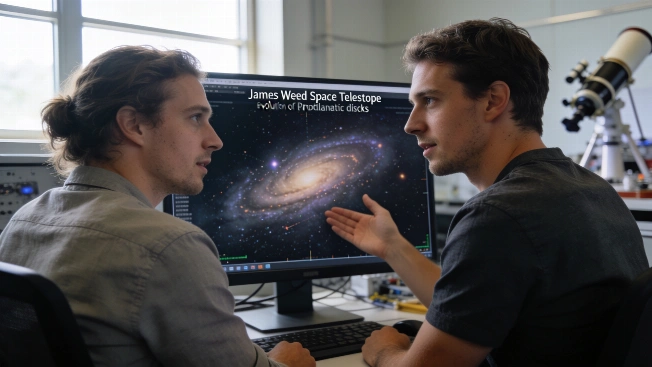
Webb Telescope Reveals Planet Formation Depends on Rapid Disk Evolution
Astronomers using the James Webb Space Telescope have tracked how gas and dust escape from disks around 72 young Sun-like stars, showing that planet formation must compete with the rapid dispersal of raw material.
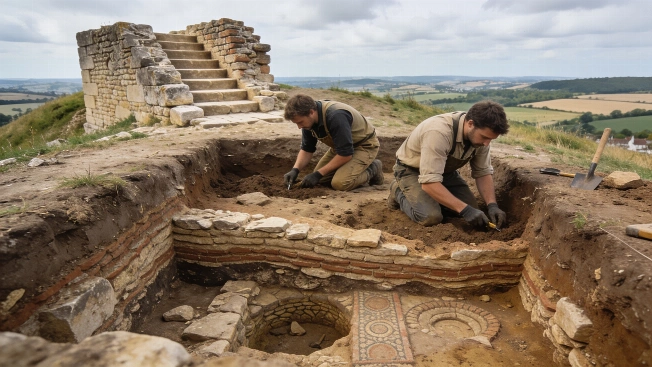
Excavation Reveals 1,500 Years of Settlement on Montbellant Hill
Archaeologists in Burgundy have uncovered deep, stratified remains on Montbellant hill, documenting the change from a Gallic oppidum to a medieval town through successive building phases and industrial activity.
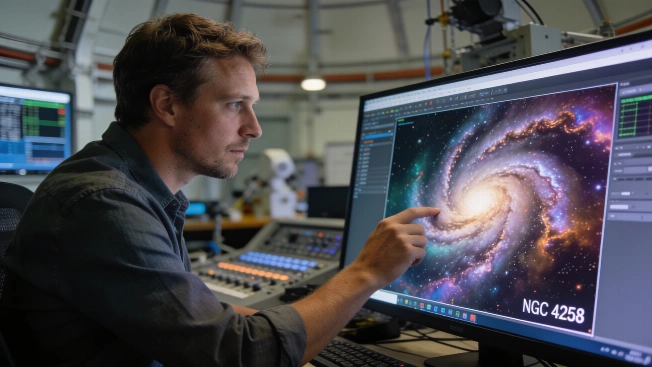
NASA Telescopes Reveal Unusual Extra Arms in Spiral Galaxy NGC 4258
A composite image from NASA's Chandra, Hubble, and James Webb telescopes reveals the spiral galaxy NGC 4258, highlighting two anomalous extra arms shaped by its central supermassive black hole
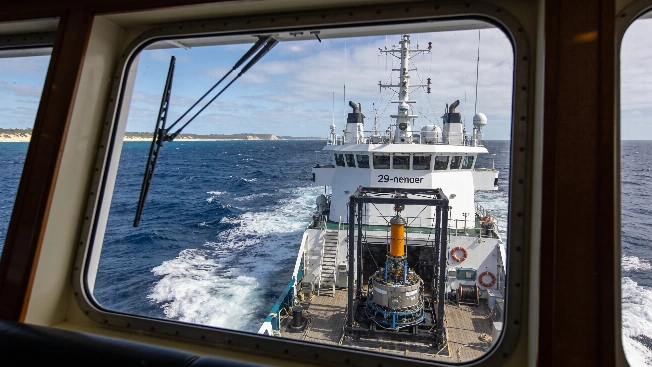
Quantum Gravimeter Demonstrates GPS-Free Navigation in Coral Sea Trial
Q-CTRL has field-tested a quantum gravimetric navigation system on open water, achieving 1-nautical-mile accuracy without GPS by combining cold-atom interferometry with classical sensors in a real maritime environment.
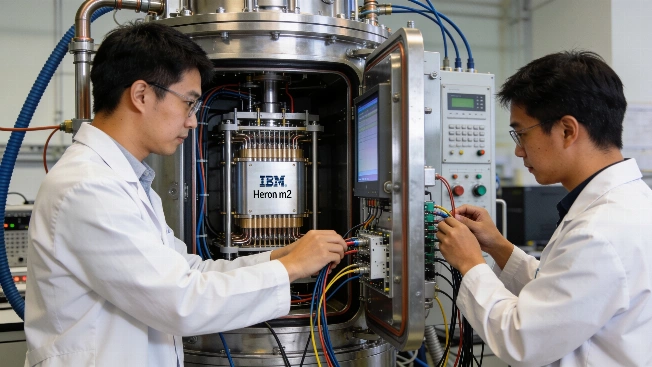
Singapore Team Compresses Qubit Use for Drug Docking on IBM Quantum Chip
Researchers at A*STAR and NUS have demonstrated a hybrid quantum-classical approach that reduces the number of qubits needed for molecular docking, with experiments on IBM's 156-qubit Heron r2 processor.
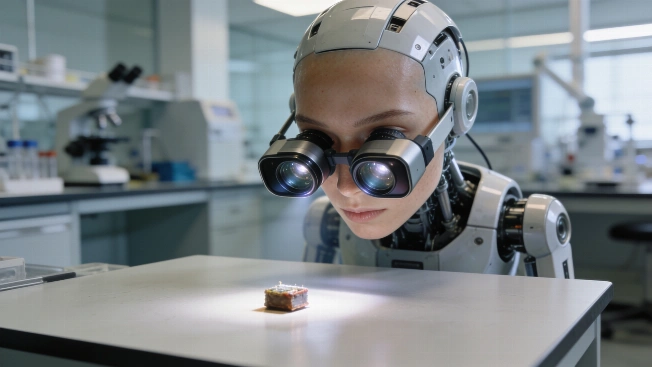
New Algorithm Brings Humanlike Depth Perception to Humanoid Robots
A research team at York University has introduced a convergent binocular stereo algorithm that enables humanoid robots to estimate depth and object orientation more like humans, with tested improvements on a challenging benchmark dataset.
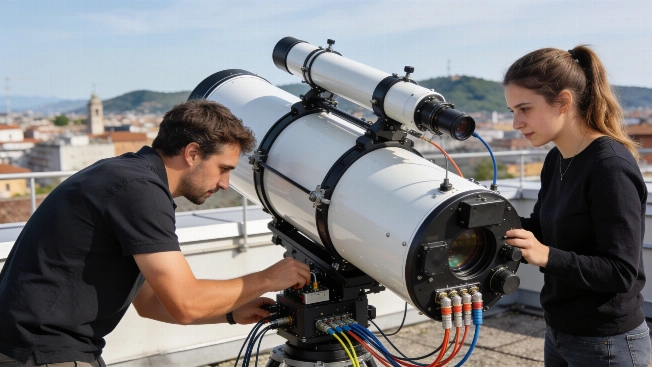
Field Test Links Quantum Key Distribution Over 18 km Free-Space Channel
A team in Italy has demonstrated real-time quantum key distribution over an 18-kilometer free-space link, using room-temperature detectors and adaptive optics to counter atmospheric turbulence and couple the signal into standard fiber.
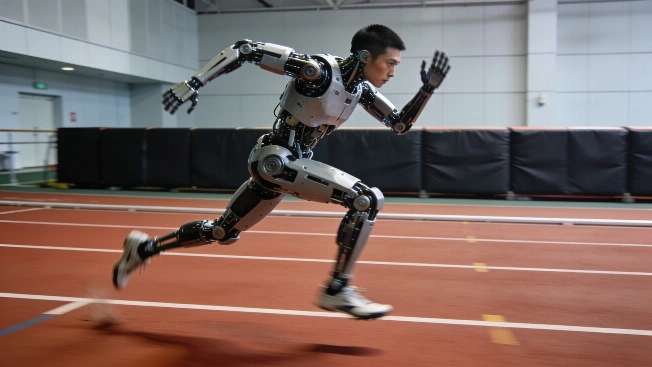
Chinese Humanoid Robot Lightning Runs 100m Faster Than Usain Bolt
A Chinese-built humanoid robot named Lightning has reportedly completed a 100-meter sprint in 9.32 seconds during a controlled test in Beijing, surpassing the human world record and raising new questions about the limits and risks of high-speed bipedal robotics
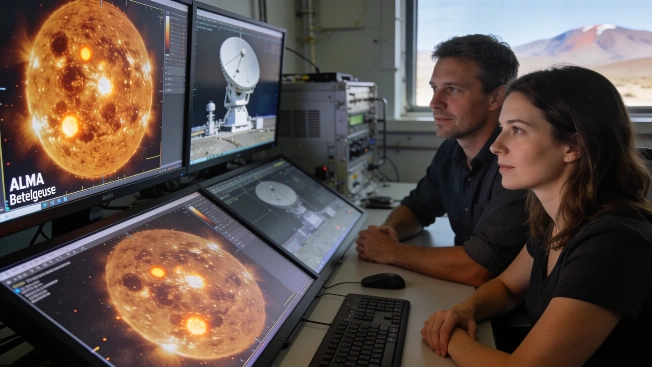
ALMA Reveals Persistent Hotspots on Betelgeuse's Turbulent Surface
Astronomers using the Atacama Large Millimeter/submillimeter Array have mapped Betelgeuse's surface in unprecedented detail, revealing long-lived hotspots and complex plasma flows that challenge current models of red supergiant stars.
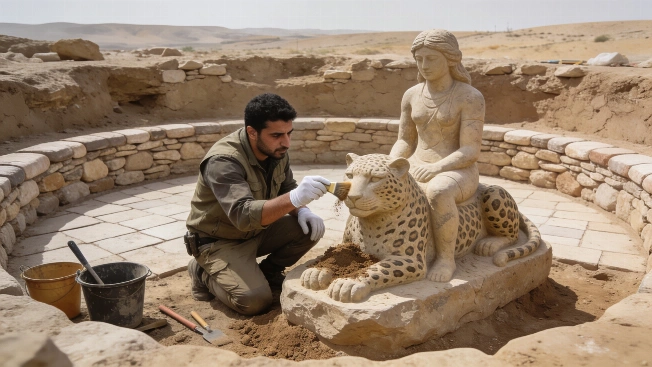
11,000-Year-Old Human-Leopard Sculpture Found at Karahantepe
Archaeologists at Karahantepe in southeastern Türkiye have uncovered a rare Neolithic stone sculpture depicting a human figure seated on a leopard, offering new evidence of symbolic art and social practices in early settled communities.
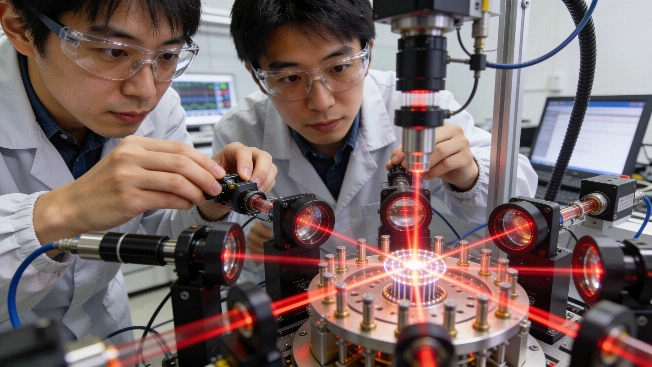
Japan Deploys Neutral-Atom Quantum Computer With 50 Qubits
Japan's Institute for Molecular Science has launched 'Shunkai,' a neutral-atom quantum computer integrating optical tweezer arrays and room-temperature control, with an initial 50-qubit platform and plans for future scaling
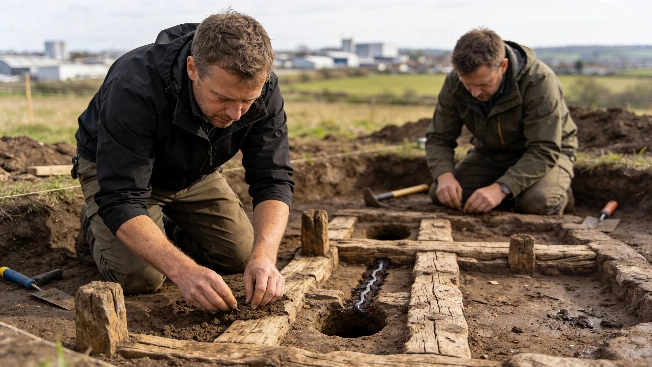
Abandoned Medieval Settlement Excavated on Halberstadt's Outskirts
Archaeologists in Saxony-Anhalt have uncovered the remains of a deserted medieval settlement, revealing sunken buildings and wells alongside a complex ditch system, but remarkably few artifacts, a pattern suggesting an organized abandonment.
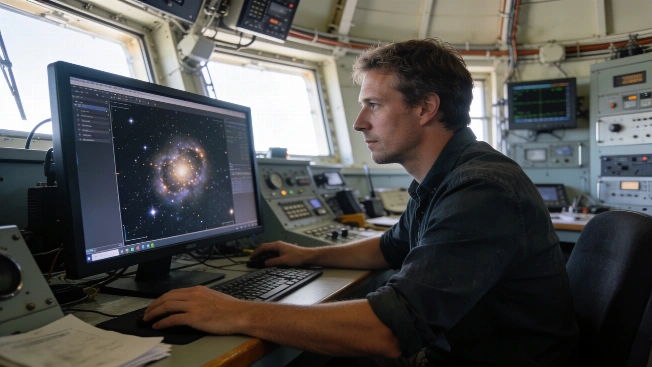
Milky Way's Oldest Known Merger Leaves Lasting Mark at Galactic Center
Astronomers have identified evidence of the Milky Way's earliest known galactic merger using Hubble Space Telescope data to trace ancient globular clusters and reveal a collision that shaped the galaxy's core nearly 12 billion years ago.
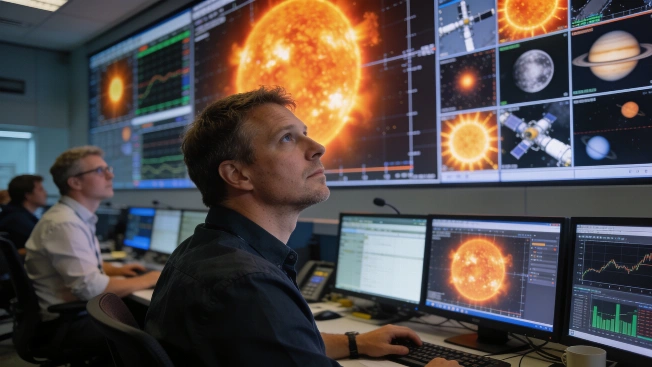
Seventeen Spacecraft Reveal Asymmetric Structure in Solar Ejection
A coronal mass ejection observed in December 2024 was tracked by 17 spacecraft across the solar system, revealing an unexpected double-lobed structure and a marked speed difference between its components
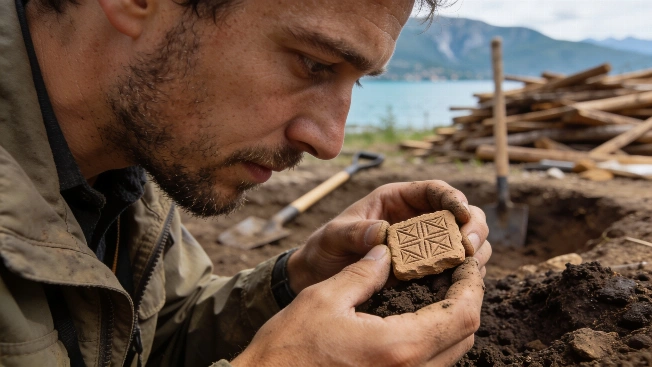
4,000-Year-Old Clay Tablet With Geometric Markings Found Near Lake Garda
Archaeologists at Lucone di Polpenazze in northern Italy have uncovered a 4,000-year-old clay tablet marked with geometric patterns, renewing questions about the function and meaning of these enigmatic Bronze Age artifacts.
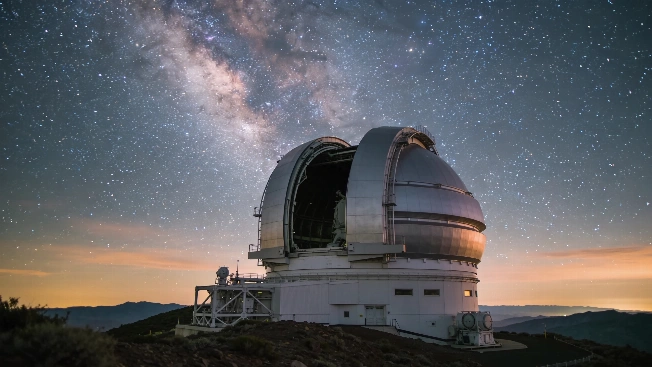
Dark Energy Camera Reveals Ancient Stars and Stellar Birth in Corona Australis
A new image from the Dark Energy Camera on the Blanco 4-meter Telescope captures the Corona Australis Molecular Cloud, highlighting newborn stars and one of the oldest star clusters in the Milky Way.
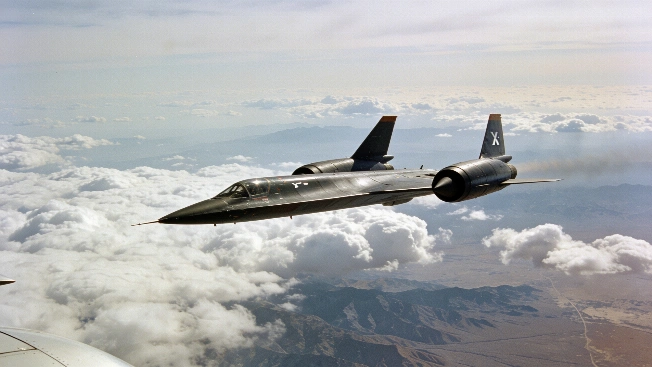
X-15 Rocket Plane Sets 1963 Altitude Record Above Kármán Line
On August 22, 1963, the X-15 rocket plane piloted by Joe Walker reached an altitude exceeding 108 kilometers, providing rare data on hypersonic flight and spacecraft reusability during a defining period for space research.
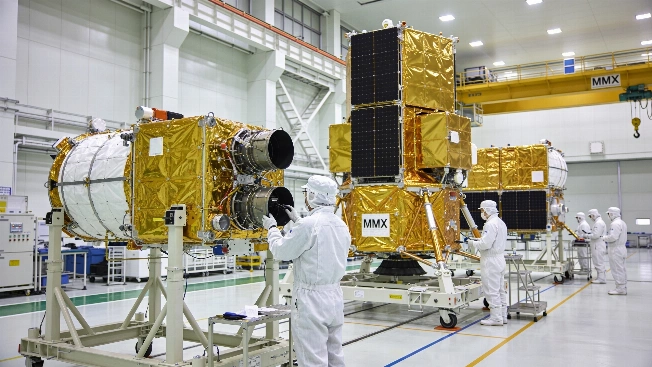
Japan Prepares MMX Spacecraft for Mars Moon Sample Return Launch
Japan has unveiled its MMX spacecraft, scheduled to launch on October 19, 2026, to collect and return samples from Mars' moon Phobos. The mission will test sample-return technology and address basic questions about the origins of Mars' moons.
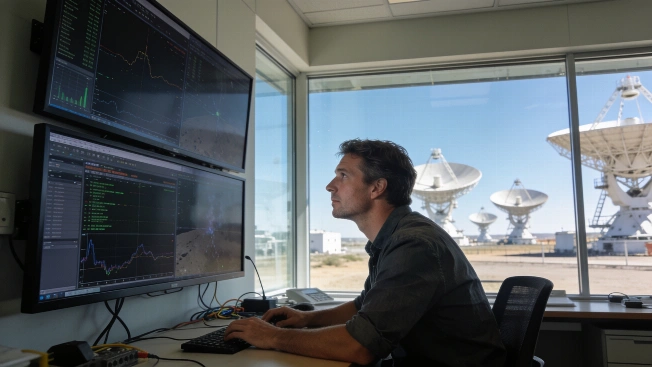
Fading Radio Galaxies Reveal What Happens When Black Holes Go Quiet
A new study using MeerKAT, LOFAR, and the Jansky Very Large Array has identified galaxies with fading radio lobes, offering understanding into the late stages of supermassive black hole activity.
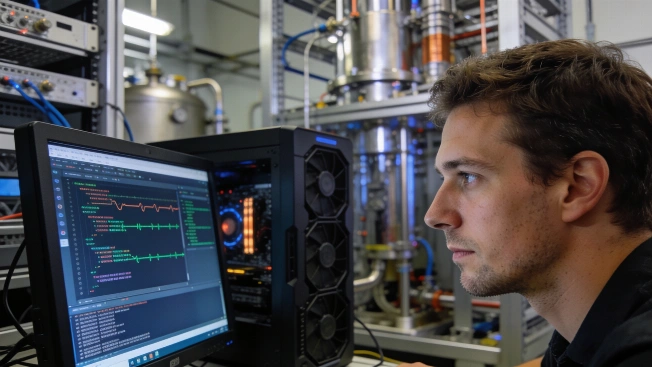
AI Decoder Surpasses PyMatching on Google Quantum Surface-Code Data
Quantum X Labs reports that its AI-based quantum error correction decoder achieved higher decoding accuracy than standard matching algorithms on Google's public surface-code dataset. The decoder was trained exclusively on synthetic data and uses GPU acceleration.
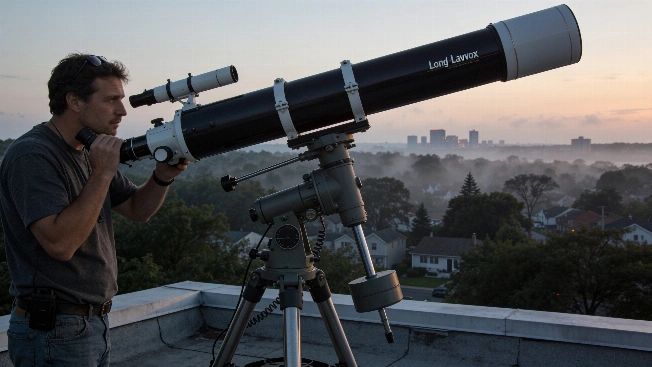
Brookhaven and Stony Brook Send Entangled Photons 21 km Through Open Air
A team at Brookhaven National Laboratory and Stony Brook University has established a 21-kilometer free-space quantum link, transmitting single and entangled photons across the atmosphere to connect metropolitan quantum network nodes under real-world conditions
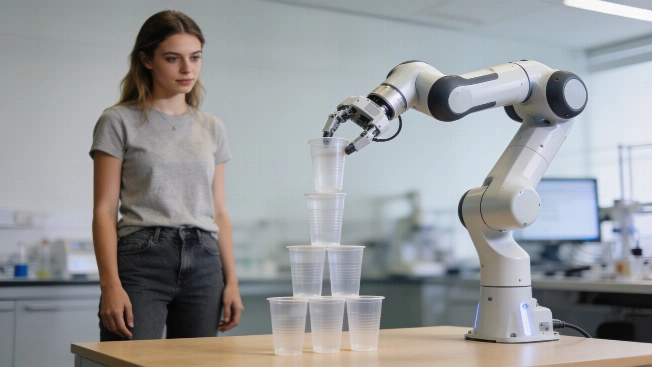
GEN-1.5 Robot Model Imitates Physical Tasks After One Short Demo
Generalist AI has introduced GEN-1.5, a foundation model for robots that attempts new physical tasks after observing a single brief demonstration, without requiring fine-tuning or retraining.
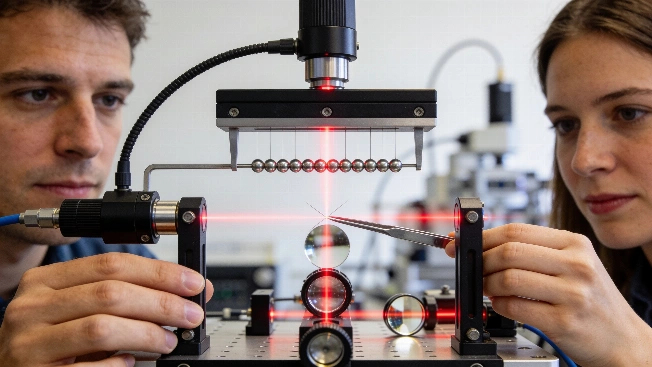
Neutral-Atom Quantum Simulator Probes 2D Conformal Field Theory Spectra
A Caltech-led team has directly measured finite-size energy excitation spectra predicted by two-dimensional conformal field theory using a neutral-atom quantum simulator based on strontium atom chains and Rydberg interactions.
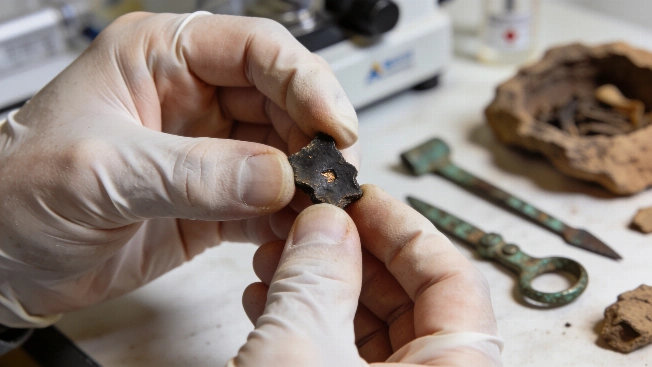
Pre-Inca Metalwork in Peru Linked to Bolivian Ore by Isotope Analysis
Archaeologists have traced metallurgical waste from a Wari-period burial at Castillo de Huarmey in Peru to ore sources in present-day Bolivia, revealing long-distance movement of metal and technological knowledge across the Andes
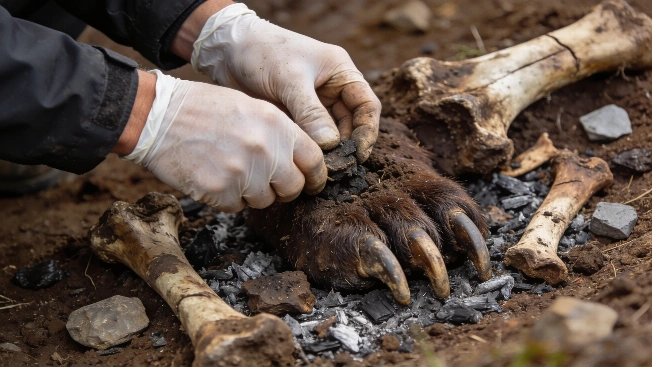
Bear Claws in Early Medieval Burials Reveal Social Hierarchy in Baltic
Archaeologists have identified brown bear claws in cremation burials from the sixth and seventh centuries CE on the Kaliningrad Peninsula, offering new evidence of social status and ritual practices among the Aestii population.
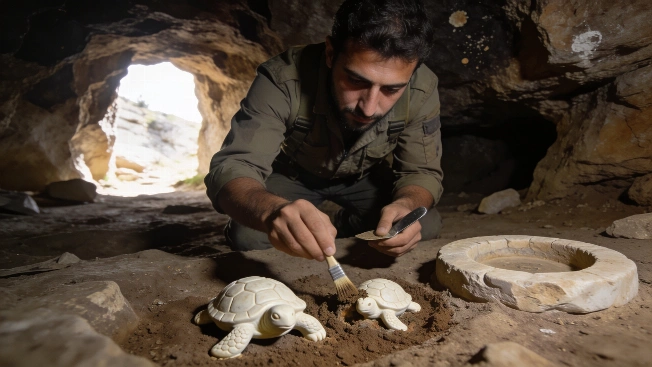
Ice Age Turtle Figurines Suggest Ritual Activity in Northwestern Türkiye
Archaeologists have uncovered 25 limestone turtle figurines at İn Cave in Bilecik Province, Türkiye, dating to 14,500-11,200 BCE. The finds offer rare evidence of symbolic or ritual practices among Epipalaeolithic hunter-gatherers.
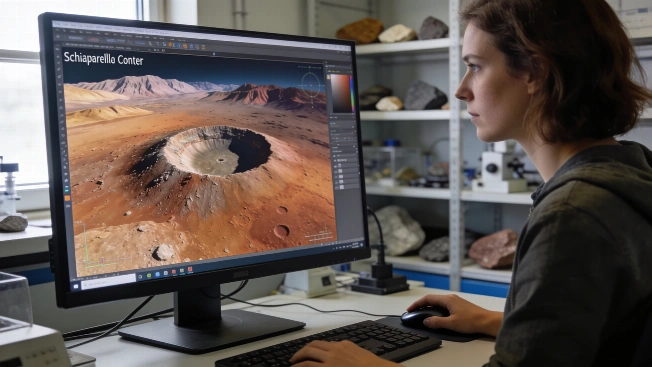
Mars Express Reveals Detailed 3D View of Schiaparelli Crater
ESA's Mars Express orbiter has produced a new high-resolution 3D visualization of Schiaparelli Crater and the Southern Highlands, offering fresh understanding into ancient Martian water activity and surface evolution.
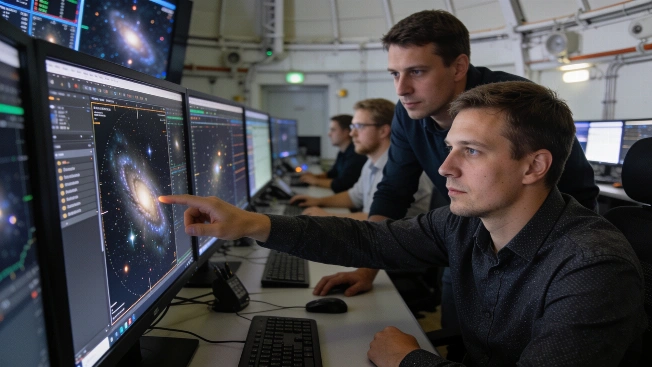
Webb Telescope Reveals Early Galaxies Are Richer in Small Stars
Astronomers using the James Webb Space Telescope have detected a higher proportion of faint, low-mass stars in ancient galaxies, suggesting these early systems are more massive than previously estimated
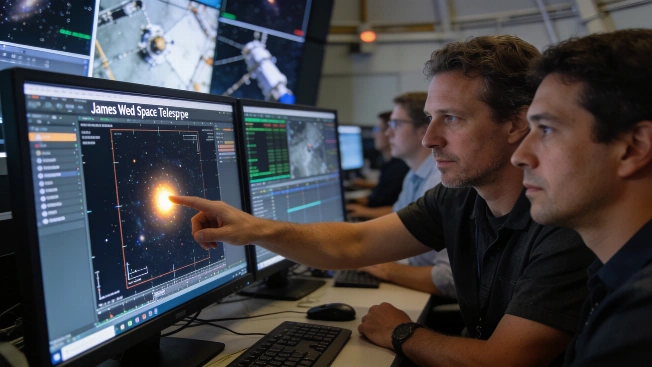
Webb Telescope Spots Candidate Black Hole Star in Early Universe
Astronomers using the James Webb Space Telescope have identified a luminous, solar-system-sized object dating to 660 million years after the Big Bang, offering the strongest evidence yet for a hypothesized class of “black hole stars.”
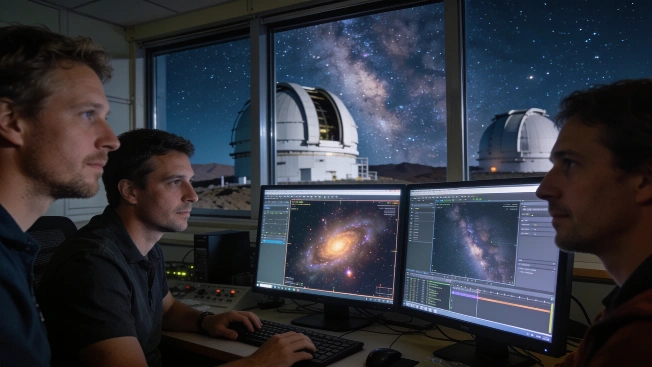
Fastest Known Star Orbits Milky Way's Black Hole in Under 9 Years
Astronomers using the Very Large Telescope Interferometer have identified S301, a star orbiting Sagittarius A* at record speed. The discovery offers a new chance to test general relativity near the Milky Way's supermassive black hole.
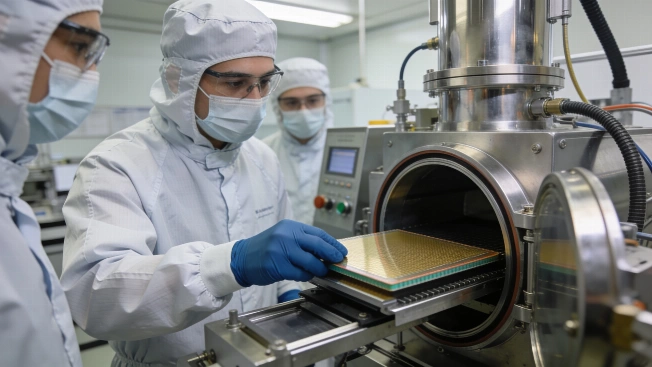
Cornell Team Deposits High-Quality Tantalum Qubits at 200°C
Researchers at Cornell University have demonstrated a low-temperature process for depositing tantalum films for superconducting qubits, using krypton gas to produce high-quality films compatible with commercial semiconductor foundries.
Part 3 of 11