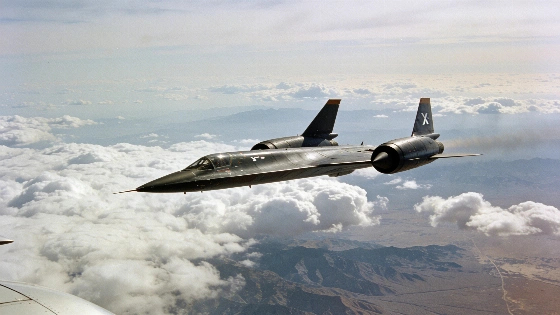
On August 22, 1963, the X-15 rocket plane piloted by Joe Walker reached an altitude exceeding 108 kilometers, providing rare data on hypersonic flight and spacecraft reusability during a pivotal era for space research
On August 22, 1963, U.S. Air Force Captain Joe Walker piloted the X-15 rocket plane to an altitude of more than 108 kilometers, surpassing the internationally recognized boundary of space. This flight, conducted as part of a joint NASA and U.S. Air Force research program, marked the highest altitude achieved by a piloted aircraft at the time and provided critical data on the transition between Earth's atmosphere and the vacuum of space.
Flight Profile and Measurements
The X-15 #3, a rocket-powered research aircraft, was launched from a B-52 mothership before igniting its engine for a steep climb. Walker's flight lasted approximately 11 minutes, with about five minutes spent in microgravity conditions above the Kármán line-the 100-kilometer threshold commonly used to define the edge of space. The mission's peak altitude of over 108 kilometers (67 miles) exceeded previous records by a significant margin, and all key flight parameters were recorded using onboard instrumentation designed to capture aerodynamic, thermal, and structural data at hypersonic speeds.
Engineering and Scientific Impact
The X-15 program was designed to investigate how both vehicles and pilots perform under extreme conditions encountered during high-speed, high-altitude flight. The aircraft tested reaction-control systems for maneuvering where conventional aerodynamic surfaces become ineffective, and gathered data on heating, stability, structural loads, and pilot physiology during reentry. These results directly informed the engineering of later crewed spacecraft, including the Mercury, Gemini, and Apollo programs, and contributed to the development of the Space Shuttle's reentry and control systems.
Reusability and Historical Context
Walker's August 1963 flight was the second time he crossed the Kármán line in the same X-15 #3 vehicle, making both pilot and aircraft the first to complete two suborbital spaceflights. This early demonstration of spacecraft reusability foreshadowed later efforts to recover and relaunch vehicles, a concept now central to commercial spaceflight. The X-15's achievements are part of a broader legacy of documenting human spaceflight milestones, as seen in the extensive visual records maintained by NASA's Johnson Space Center, which are highlighted in coverage of astronaut training and mission operations.
Limitations and Legacy
While the X-15 flights provided valuable data, the program was limited to suborbital trajectories and brief periods of weightlessness. The aircraft's operational ceiling was determined by its propulsion system and thermal protection, restricting its ability to reach orbital velocity. Nevertheless, the X-15's experimental flights established foundational knowledge for future reusable spacecraft. Today, the principle of reusability is exemplified by vehicles such as SpaceX's Falcon 9, which routinely returns boosters for multiple launches, building on lessons first explored in the 1960s.
The Kármán line, set at 100 kilometers above sea level, is widely used to define the boundary between Earth's atmosphere and outer space. This threshold is not a physical barrier but a practical convention, marking the altitude where aerodynamic flight becomes impossible due to the thinness of the air. Above this line, vehicles must rely on reaction-control thrusters rather than aerodynamic surfaces for maneuvering. The X-15 program's ability to cross this boundary provided direct evidence of the challenges and requirements for piloted spaceflight, shaping the design of subsequent spacecraft and influencing international standards for defining astronaut status.