Japan has revealed its MMX spacecraft, scheduled to launch on October 19, aiming to collect and return samples from Mars' moon Phobos. The mission will test new sample-return technology and address key questions about the origins of Mars' moons.
Japan's space program has taken a significant step toward a new phase of planetary exploration with the public unveiling of its Martian Moons eXploration (MMX) spacecraft. The mission, led by the Japan Aerospace Exploration Agency (JAXA), is scheduled for launch on October 19, 2026, and will attempt to collect and return material from the surface of Phobos, the larger of Mars' two small moons. If successful, MMX will deliver the first physical samples ever retrieved from the Mars system, providing a new window into the history of the Red Planet and its satellites.
Mission Architecture and Launch Timeline
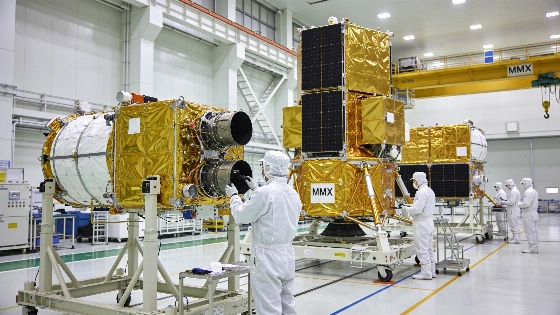
The MMX spacecraft was presented to the media at Tanegashima Space Center, the launch site in southern Japan. The mission will depart atop an H3 rocket, with liftoff targeted for 3:41 p.m. EDT (19:41 GMT) on October 19, the opening day of a launch window that extends through November 7. The spacecraft is designed as a modular system, comprising a propulsion module and two main elements: the Exploration Module and the Return Module. This architecture enables MMX to conduct both orbital reconnaissance and surface operations at Mars' moons.
JAXA originally planned to launch MMX in 2024, but technical issues with the H3 rocket forced a delay. Because Mars and Earth align favorably for interplanetary missions only once every 26 months, the postponement required a complete rescheduling of the mission timeline. Once launched, MMX will spend approximately one year in transit before entering orbit around Mars, where it will begin detailed mapping and analysis of Phobos and Deimos.
Sampling Strategy and Scientific Objectives
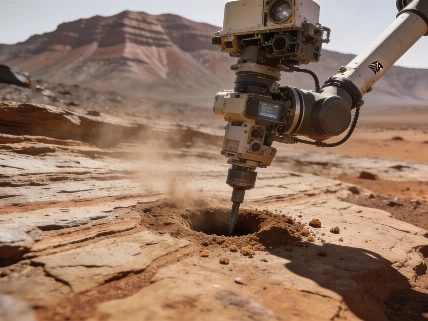
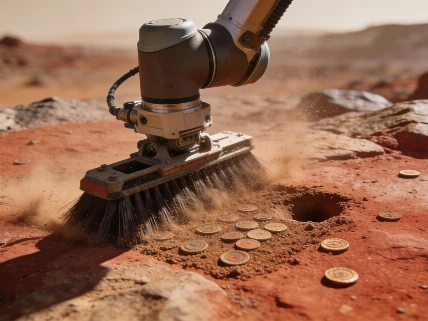
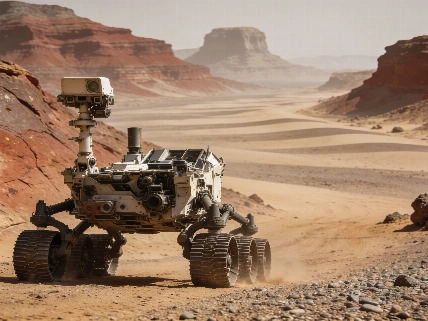
Upon arrival at Mars, MMX will use remote sensing instruments to characterize the surfaces and environments of both Phobos and Deimos, which measure about 22 kilometers and 12 kilometers in diameter, respectively. The mission's primary goal is to land on Phobos, collect at least 10 grams of surface material, and return these samples to Earth for laboratory analysis. To support this, MMX will deploy a 25-kilogram French-German rover, Idefix, which will traverse the surface of Phobos and conduct in situ measurements to inform landing site selection and surface operations.
The returned samples are expected to help resolve longstanding questions about the origin of Mars' moons. Competing hypotheses suggest that Phobos and Deimos may be either remnants of a giant impact that formed early Mars or captured asteroids from the outer solar system. By analyzing the composition and structure of the collected material, scientists hope to distinguish between these scenarios and improve models of planetary satellite formation.
Technical Challenges and International Context
Sample-return missions from small bodies present unique engineering and scientific challenges. MMX must execute precise maneuvers to approach, land on, and depart from Phobos, a body with extremely weak gravity and uncertain surface properties. The mission's sampling mechanism is designed to collect regolith with minimal disturbance, while the return capsule must ensure the safe delivery of material through Earth's atmosphere in 2031.
Previous attempts to return samples from the Mars system have not succeeded. Russia's Phobos-Grunt mission in 2011 failed to leave Earth orbit, and earlier Soviet probes did not achieve their objectives. In contrast, Japan has demonstrated expertise in small-body sample return with the Hayabusa and Hayabusa2 missions, which successfully delivered material from asteroids Itokawa and Ryugu. The MMX mission builds on this heritage, while NASA's Perseverance rover continues to cache Martian surface samples for a possible future return, though the timeline for that effort remains uncertain. For readers interested in the broader context of planetary science training and outreach, a recent initiative by NASA SCoPE and Arizona State University is described in this report on planetary science internships.
What MMX Could Reveal
By returning samples from Phobos, MMX aims to provide direct evidence about the moon's composition, surface processes, and potential links to Mars or the outer solar system. Laboratory analysis on Earth will allow for high-precision measurements of isotopic ratios, mineralogy, and organic content, which are not possible with remote sensing alone. These data could clarify whether Phobos and Deimos are captured objects or formed in situ, and may also shed light on the early history of Mars itself.
However, the mission faces significant uncertainties. The physical properties of Phobos' surface remain only partially constrained, and the technical complexity of sample collection and return introduces multiple points of risk. The scientific value of the returned material will depend on both the quantity and the preservation of the samples during transit and re-entry.
Sample-return missions such as MMX rely on a sequence of critical phases: launch, cruise, orbital insertion, surface operations, sample acquisition, departure, and Earth re-entry. Each phase requires precise navigation and robust engineering to ensure mission success. The returned samples will undergo strict contamination control and detailed laboratory analysis, enabling scientists to compare their findings with remote sensing data and theoretical models. This process is essential for transforming raw extraterrestrial material into scientific knowledge about planetary origins and evolution.