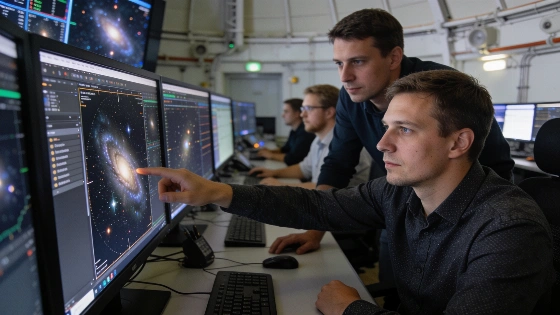
Astronomers using the James Webb Space Telescope have detected a higher proportion of faint, low-mass stars in ancient galaxies, suggesting these early systems are more massive than previously estimated
New observations from the James Webb Space Telescope (JWST) are challenging long-held assumptions about the makeup of the universe's earliest galaxies. By probing the faintest starlight in galaxies that formed over 12 billion years ago, astronomers have found that these ancient systems contain far more low-mass stars than previously recognized, implying that their total mass has been significantly underestimated.
Probing Ancient Galaxies
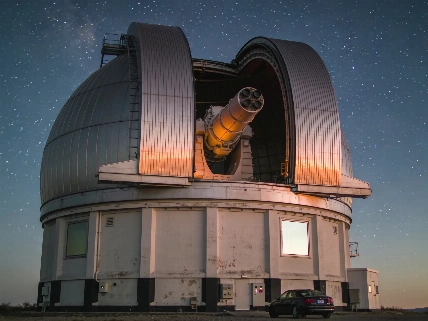
The research team targeted nine galaxies that had already passed through their most active periods of star formation. Using JWST's infrared sensitivity, they collected high-quality spectra capable of distinguishing the subtle signatures of small, faint stars-objects that are easily lost in the glare of their brighter, more massive counterparts. To strengthen their analysis, the team combined JWST data with ground-based observations from the Very Large Telescope (VLT) in Chile, enabling a more complete census of stellar populations in these distant galaxies.
In one striking case, a galaxy observed at a lookback time of less than 1.5 billion years after the Big Bang was found to contain up to four times the stellar mass previously estimated. This dramatic revision is attributed to the detection of a large population of low-mass stars, which emit much less light than massive stars but contribute substantially to the galaxy's total mass.
Stellar Populations and Mass Estimates
Traditionally, astronomers have estimated the mass of distant galaxies by measuring their total light output and applying models based on the stellar populations of nearby galaxies such as the Milky Way. However, these models assume that the ratio of massive to low-mass stars-known as the initial mass function-remains constant across cosmic history. The new JWST results indicate that this assumption does not hold for the earliest galaxies, which appear to be dominated by a much higher fraction of small stars than seen in the present-day universe.
This finding has important implications for our understanding of galaxy formation and evolution. If early galaxies are more massive than previously thought, their gravitational influence, chemical enrichment, and potential for planet formation may all need to be reconsidered. The discovery also raises questions about the processes that governed star formation in the early universe and whether similar trends are present in other ancient systems.
Methodology and Observational Limits
The ability to detect faint stars in distant galaxies depends critically on the sensitivity and spectral resolution of the observing instruments. JWST's large mirror and advanced infrared detectors allow astronomers to collect enough light to resolve the subtle features in galaxy spectra that betray the presence of low-mass stars. The team's approach required not only deep exposures but also sophisticated analysis techniques to separate the contributions of different stellar populations.
Despite these advances, there are still limitations. The results are based on a small sample of galaxies, and the method relies on interpreting integrated light rather than resolving individual stars. Further observations will be needed to determine whether the trend holds across a broader range of early galaxies. As JWST continues its mission, astronomers expect to refine these measurements and test the universality of the initial mass function in the early universe.
Implications for Cosmic History
The revised mass estimates for early galaxies could affect models of cosmic structure formation, the timeline of galaxy assembly, and the predicted abundance of planets in the early universe. Since many planets are thought to form around low-mass stars, a higher proportion of such stars could mean that planet formation was more common in the universe's first billion years than previously assumed.
These findings build on a growing body of evidence that the early universe was more complex than once believed. For example, recent JWST observations have also revealed dense clusters of young stars in regions like the Carina Nebula, as discussed in a related Science Report article. Together, these results are prompting astronomers to revisit key assumptions about how galaxies and stars formed in the universe's infancy.
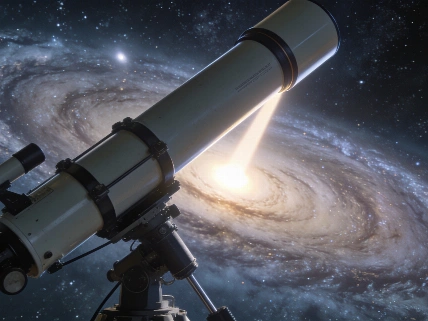
Understanding the composition of distant galaxies relies on the technique of spectroscopy, which involves splitting the light from an object into its component wavelengths. By analyzing the resulting spectrum, astronomers can identify the fingerprints of different types of stars and estimate their relative abundances. The challenge is that massive stars dominate the light output, making it difficult to detect the fainter signals from low-mass stars. Instruments like JWST, with their high sensitivity and spectral resolution, are now making it possible to probe these hidden populations and refine our models of galaxy evolution.