Archaeologists working at Lucone di Polpenazze in northern Italy have uncovered a 4,000-year-old clay tablet inscribed with geometric patterns, deepening questions about the function and meaning of these enigmatic Bronze Age artifacts
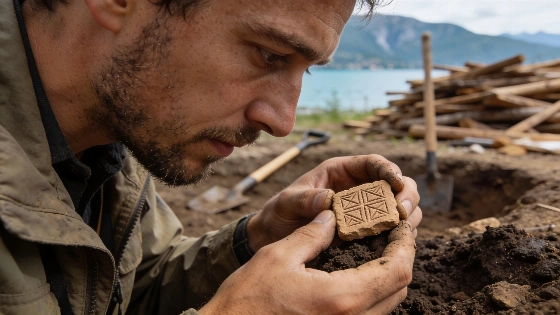
A clay tablet bearing incised geometric markings has been recovered from the Early Bronze Age settlement of Lucone di Polpenazze, near Lake Garda in northern Italy. The object, estimated to be around 4,000 years old, was found during recent excavations at the Lucone D area, a site known for its well-preserved prehistoric pile dwellings. The tablet's surface features a series of carefully impressed lines and shapes, including circles, triangles, and squares, but the meaning of these symbols remains unresolved.
Context of the Discovery
Lucone di Polpenazze is one of the most significant pile-dwelling sites in the Lombardy region, with evidence of occupation spanning from the Neolithic through the Bronze Age. The Lucone D settlement, where the tablet was found, consists of the remains of a small village constructed on wooden piles over a now-vanished lake. Radiocarbon dating of oak timbers from the site places its construction at approximately 2034 BCE. Archaeologists have identified at least five separate settlements in the area, but Lucone D stands out for the exceptional preservation of organic materials and architectural features.
The newly discovered tablet is the third of its kind from Lucone D and the 21st from the broader Lucone area, making this one of the densest concentrations of such artifacts in Europe. The tablets are typically made from clay, though stone examples are known, and are characterized by deliberate incisions forming geometric motifs. Some of the earliest examples are dominated by impressed dots, while others display more complex arrangements.
Interpretation and Uncertainty
The function of these tablets is still debated among researchers. Proposed interpretations include their use as calendars, counting devices, or early forms of symbolic communication. Some hypotheses suggest a ritual or amuletic role, while others propose a connection to Bronze Age trade, with the markings potentially serving as identifiers for goods or quantities, similar to commercial labels. However, no consensus has been reached, and the lack of decipherable inscriptions limits definitive conclusions.
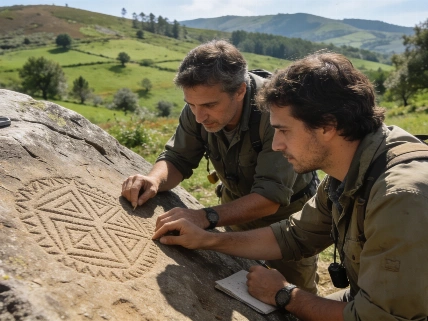
Comparable tablets have been found in Switzerland, Germany, and the Danube-Carpathian Basin, indicating that the tradition of marking clay or stone objects with geometric patterns was shared across a wide region during the Bronze Age. The unusually high number of tablets at Lucone di Polpenazze, however, distinguishes the site and raises questions about local practices or social organization.
Preservation Through Catastrophe
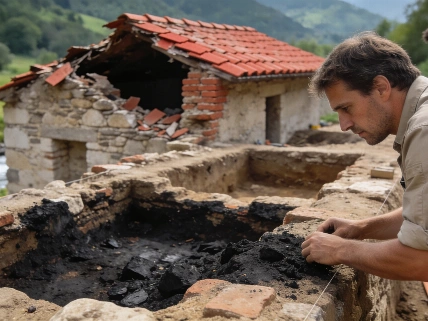
One factor contributing to the remarkable preservation at Lucone D is a catastrophic fire that destroyed the settlement. The intense heat carbonized organic materials and effectively fired sun-dried clay architecture, allowing objects that would normally decay to survive for millennia. Excavations have yielded wooden tools, loom weights, textile fragments, seeds, and even food remains preserved in ceramic vessels. These finds provide a rare window into daily life, subsistence, and craft production in Early Bronze Age northern Italy.
The tablet's archaeological context is secure, with its recovery from stratified deposits beneath the former settlement platforms. The accumulation of household refuse and fire debris has created a detailed record of material culture and environmental conditions. The site's preservation conditions are comparable to other exceptional European wetland settlements, such as those discussed in research on prehistoric enclosures and their possible calendrical functions, including the analysis of a Neolithic enclosure near Chleby, Czech Republic (see related research).
Ongoing Questions
Despite the growing number of tablets and improved understanding of their archaeological context, the meaning of the geometric markings remains elusive. The possibility that they reflect systems of counting, trade, or ritual practice is supported by their distribution and formal characteristics, but direct evidence for any single interpretation is lacking. The Lucone di Polpenazze discoveries highlight both the potential and the limitations of archaeological inference when written records are absent and material evidence is ambiguous.
As research continues, further analysis of the tablets' markings, manufacturing techniques, and spatial distribution may clarify their role within Bronze Age communities. For now, these small clay objects remain among the most intriguing and least understood artifacts of prehistoric Europe.
Archaeological interpretation of undeciphered artifacts often relies on context, comparative finds, and experimental reconstruction. Without written records or direct ethnographic parallels, researchers must weigh multiple hypotheses and remain cautious about assigning definitive meanings. The study of geometric tablets from Lucone di Polpenazze illustrates the challenges of reconstructing ancient systems of communication and exchange from fragmentary evidence, and underscores the importance of secure archaeological context in evaluating competing interpretations.