
Advanced Materials
35 reportsComposite materials and formal definitions reveal where results converge and where they diverge. The comparison asks how performance is measured and what defects limit durability, distinguishing formal consequences from intuition, analogy, or application.

Metamaterials Move From Lab Designs Toward Practical Uses
A UK roadmap published in October 2026 sets out five steps to move metamaterials from academic research toward industry, as work on light control and sound management reveals useful applications alongside persistent manufacturing barriers.
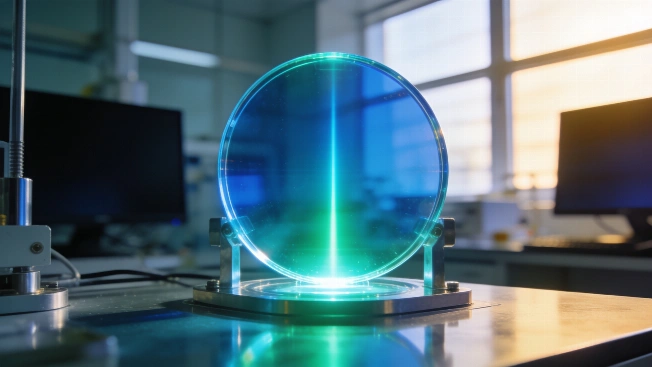
Gadolinium Glass Scintillator Detects Four Radiation Types
A cerium-doped gadolinium oxyfluoride glass produced signals under X-rays, gamma rays, neutrons and particle beams, with tests also reporting 29.8 lp/mm imaging resolution and 85.5% energy transfer to cerium ions

CoilLCE Gives Soft Robots More Precise Muscle Control
A Penn team embedded copper coils in soft actuator fibers so resistance readings can guide heating in real time. Piano-playing fingers and gaze-shifting eyes demonstrate the system

Caltech Robot Assembles a Truss Bay in Orbit Without Astronauts
The DARPA-backed ASTRA payload used a robotic arm to assemble a third section of a perimeter truss in low Earth orbit. The test stopped short of completing its planned reflector antenna
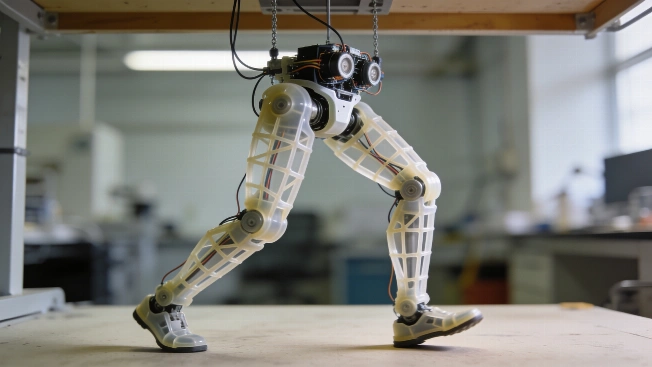
Printed TPU Gives Robotic Legs Muscle-Like Flexibility
University of Tokyo researchers shaped one flexible plastic into components with different mechanical behavior. Motors and cables drive the legs, but demonstrations still rely on suspension to support the robot
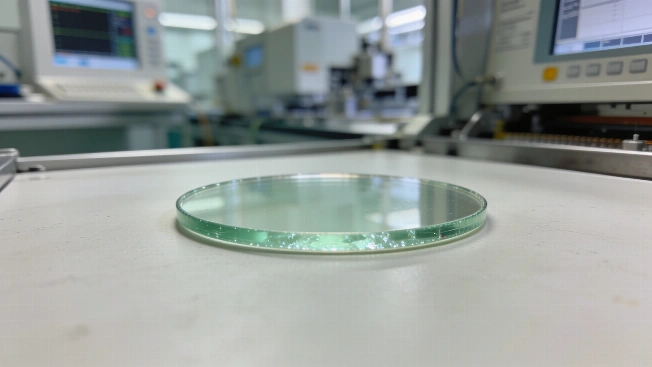
Wolfspeed Offers Transparent SiC Wafers for Quantum Hardware
Wolfspeed says its 150 mm and 200 mm transparent 4H-SiC wafers are commercially available while 300 mm substrates remain at the sampling stage; the announcement does not demonstrate quantum-device performance
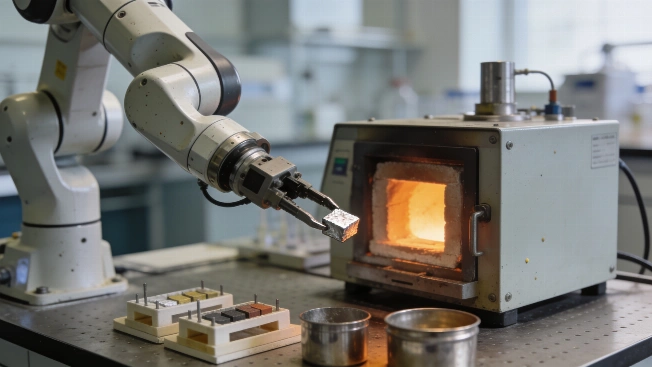
Texas A&M plans AI-led lab to test new metal alloys
A $2 million grant will fund the Aggie AI Foundry at Texas A&M University, a planned robotic laboratory intended to shorten alloy development. Its performance claims remain untested until the facility operates.
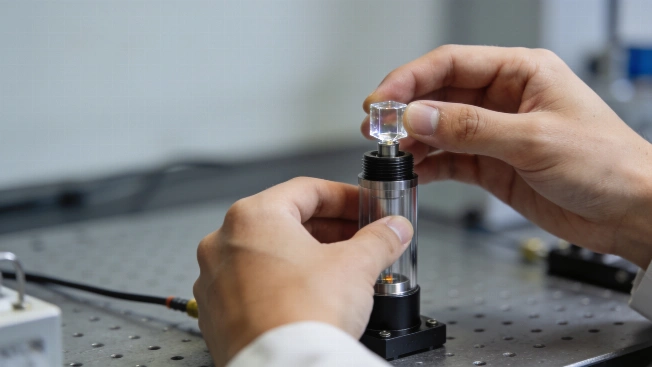
Lanthanum bromide sharpens gamma-ray detection
Cerium-doped lanthanum bromide can distinguish gamma-ray energies more precisely than common sodium iodide detectors while operating at room temperature. Its performance depends on crystal quality and detector configuration.
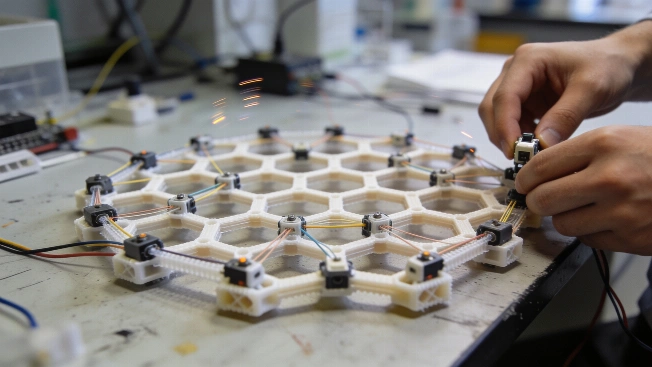
A robotic material finds its own rhythm across 37 units
A laboratory honeycomb of 37 active units turned small vibrations into coordinated movement without an external clock. The experiment shows self-organized motion, but not a robot ready for practical tasks.

NASA Sends Experimental Heat Shields Into Earth Reentry
NASA is using a departing cargo spacecraft to test 12 experimental reentry capsules and compare heat shield materials for future missions to the Moon, Mars, and other planetary destinations.
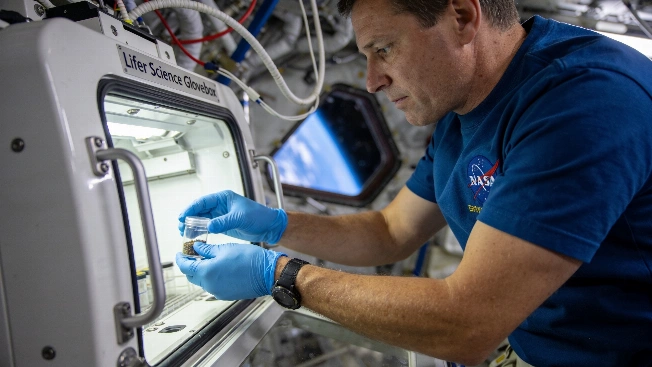
Crew-12 Heads Home After 235 Days of Science in Orbit
NASA's SpaceX Crew-12 is preparing to leave the International Space Station after a 235-day mission investigating quantum systems, living tissue, microbes, materials and medical supplies, with undocking possible as early as October 5, 2026.
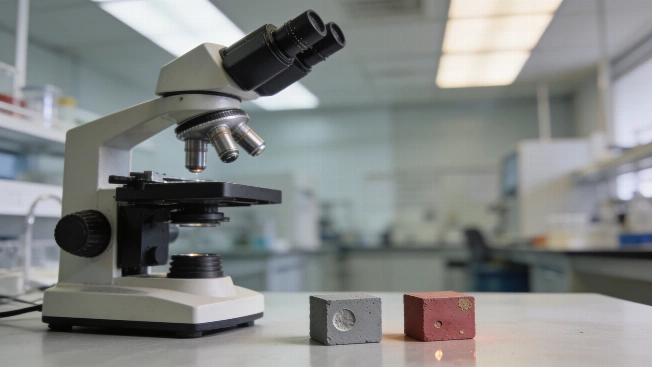
NASA Material Turns Lunar Dust Into Tools for Future Habitats
NASA researchers have mixed biodegradable plastic with simulated Moon and Mars dust to create a tunable composite now being tested for future habitat equipment and extreme space conditions.
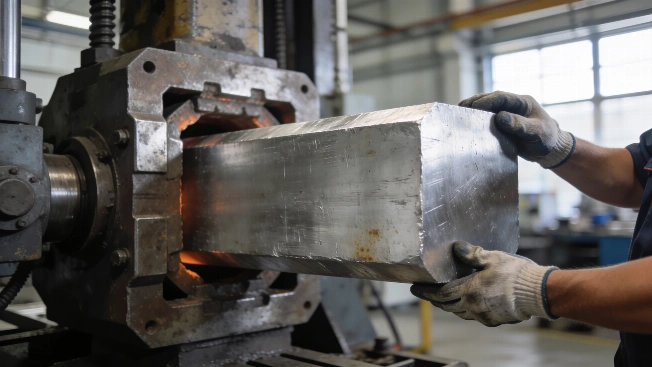
NASA Warns Casting Defects Can Weaken Aluminum 2219
A NASA technical bulletin warns that flawed casting can leave Aluminum 2219 vulnerable to corrosion and uneven mechanical performance unless manufacturers apply validated homogenization and multidirectional deformation.
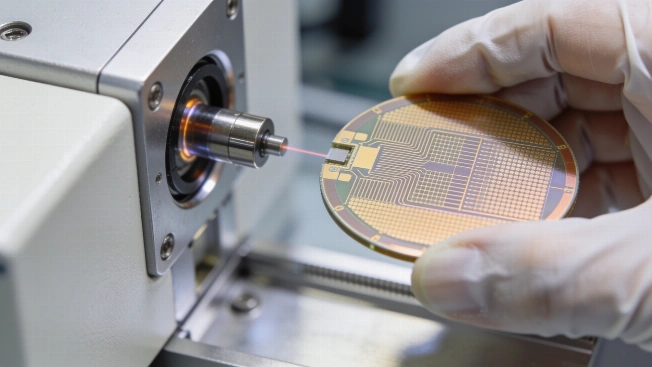
Silicon Nitride Modulators Open a Route to Visible Quantum Photonics
NLM Photonics, LIGENTEC SA and Spark Photonics have fabricated silicon nitride organic-hybrid modulators that could connect low-loss visible photonics with quantum routing and laser control.
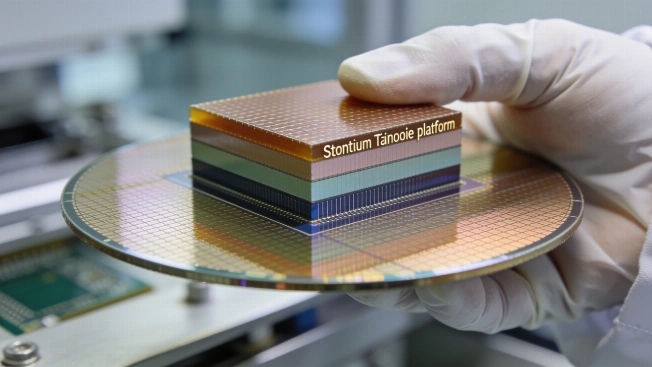
Strontium Titanate Insulator Platform Targets Quantum Device Integration
La Luce Cristallina has introduced a silicon-based quantum paraelectric strontium titanate on insulator wafer platform engineered for quantum computing and cryogenic electronics, with a focus on foundry compatibility and voltage-tunable dielectric control.
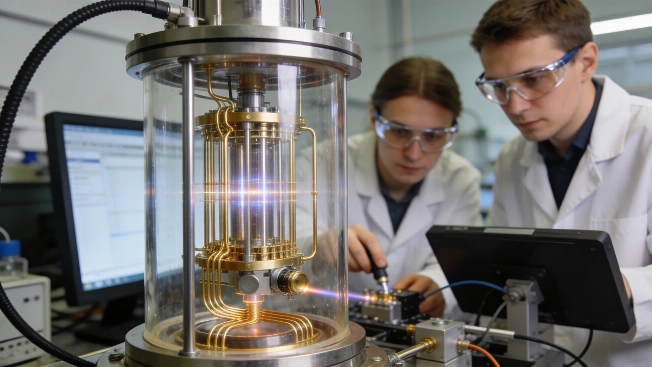
IonQ, NVIDIA, and qBraid Cut Quantum Simulation Errors by Over Half
A new collaboration between IonQ, NVIDIA, and qBraid reports a 54% reduction in logical error rates for deep Trotterized quantum chemistry simulations, using trapped-ion hardware and active mid-circuit error detection.
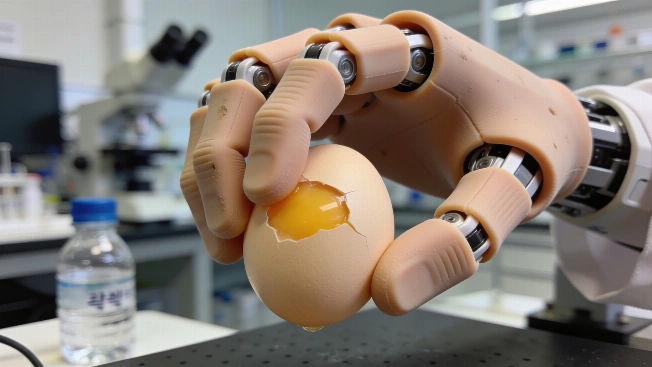
3D-Printed Soft Robotic Hand Shows Delicate Grip and Strength in Lab Tests
A research team at KAIST has built a 3D-printed soft robotic hand that can cradle fragile objects and lift heavy ones, using AI to improve the material's stretchability and durability for advanced manipulation tasks.
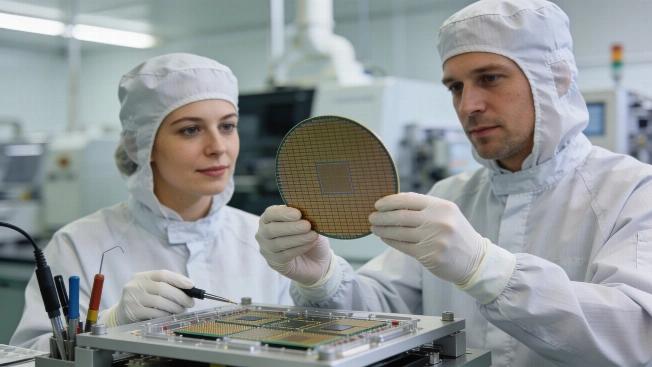
SEALSQ and IC'Alps Target 2026 for Quantum-Resistant ASIC Prototype
SEALSQ Corp and its French subsidiary IC'Alps have detailed progress on QASIC, a custom post-quantum ASIC platform designed to embed quantum-resistant cryptography directly into application-specific silicon for sectors including automotive and healthcare.
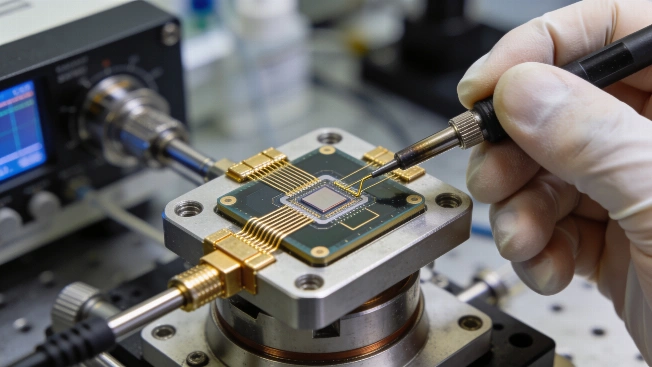
NIST Scales SNSPD Widths to 0.1 mm for Quantum Photonic Devices
Researchers at the National Institute of Standards and Technology have demonstrated a superconducting nanowire single-photon detector with a 100-micrometer active width, addressing fabrication and noise challenges that have limited quantum photonic hardware.
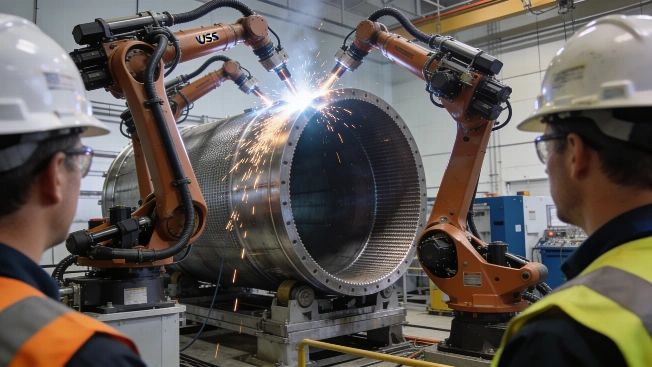
US Labs Test Large-Scale Metal 3D Printing for Nuclear Vessels
Oak Ridge and Idaho National Laboratories have demonstrated wire arc additive manufacturing for steel pressure vessels intended for nuclear energy, addressing US forging capacity limits and aiming to speed component qualification.
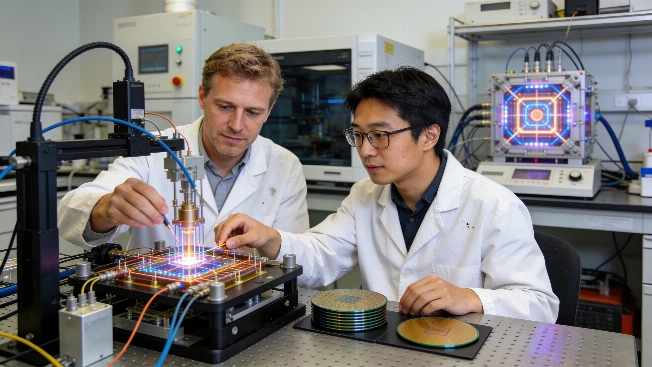
Quantum Simulation Targets EUV Lithography Blur in Canada-Japan Project
Xanadu and Mitsubishi Chemical are advancing quantum simulation for semiconductor fabrication, aiming to address radiation-induced blur in extreme ultraviolet lithography with support from Canadian and Japanese research funding.
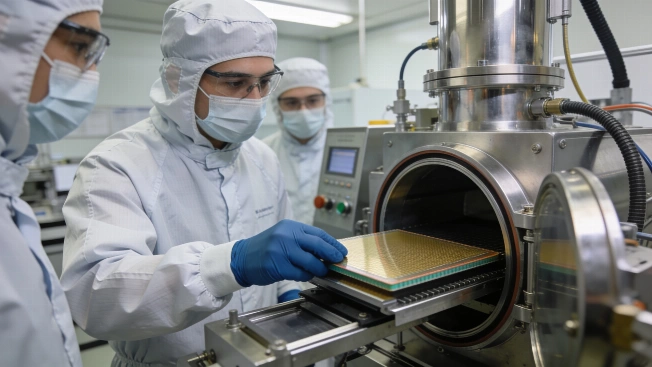
Cornell Team Deposits High-Quality Tantalum Qubits at 200°C
Researchers at Cornell University have demonstrated a low-temperature process for depositing tantalum films for superconducting qubits, using krypton gas to produce high-quality films compatible with commercial semiconductor foundries.

200 Logical Qubit Quantum Emulation Benchmarked on Classical Hardware
Researchers have emulated quantum algorithms involving more than 200 logical qubits with the iQCC method on standard server hardware. The study benchmarks performance and accuracy for OLED materials design without relying on supercomputers.

Plastic Joints Aim to Cut Humanoid Robot Weight by Over 30 Percent
Celanese Corporation and Vigor Precision have announced a collaboration to develop lightweight plastic joint components for humanoid robots, targeting a weight reduction of more than 30 percent while maintaining mechanical durability and precision under demanding conditions.
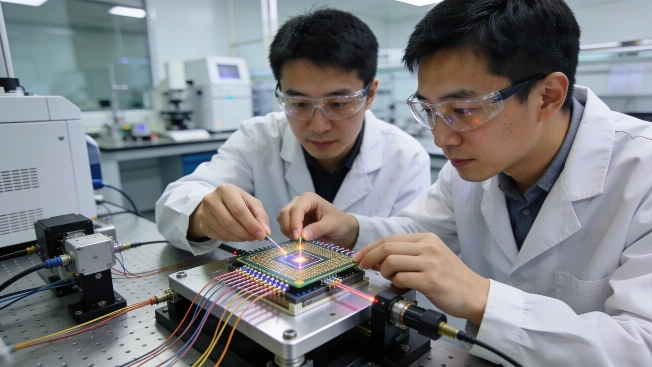
16-Qubit Photonic Quantum Processor Demonstrated on Silicon Chip
A team from Hefei Guizhen Chip Technology and USTC has built a 16-qubit measurement-based quantum computing system on a silicon photonic chip, achieving high-fidelity operation with high-dimensional path encoding.
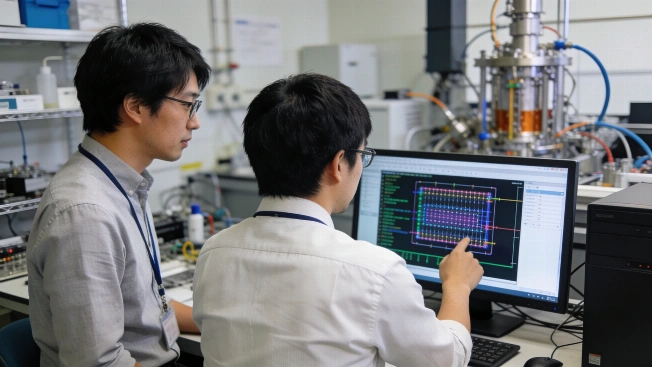
Honda Invests in Quemix to Advance Quantum Algorithms for Materials
Honda has taken an equity stake in Quemix, a Tokyo-based quantum software startup, to accelerate the use of quantum algorithms for next-generation battery materials and automotive applications.
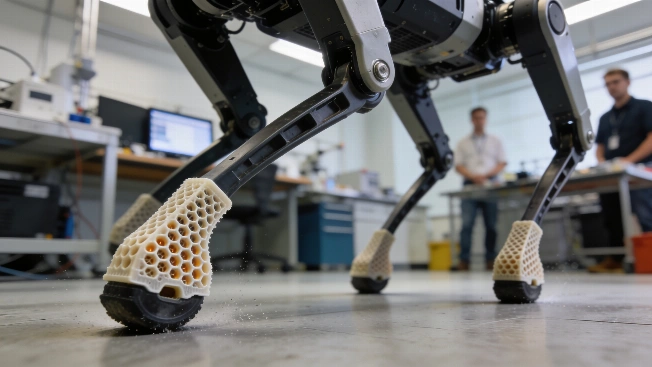
3D-Printed Porous Feet Cut Power Use in Quadruped Robot Tests
A research team at Seoul National University of Science and Technology has tested 3D-printed porous feet on a quadruped robot, reporting up to 6.2% lower battery consumption during walking tasks with a learning-based controller.
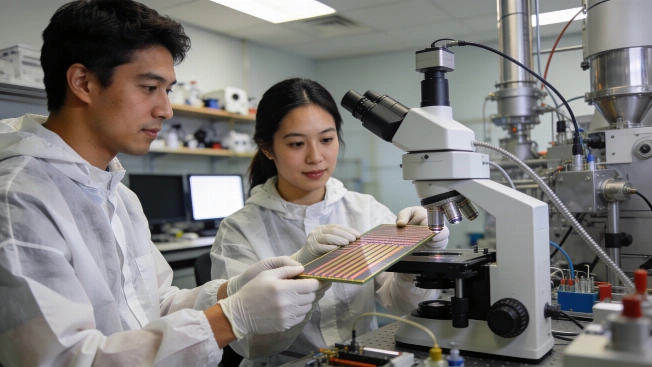
UC San Diego Awarded $18M to Advance Quantum Materials Research
UC San Diego has secured $18 million in NSF funding to develop quantum metamaterials and chemically engineered 2D superlattices, shifting its MRSEC center's focus to foundational quantum hardware and workforce training.
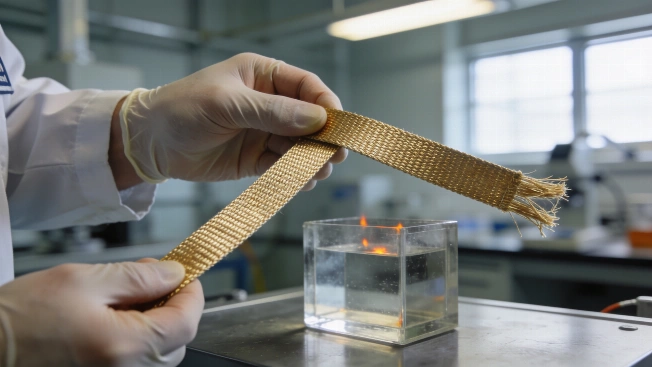
NASA Tests Fire-Resistant Webbing for Moon and Mars Missions
NASA testing found that natural, gold-colored Kevlar(R)/PBI webbing met flammability criteria in a high-oxygen environment, though complete softgoods assemblies still require configuration and wear testing.
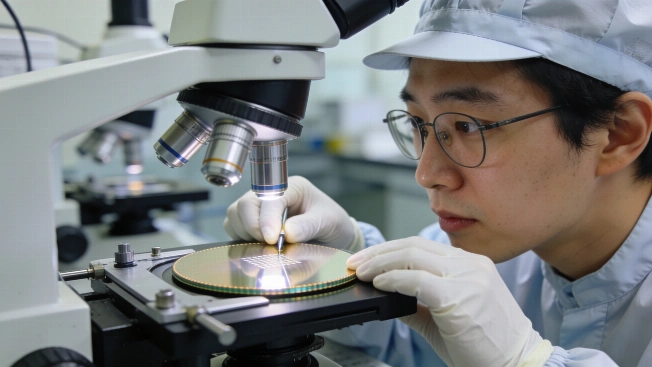
Zinc Oxide Defect Proposed as Room-Temperature Spin Qubit Alternative
A theoretical study led by SKKU researchers identifies a molybdenum-oxygen-vacancy complex in zinc oxide as a candidate for high-fidelity spin qubits operating at room temperature, potentially addressing fabrication challenges faced by diamond NV centers
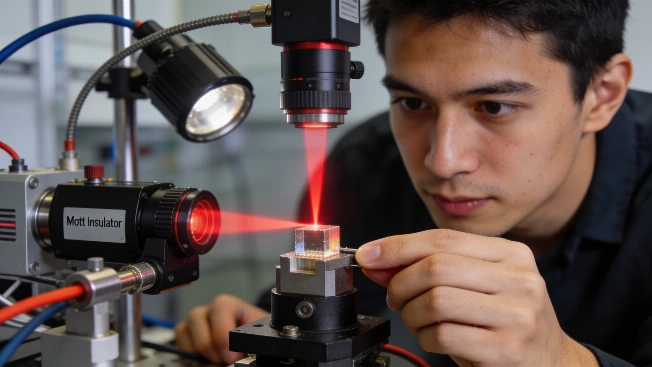
Laser-Driven Nonlinear Dynamics Observed in Mott Insulators
Researchers have identified four distinct regimes of photoexcitation in Mott insulators, revealing how laser-driven feedback can dynamically alter conductivity and carrier production in strongly correlated materials.
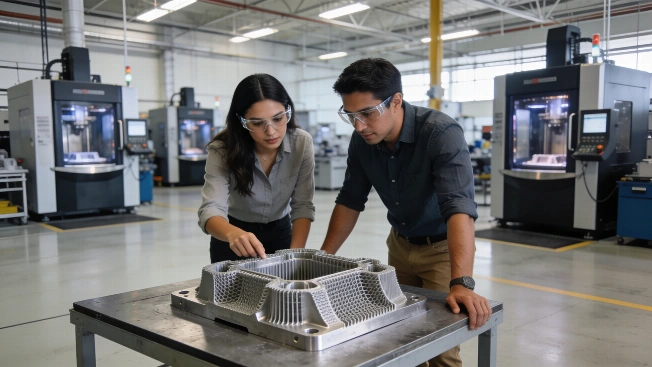
Velo3D Launches Large-Scale Metal 3D Printing Facility in California
Velo3D has opened Forge 1, a 289,000-square-foot campus in Livermore, California, to expand production of large-format metal additive manufacturing systems for aerospace, defense, and energy applications.
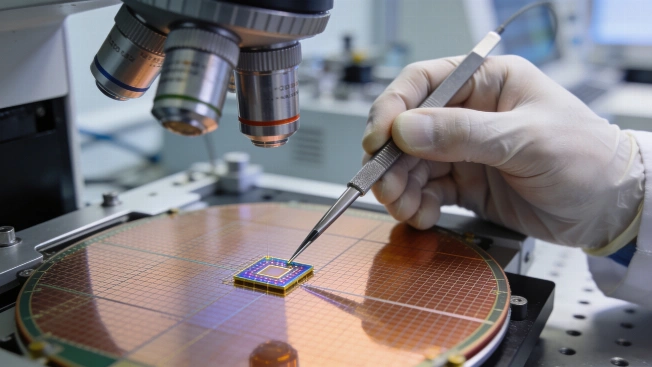
Micro-Transfer Printing Advances Heterogeneous Silicon Photonics Integration
Researchers have demonstrated micro-transfer printing to combine materials such as III-V semiconductors and lithium niobate with silicon photonics, addressing integration challenges for faster optical computing and communications hardware.

Researchers Demonstrate Vapor-Triggered Switching in Advanced Fluid Materials
A team in Japan has built a reversible system that uses vapor to change the color and physical state of advanced functional fluids, while also switching their phosphorescence. The work offers a new approach to designing smart materials with tunable properties.
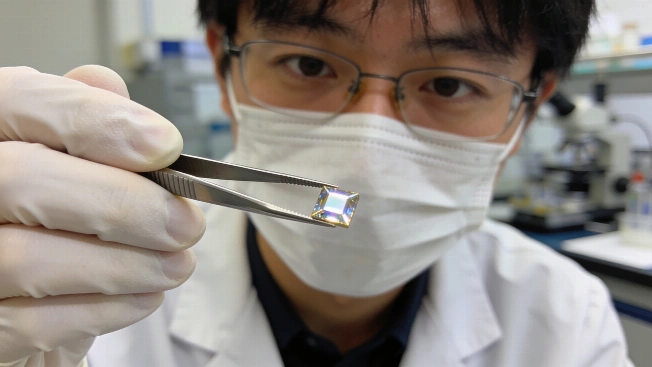
Solid Crystal Thermoelectric Material Demonstrated for Heat Recovery
A research team at the Institute of Science, Tokyo, has engineered a solid crystal thermoelectric material that mimics the properties of atomically thin films, potentially enabling more practical waste heat recovery in industrial settings.