
Chemistry & Materials
21 reportsKinetics and spectroscopy are read together rather than as isolated findings. This makes it possible to address how catalysts change reactions and which models predict chemistry, identifying which examples clarify the concept and which expose its limits.
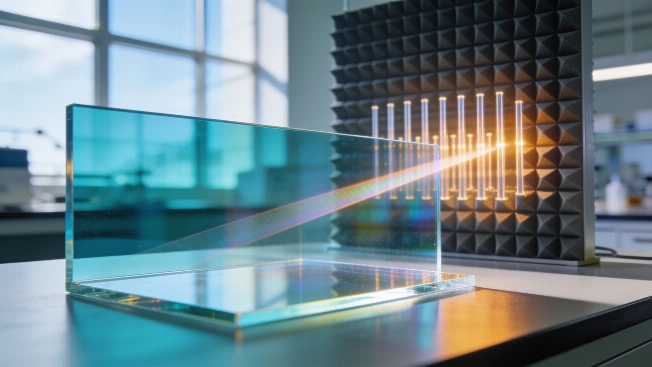
Metamaterials Move From Lab Designs Toward Practical Uses
A UK roadmap published in October 2026 sets out five steps to move metamaterials from academic research toward industry, as work on light control and sound management reveals useful applications alongside persistent manufacturing barriers.
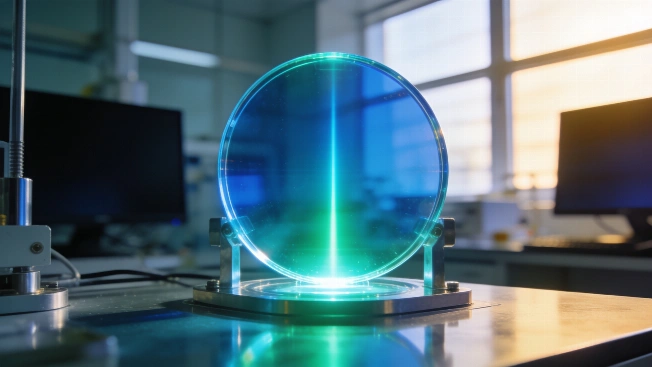
Gadolinium Glass Scintillator Detects Four Radiation Types
A cerium-doped gadolinium oxyfluoride glass produced signals under X-rays, gamma rays, neutrons and particle beams, with tests also reporting 29.8 lp/mm imaging resolution and 85.5% energy transfer to cerium ions

NVIDIA reports 900-fold speedup in cell analysis
NVIDIA is pairing a science-focused open model with GPU software for research workloads. The company reports an eight-minute correlation time for telescope data and a 900-fold gain in one cell-analysis task

Google Agents Formalize Weil Conjectures With 1.8M Lean Lines
Google says its Gemini-powered Teamwork system has formalized major proofs and optimized software. The company also reports 95% top-one accuracy on a complex NMR benchmark
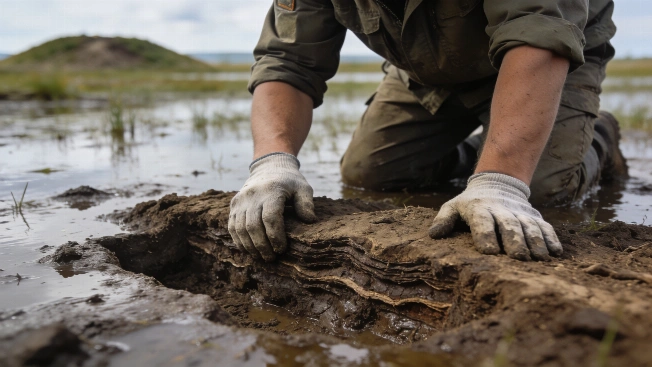
Cannabis Traces Link Seeds and Human Exposure at Siberian Burial Site
At Tunnug-1, six radiocarbon-dated seeds and cannabinoid traces in preserved hair place plant remains and human exposure in one early eighth-century BCE burial complex; the evidence cannot reveal how the compounds entered the body
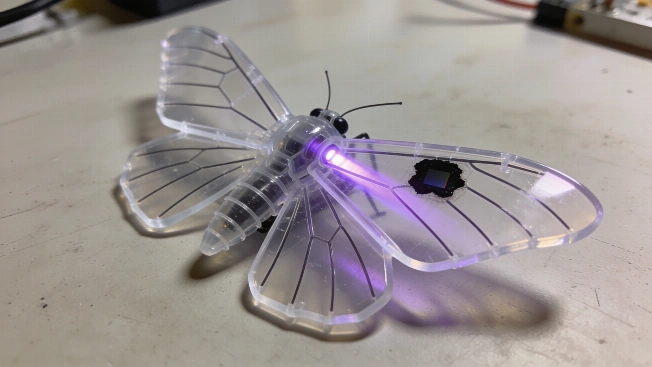
Moth robot grows a UV sensor through its own circulation
A PETG moth prototype circulated reactive chemicals through wing microchannels, forming conductive polypyrrole where UV light struck. Its impedance shift triggered wing movement or an LED, though researchers still controlled placement and delivery
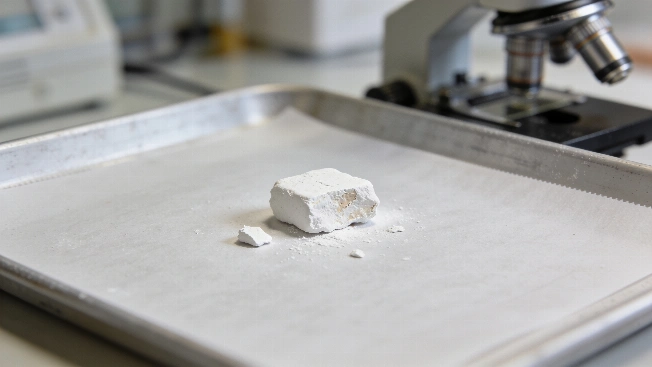
Jetyasar Cosmetics Reveal Silk Road Aromatic Trade
Chemical analysis of chalk-like pieces from two Jetyasar burials dated to the 2nd-4th centuries AD detected plant aromas, including ingredients researchers say may have traveled from India along exchange routes
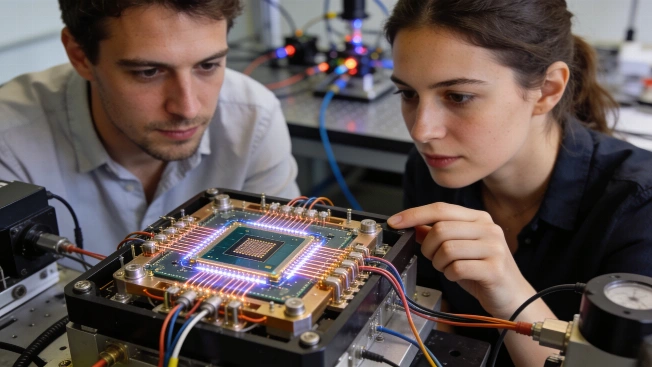
Molecular Qubits Show Single-Spin Optical Readout
At 4.5 K researchers used light to initialize and read individual molecular spins, with coherence reaching 2.2 ms under dynamical decoupling. Chip integration remains a development goal
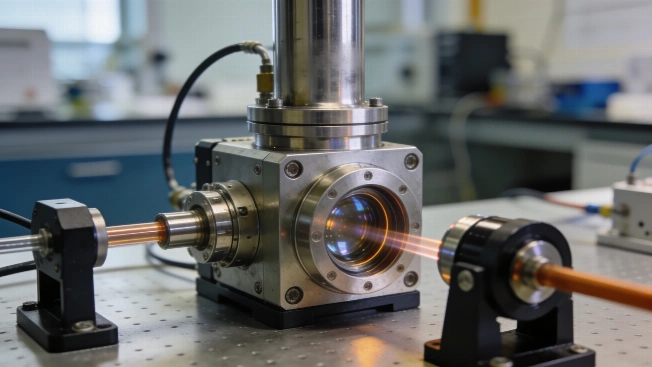
Quantinuum and GE Vernova Plan Helios Superconductivity Simulations
Quantinuum and GE Vernova plan to run Fermi-Hubbard simulations on the Helios quantum computer, testing whether simulated pairing states can inform the search for high-temperature superconducting materials
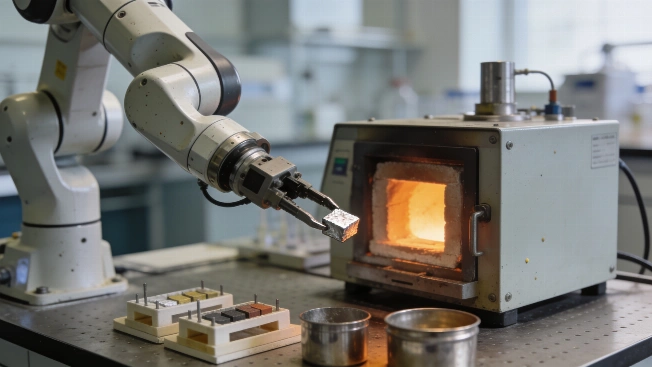
Texas A&M plans AI-led lab to test new metal alloys
A $2 million grant will fund the Aggie AI Foundry at Texas A&M University, a planned robotic laboratory intended to shorten alloy development. Its performance claims remain untested until the facility operates.
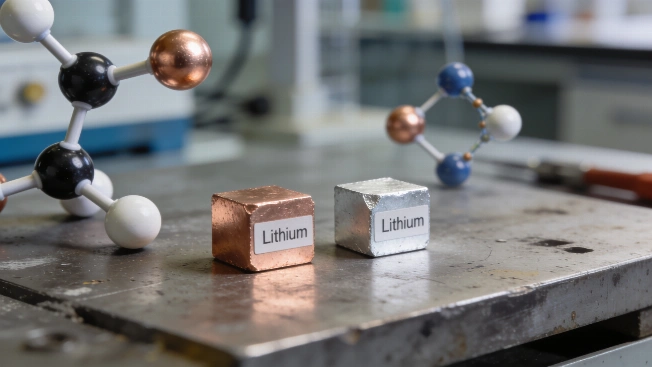
Hybrid Quantum Model Leads on Copper-Lithium Force Accuracy
A peer-reviewed study reports that a quantum-classical version of Allegro predicted forces more accurately than its classical counterpart on a copper-lithium dataset, while transferred settings also held up on two organic benchmarks
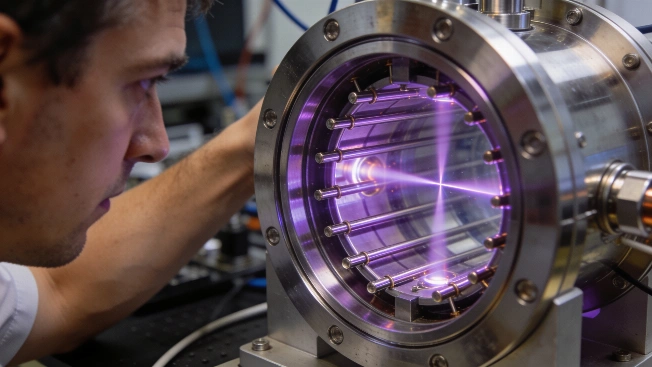
Trapped Ion Processor Resolves a Subtle NMR Double Peak
Quantinuum and HQS reproduced a difficult diphosphane NMR feature on trapped-ion hardware after compressing a 22-spin model into 21 effective spins, using 70 Trotter steps and circuits with more than 1,400 two-qubit gates.
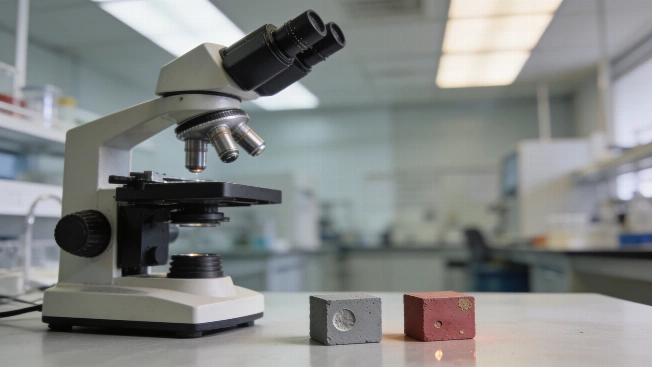
NASA Material Turns Lunar Dust Into Tools for Future Habitats
NASA researchers have mixed biodegradable plastic with simulated Moon and Mars dust to create a tunable composite now being tested for future habitat equipment and extreme space conditions.
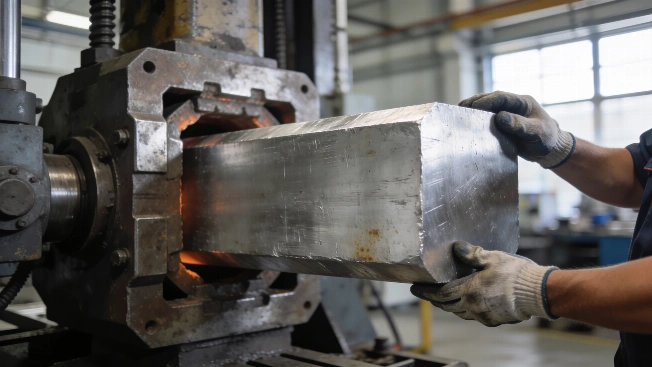
NASA Warns Casting Defects Can Weaken Aluminum 2219
A NASA technical bulletin warns that flawed casting can leave Aluminum 2219 vulnerable to corrosion and uneven mechanical performance unless manufacturers apply validated homogenization and multidirectional deformation.
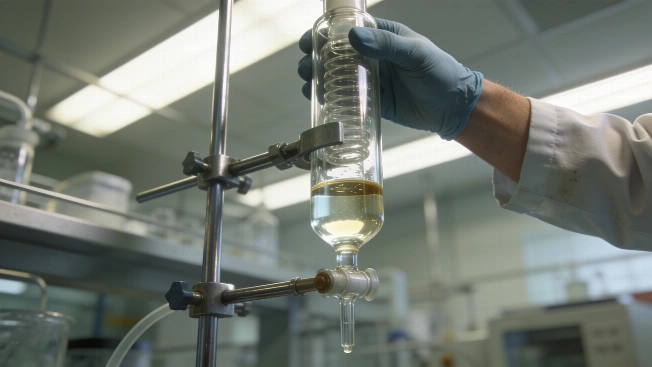
Quantum Models Target Rare Earth Separation Chemistry
USA Rare Earth, Pasqal and Riven Systems are developing a quantum-machine-learning process to identify selective extractants for separating mixed rare earth carbonate into individual oxides, using thousands of automated experiments and feedstocks from mining and recycling.
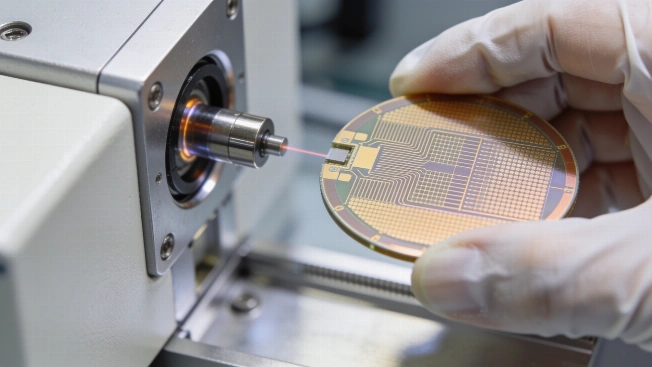
Silicon Nitride Modulators Open a Route to Visible Quantum Photonics
NLM Photonics, LIGENTEC SA and Spark Photonics have fabricated silicon nitride organic-hybrid modulators that could connect low-loss visible photonics with quantum routing and laser control.
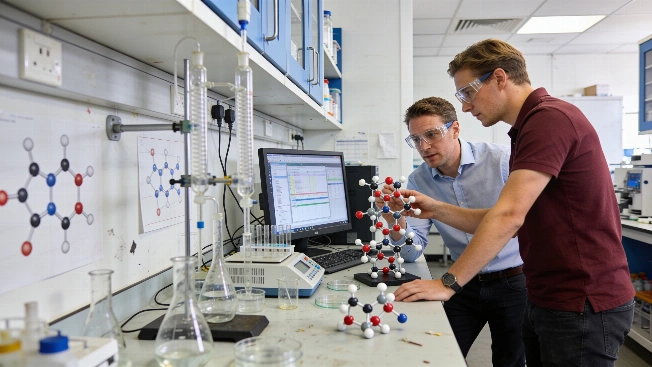
US and UK Back Eight Teams to Engineer Molecular Quantum States
A new $10 million joint program from the US National Science Foundation and UK Research and New idea will support eight research teams working to control quantum coherence and entanglement in complex molecular systems.
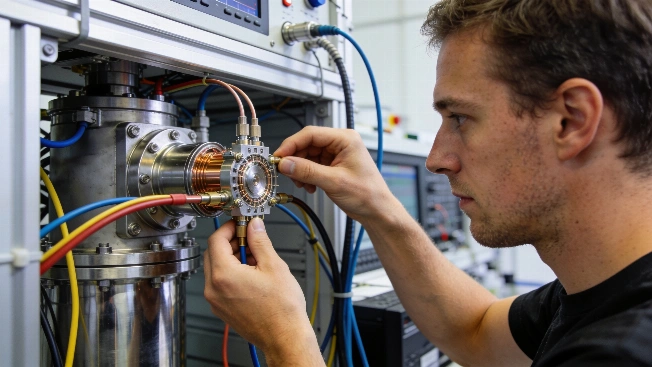
QC Ware Tests Hybrid Quantum-Classical Chemistry on IBM Heron Processor
QC Ware has demonstrated a hybrid quantum-classical process for molecular energy calculations, integrating its Promethium platform with IBM's 156-qubit Heron superconducting quantum processor to analyze a complex metalloenzyme system
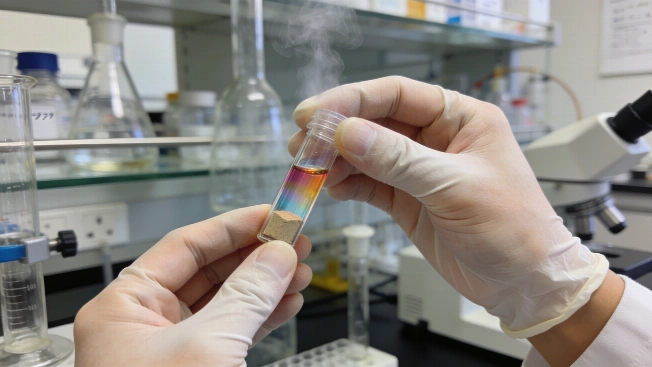
Researchers Demonstrate Vapor-Triggered Switching in Advanced Fluid Materials
A team in Japan has built a reversible system that uses vapor to change the color and physical state of advanced functional fluids, while also switching their phosphorescence. The work offers a new approach to designing smart materials with tunable properties.
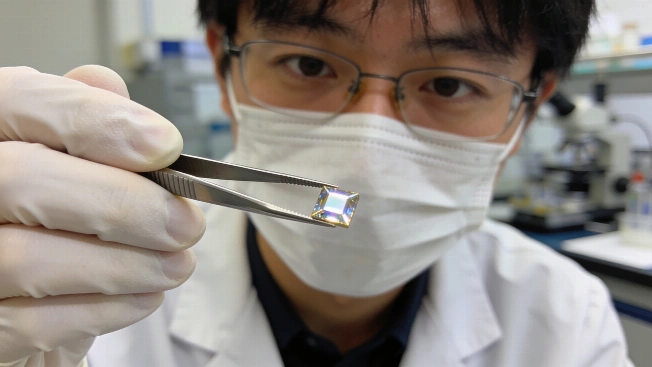
Solid Crystal Thermoelectric Material Demonstrated for Heat Recovery
A research team at the Institute of Science, Tokyo, has engineered a solid crystal thermoelectric material that mimics the properties of atomically thin films, potentially enabling more practical waste heat recovery in industrial settings.
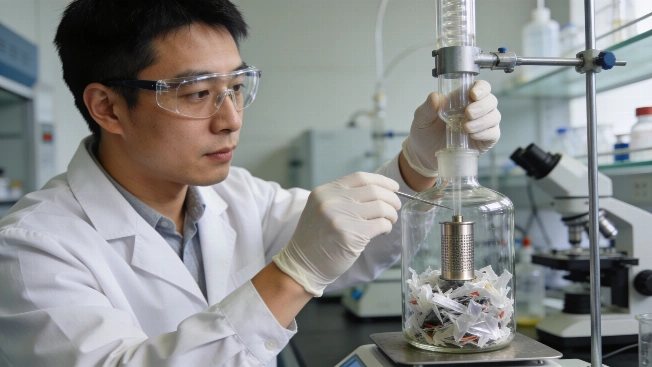
China Tests Low-Cost Catalyst to Turn Plastic Waste Into Jet Fuel
Researchers in China have demonstrated a chemical process that converts polyolefin plastic waste into aviation-grade fuel with a cobalt-nickel catalyst. The method remains at the laboratory stage and faces impressive engineering hurdles.