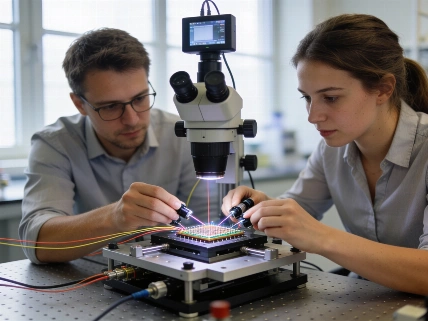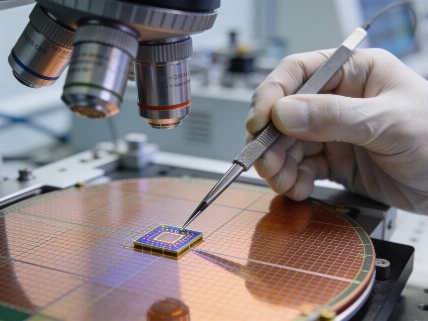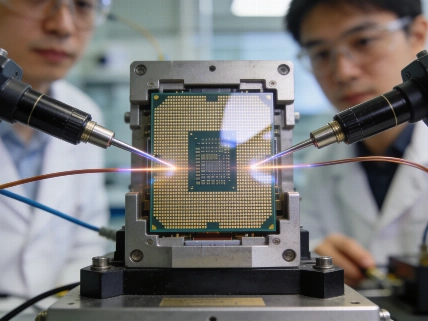
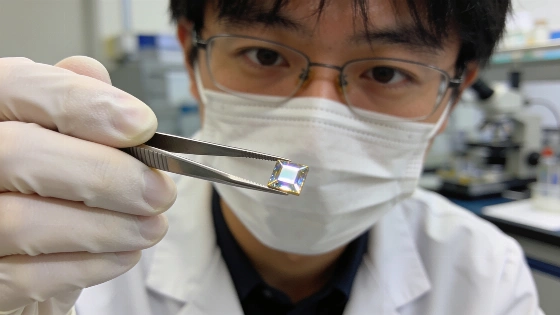
A research team at the Institute of Science, Tokyo, has engineered a solid crystal thermoelectric material that mimics the properties of atomically thin films, potentially enabling more practical waste heat energy recovery in industrial settings
Researchers at the Institute of Science, Tokyo, have reported the laboratory development of a solid crystal thermoelectric material designed to convert heat differentials into electrical energy. The material, based on a compound of thallium, iron, and selenium (TlFe₁.₆Se₂), is engineered to replicate the favorable electrical properties of atomically thin films while offering the mechanical stability and scalability of a bulk crystal. The work, published in the peer-reviewed Journal of Materials Chemistry A, is positioned as a step toward more practical waste heat energy recovery systems, though it remains at the research stage.
Thermoelectric materials generate electricity when there is a temperature difference between two sides of the material. For effective energy conversion, such materials must allow electrical charges to move freely while simultaneously impeding the flow of heat-a combination rarely achieved in conventional conductors, which typically transmit both heat and electricity efficiently. The Tokyo team addressed this challenge by embedding extremely thin layers of iron selenide (FeSe) within a larger three-dimensional crystal structure, creating a layered 'sandwich' that preserves the electrical advantages of ultrathin films.
Material Structure and Performance
The engineered TlFe₁.₆Se₂ crystals are intentionally designed with iron vacancies-missing iron atoms within the lattice. These vacancies disrupt the regular atomic arrangement, scattering atomic vibrations known as phonons that would otherwise carry heat through the material. As a result, the crystals exhibit a low thermal conductivity of approximately 0.2 watts per meter-kelvin at 180°C (356°F), according to the research team. This value is comparable to some of the best-known thermoelectric insulators, while the material maintains sufficient electrical conductivity for energy generation.
In practical terms, the material's structure allows it to act as a thermal insulator while still producing an electrical response to temperature gradients. This combination is considered technically significant because it could, in principle, enable the recovery of waste heat from sources such as industrial exhausts, vehicle engines, or power plant furnaces-applications where robust, scalable materials are required. However, the current results are limited to laboratory-scale crystals, and no field deployment or industrial integration has been demonstrated.
Limitations and Safety Considerations
Despite the promising laboratory measurements, several obstacles remain before the material can be considered for real-world energy recovery. The overall conversion efficiency-the proportion of heat energy converted to electricity-has not yet reached levels required for commercial viability. Additional challenges include ensuring long-term stability, mechanical strength, cost-effective manufacturing, and consistent performance under industrial conditions. The use of thallium, a highly toxic element, introduces further safety and containment requirements that would need to be addressed before any deployment outside controlled environments.
The research does not report independent replication or large-scale testing, and the results are based on controlled laboratory conditions. The study's authors acknowledge that further work is needed to optimize the material's properties, assess its durability, and evaluate its safety profile in practical settings. Regulatory approval and environmental risk assessment would be mandatory steps for any future industrial application, particularly given the toxicity of thallium compounds.
Context and Implications
The study demonstrates a technical approach for embedding low-dimensional material functionality within bulk crystals, potentially overcoming a longstanding trade-off between electrical and thermal transport properties in thermoelectric materials. While the laboratory results are notable, the path to deployment will require addressing both engineering and safety challenges, as well as independent validation of performance claims. The research adds to ongoing efforts to develop materials that can recover energy from waste heat, but it does not establish a timeline or guarantee for commercial adoption.
Thermoelectric materials are evaluated by their ability to convert temperature differences into electrical voltage, a property quantified by the dimensionless figure of merit (ZT). Achieving high ZT values requires optimizing electrical conductivity, minimizing thermal conductivity, and maintaining material stability. In practice, most materials that conduct electricity well also conduct heat, limiting their efficiency. The approach described here-using engineered vacancies and layered structures-aims to decouple these properties, but the balance remains technically challenging. The broader field continues to seek materials that can be manufactured at scale, operated safely, and integrated into existing energy systems without introducing new environmental or health risks.