
Research Updates - Part 3
532 reports
Gold Grating Splits Plasmon Modes by Light Spin
A periodic gold nanostructure produced different plasmon responses to left- and right-circularly polarized light. The proposed mechanism relies on the focused beam and grating geometry rather than built-in structural asymmetry.
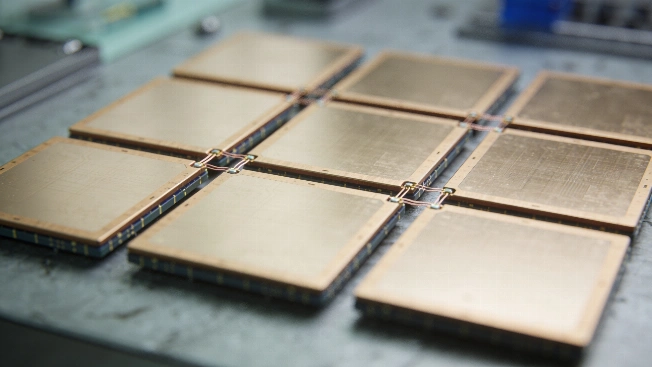
Flat quantum modules cut simulated QEC overhead by over 30-fold
A proposed modular code links 72-qubit and 116-qubit planar modules across sparse seams. Circuit-level simulations tested whether logical errors stay low when those links are noisier than on-chip gates.
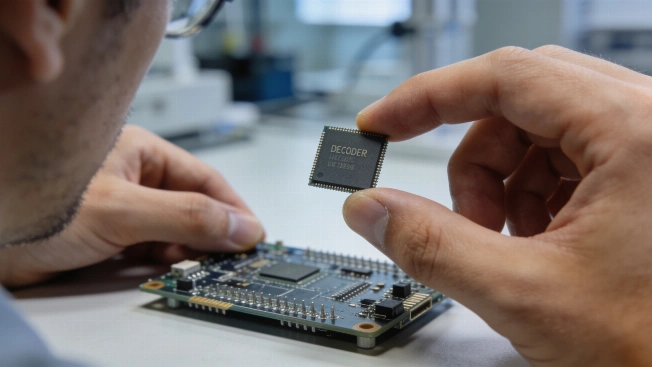
Open AI Agents Cut QEC Decoder Inference Costs 11.5-Fold
IBM Research used a coordinator and four worker agents to restructure Relay-BP decoder code for a qLDPC code. The reported speedups are hardware-design estimates and do not demonstrate performance from a fabricated chip.

Blockchain signatures face a post-quantum size problem
Terra Quantum's analysis compares signature sizes for blockchain use and reviews mitigation plans across Solana, Algorand and Ethereum. Its preferred compact option remains under draft standardization.
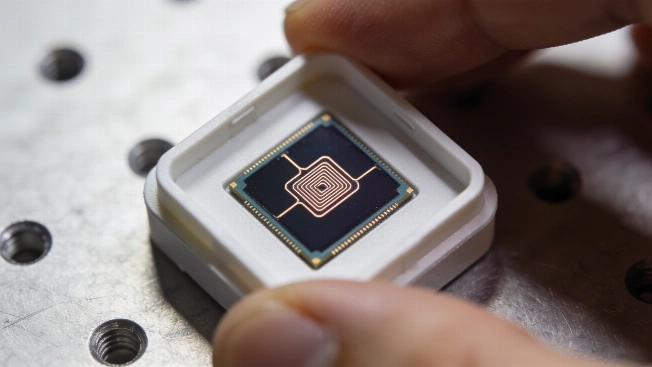
Spin Waves Deliver 4 dB Isolation on a Chip
An Argonne and UIUC team coupled propagating spin waves to a superconducting resonator on one chip, reporting 4 dB of power isolation at a specific transmission peak. The result is a proof of concept, not a complete microwave isolator.

Cambridge Opens IonQ Centre With a 256-Qubit Plan
Cambridge's new IonQ centre is set to pair a planned 256-qubit Superion computer with campus entanglement links. Innovate UK will arrange three years of computing access for the National Quantum Computing Centre.
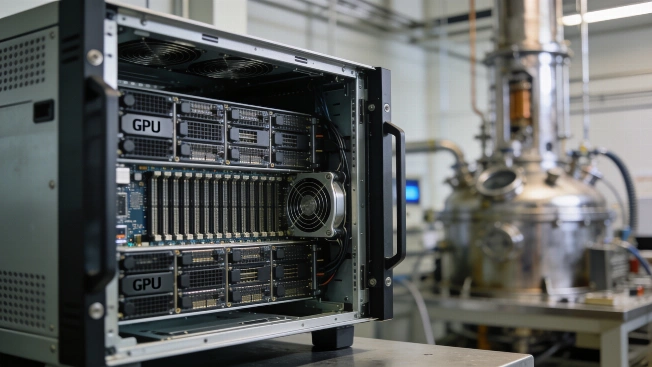
GPU Calibration Cuts Quantum Decoder Training to Seconds
Riverlane and NVIDIA report that an H100 GPU cuts surface-code decoder-training epochs from minutes to seconds, while recalibrated priors lower logical error rates by several percent to as much as twofold compared with uncalibrated starting weights.
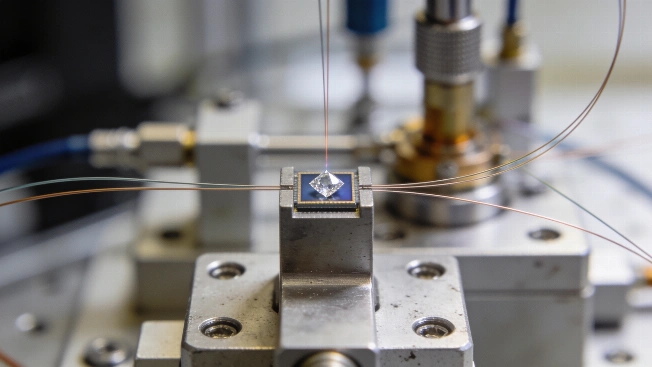
Diamond Spins Run Grover Search at Room Temperature
A diamond quantum computer in Dresden ran a three-qubit Grover search at 296.3 K, with a reported 77.3% success probability. The result approaches a roughly 78% result cited for a cryogenic superconducting processor.
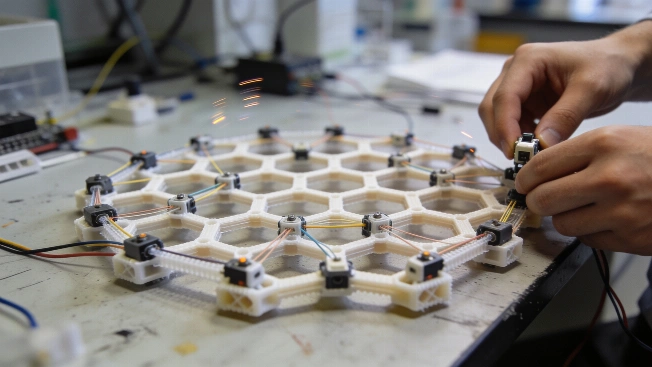
A robotic material finds its own rhythm across 37 units
A laboratory honeycomb of 37 active units turned small vibrations into coordinated movement without an external clock. The experiment shows self-organized motion, but not a robot ready for practical tasks.
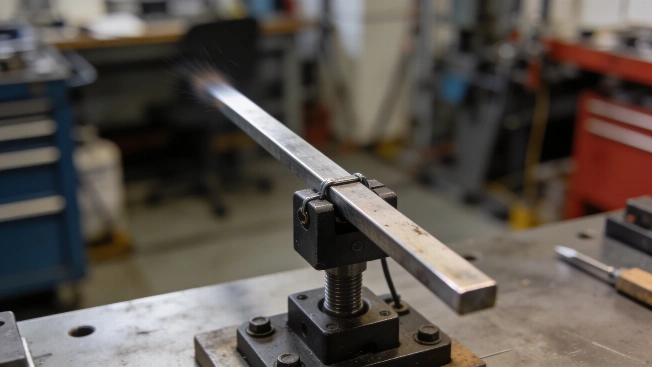
How Two Nearby Modes Turn Structural Motion Complex
A NASA technical bulletin uses a reduced eigenvalue model to explain how nonproportional damping can change two closely spaced structural modes, even when total damping is light.
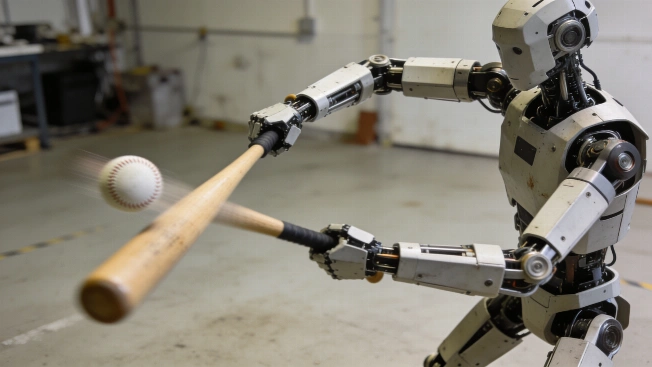
AthenaZero takes baseball tasks beyond rigid robot control
In research evaluations, AthenaZero performed three baseball tasks involving throws, catches and a bat. The tests examine how a robot's mass and mechanical design affect fast physical interactions.
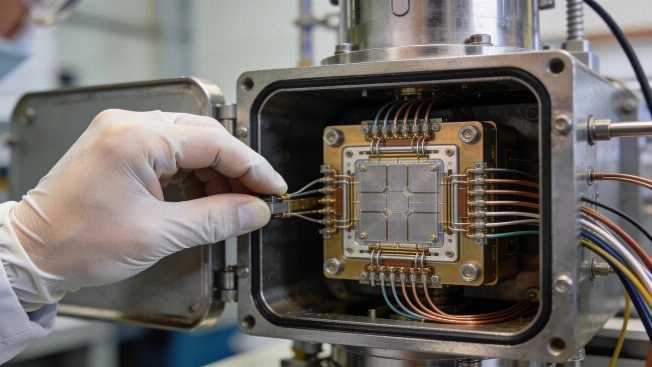
Software Reweighting Cuts Simulated Surface-Code Errors 1,600-Fold
Google Quantum AI reports that Virtual Error Cancellation reduced residual logical errors by more than 1,600-fold in distance-7 surface-code simulations. The offline method reuses recorded stabilizer measurements, but has not yet been demonstrated on a quantum processor.
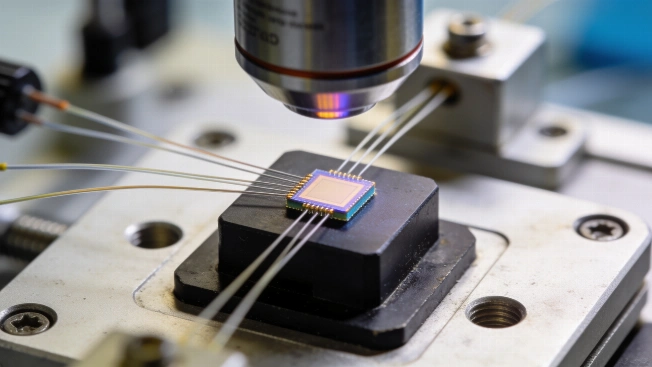
A Photonic Chip Transfers Skyrmion Topology Between Quantum States
An integrated silicon nitride photonic chip transferred a skyrmion pattern from a single-photon state into correlations between two photons. The reported topological number remained measurable under noise even after concurrence fell to zero: a result about state structure, not proof of a functioning quantum network.

IonQ Reports Up to 74-Fold Faster Logical Gates Through qLDPC Scheduling
An arXiv preprint by Mark Webster and Nicolas Delfosse describes scheduled joint measurements paired with CliNR, reporting up to 74-fold speedup for logical Clifford operations and up to fivefold for Toffoli gates against sequential logical measurements. The analysis considers Q70 and Q102 codes in IonQ's Walking Cat trapped-ion architecture, but does not establish a full fault-tolerant computer or a useful algorithm run.

WorMa Robot Shifts Water Weight to Conquer Rough Terrain
NYU's WorMa prototype moves 300 grams of water between its head and tail to adjust traction on slopes and steps, and improve swimming while keeping its basic undulating motion

IBM Moves Quantum Error Control to the Client Side
IBM Quantum has shifted basic error-mitigation controls from a server-side black box to researchers' local workflows, while its new Executor primitive handles large circuit families near the hardware.

Xanadu Reports Nearly Fourfold QROM Cost Reduction in Algorithmic Estimate
Xanadu-linked circuit constructions are reported to reduce the estimated non-Clifford cost of quantum read-only memory by about 3.9-fold for 32-bit entries. The result remains an unverified algorithmic resource estimate, not demonstrated hardware acceleration.

A Microcomb Chip Solves a Key Problem in Optical Metrology
A foundry-fabricated photonic chip has produced a self-aligned octave-spanning microcomb by driving one resonator with two lasers separated by an octave, demonstrating a potential route to compact precision metrology.
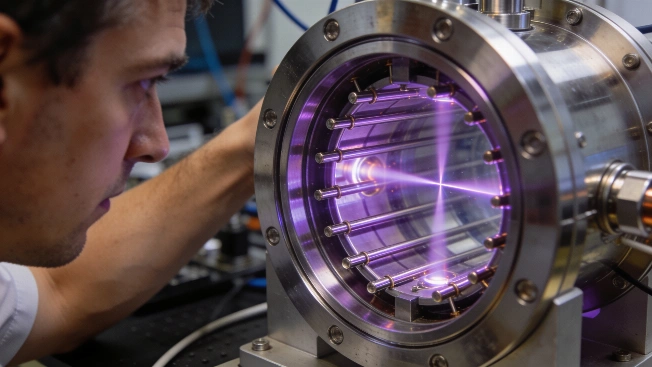
Trapped Ion Processor Resolves a Subtle NMR Double Peak
Quantinuum and HQS reproduced a difficult diphosphane NMR feature on trapped-ion hardware after compressing a 22-spin model into 21 effective spins, using 70 Trotter steps and circuits with more than 1,400 two-qubit gates.
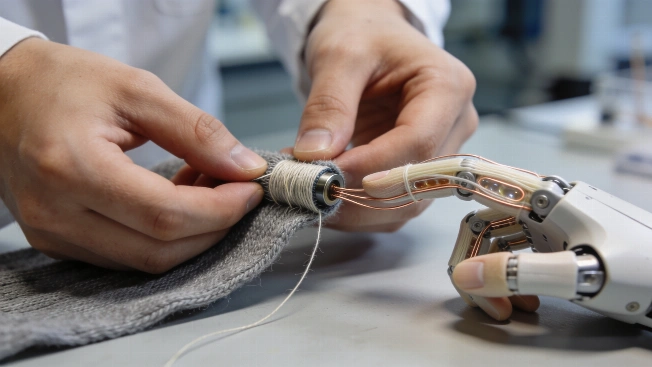
FiberMotor puts linear motion into a thread-like motor
EPFL researchers developed FiberMotor, a 1 to 3-millimeter electrostatic actuator made from two hollow fibers and copper electrodes. Applying voltage makes one fiber slide inside the other, producing quiet linear motion in both directions for textiles and soft robotic devices.

SPHEREx Maps the Chemical Weather of Brown Dwarfs
NASA's SPHEREx has analyzed 37 brown dwarfs across an extreme temperature range, detecting spectral signatures of water and methane, along with carbon monoxide and carbon dioxide, while revealing how atmospheric chemistry changes as these objects cool.
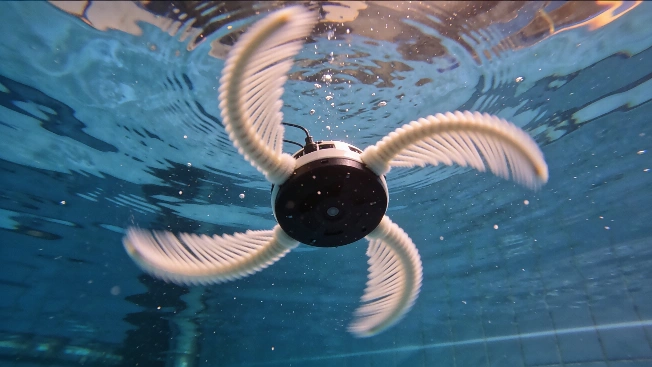
Two Actuators Give a Feather Star Robot Three-Dimensional Control
A North Carolina State University prototype uses two actuators and four elastic wings to move vertically and horizontally, then rotate underwater, using its structure instead of additional motors.
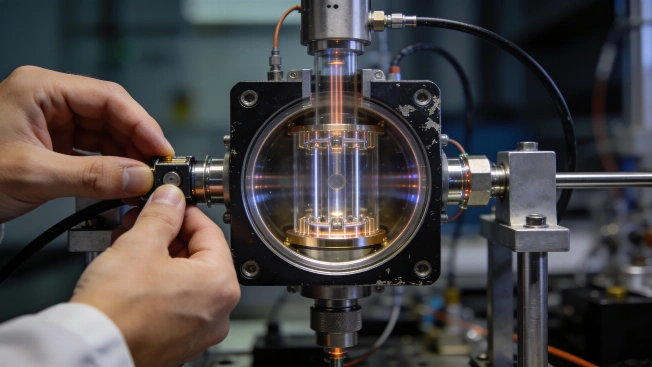
Quantum Error Correction Benchmark Tests Three Hardware Platforms
A preprint from Jülich Supercomputing Centre compares ten IBM, IQM and Quantinuum processors, testing whether repeated measurement, reset, feed-forward and idling preserve the signals required for quantum error correction.

OpenAI puts 722 machine-generated math manuscripts under scrutiny
OpenAI has published 722 machine-generated mathematical manuscripts across 372 research families, alongside selected Lean formalizations that allow computers to check parts of the underlying proofs.

University of Stuttgart plans autonomous robot teams for construction
University of Stuttgart researchers are designing SCALAR and COBRAS to assemble timber modules and lightweight space frames with coordinated robot teams, while testing whether automation can reduce waste and site labor.
Hubble Data Point to a Possible Planet Born After Its Star Died
Reanalyzed NASA Hubble spectroscopy and archival FUSE ultraviolet data reveal extreme niobium enrichment around the white dwarf HS 0209+0832, while TESS detected a 4.4-day brightness cycle consistent with, but not proving, the presence of a close-orbiting gas-giant candidate.
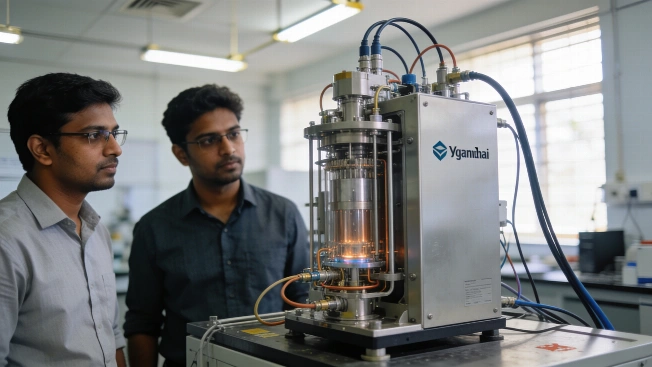
IBM Deepens India Partnerships Around Quantum Computing and AI
IBM is expanding its established research collaborations with IISc and IIT Bombay to develop quantum-classical workflows and agentic systems, alongside sovereign AI infrastructure and Indic language models, while leaving performance gains and deployment outcomes to be demonstrated.
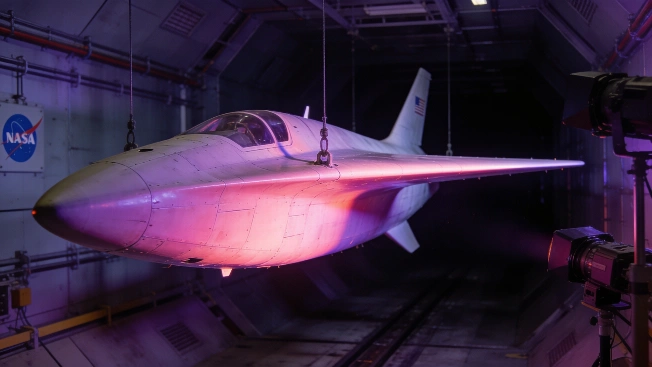
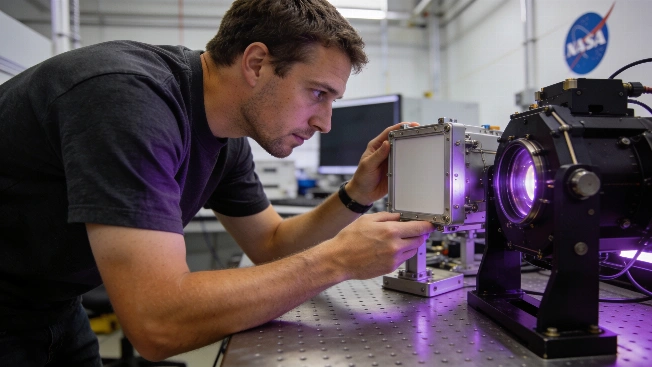
NASA Wing Glows Under Ultraviolet Light in Airflow Test
A NASA Langley test made a freely moving model wing glow pink-purple while high-speed cameras recorded full-field pressure changes in a low-oxygen wind-tunnel environment.
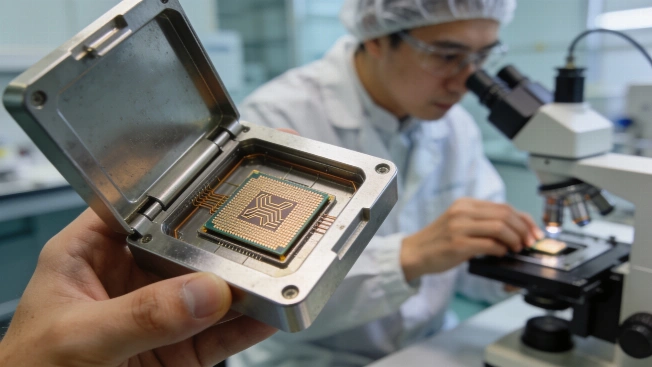
Nanometre Fabrication Shifts Explain Transmon Qubit Performance Gaps
A blinded study of 22 superconducting transmons links twofold T1 variation to nanometre-scale oxide and etch differences while finding no clear role for macroscopic surface defects

LuGo Cuts Quantum CFD Gate Counts by More Than 95 Percent
ORNL's LuGo structure moves heavy initialization onto Frontier before quantum state mapping, reducing a fluid-dynamics circuit from about 2 million gates to 91,000 across several hardware platforms.

Webb Traces Planet Shattering Collisions Around Young Stars
James Webb and Spitzer observations of 21 rare extreme debris disks show how mineral fingerprints distinguish Mars-scale planetary impacts from smaller collisions that reshape young stellar systems
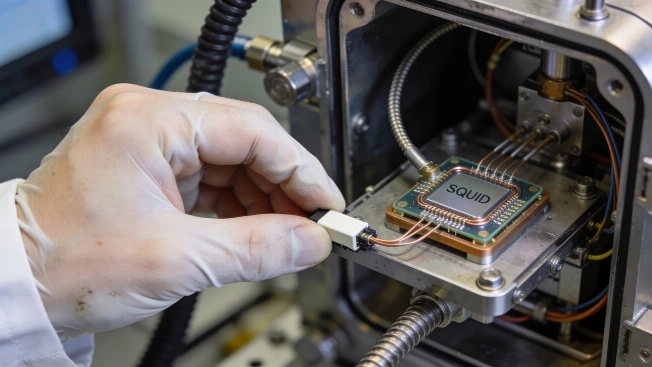
DC-Biased SQUID Stabilizes Multi-Photon Cat Qubits
Alice & Bob and ENS Lyon used a microvolt-scale DC-biased SQUID to control photon conversion between superconducting resonators and demonstrate multi-photon dissipation for cat-qubit stabilization.
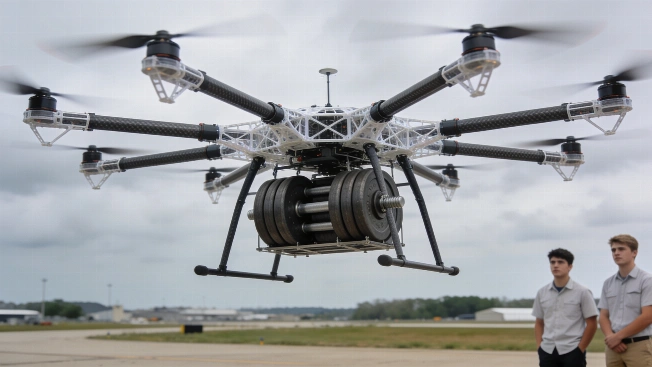
Texas A&M Drone Carries More Than Twice Its Own Weight
Texas A&M aerospace students flew a 50-pound battery-powered drone carrying 110 pounds over four nautical miles in 12 minutes at the first DARPA Lift Challenge, demonstrating the limits and promise of lightweight heavy-lift engineering.
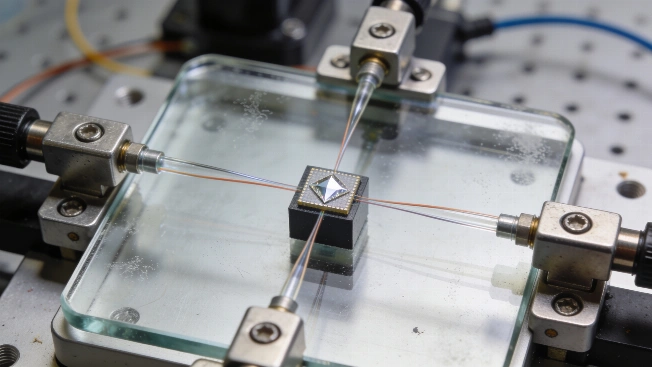
Quantum Sensor Network Research Wins $600,000 NSF Grant
A three-year NSF award, beginning June 1, 2026, will fund a Stony Brook and University of Hawaiʻi collaboration on entangled sensor nodes using squeezed-light photonics and diamond spin centers under realistic noise.
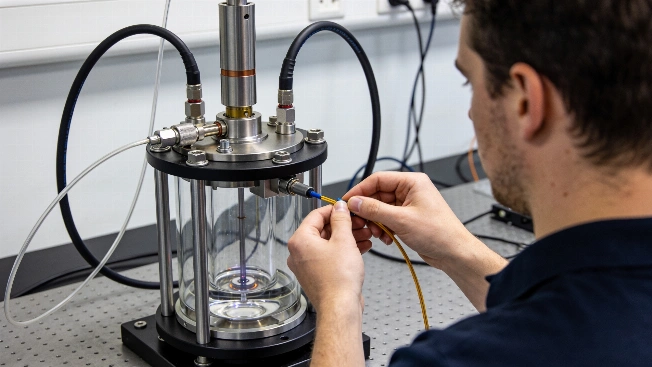
Infleqtion Links Neutral Atoms to Real-Time Error Decoding
Infleqtion and Riverlane plan to connect neutral-atom hardware with real-time quantum error-correction decoding in a UK engineering effort focused on latency and logical-qubit performance
Part 3 of 16