
Quantum Physics - Part 6
476 reports
Quantum Optimization Finds Value Before Quantum Advantage
JIJ relies on classical and quantum-inspired solvers for most commercial improvement work while testing quantum photonics for better answers, not faster runtimes.
Silicon Spin Qubits Move Toward 300 mm Quantum Processing
Quobly will use CEA-Leti's FAMES Pilot Line in Grenoble to prototype 3D integration and cryogenic control layers for 300 mm silicon spin-qubit processors, while Alloy Forge and qBraid Cloud offer developers an interim environment before planned access to the Alloy Pioneer QPU.
Quantum Computing Faces Its Hardest Test Beyond Qubit Counts
Quantum processors are no longer judged only as faster classical machines. Their value depends on whether real workloads can be mapped to quantum evolution and run reliably within hybrid systems with effective error correction.
ETSI Warns That Quantum Randomness Can Become Predictable
ETSI's technical report TR 104 171 says quantum random-number generators need continuous checks across the full entropy chain: detector dead time and side-channel leakage, along with noise, can reintroduce predictability.
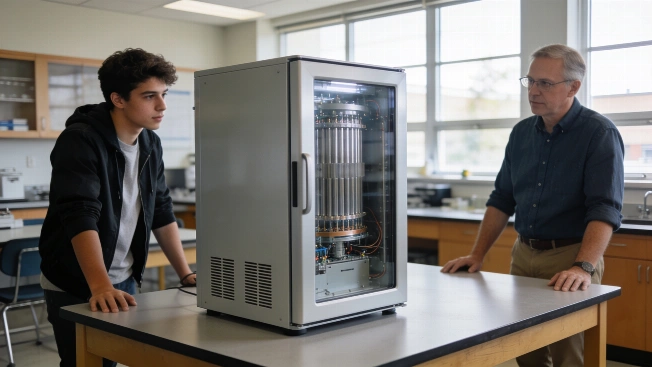
Room Temperature Quantum Computer Heads to Public High School
Fairfax County Public Schools plans to place XeedQ's four-qubit diamond spin processor at Skyview High School in December 2026, giving students direct access to room-temperature quantum hardware through learning pathways beginning in spring 2027.
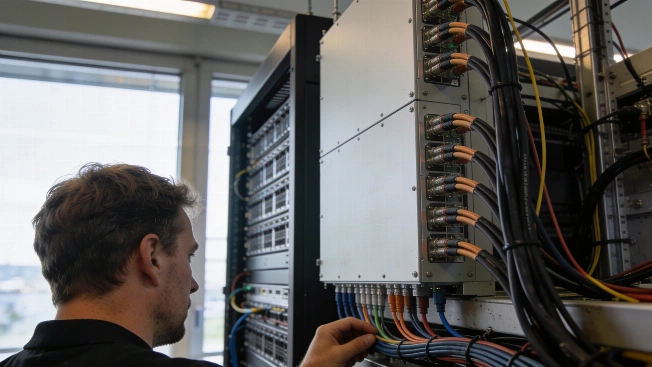
Qambria Raises $2.4M for Quantum Control Infrastructure
Swiss startup Qambria has raised CHF 2 million to develop vendor-neutral software that links quantum processors with high-performance computing systems and handles real-time control tasks.
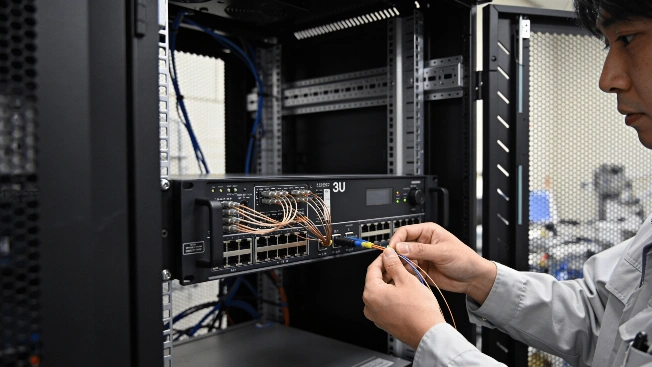
QuiX Quantum Brings Photonic Quantum Hardware to Japan
QuiX Quantum has appointed Sendai-based TEI-C as its exclusive Japanese distributor, giving universities, research institutes and industry local access to Alquor 2.0 photonic processors and PACU control systems.
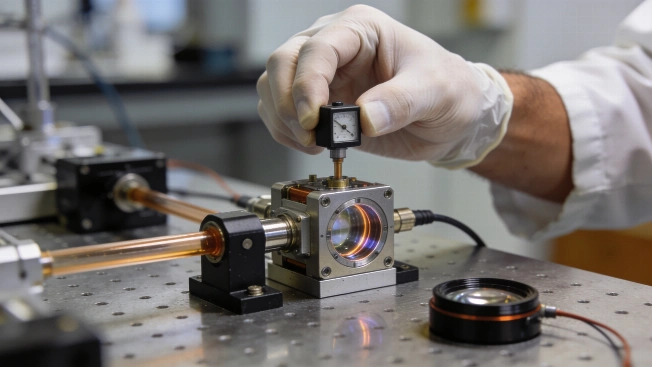
Mesa Quantum Raises $11.8M for GPS-Independent Quantum Sensors
Mesa Quantum has raised an oversubscribed $11.8 million round to move its chip-scale atomic clocks and inertial sensors from component research toward integrated systems and scaled manufacturing for GPS-denied environments.
Infleqtion Entangles 30 Logical Qubits on Neutral Atoms
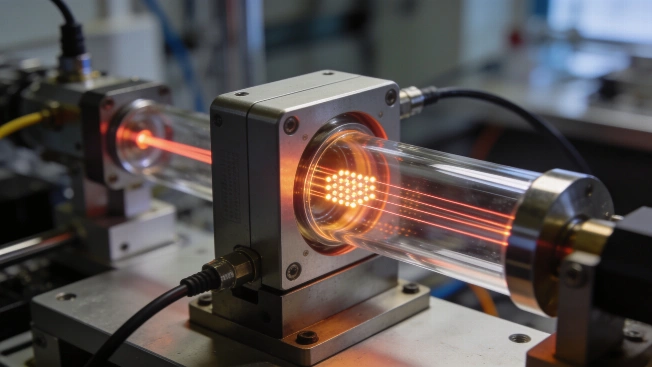
On September 24, 2026, Infleqtion said its commercial Sqale neutral-atom processor had entangled 30 logical qubits using 80 physical qubits. The demonstration combined encoded atom blocks with dynamic shuttling, a lower-overhead logical gate and software-assisted loss recovery.

Quantum Optimization Takes Aim at Airline Disruptions
Mphasis and Copa Airlines have named finalists in a global challenge that used real airline data to test hybrid quantum improvement for reassigning passengers after disruptions, while leaving performance gains and commercial deployment unresolved.

IonQ QCBM Beats Classical Radar Change Detection Baselines
IonQ reports that a 20-qubit trapped-ion quantum generative model improved radar change detection on a high-resolution airfield dataset while matching classical methods on volcanic InSAR imagery
FIU Selects IonQ Superion for On-Site Quantum Computing
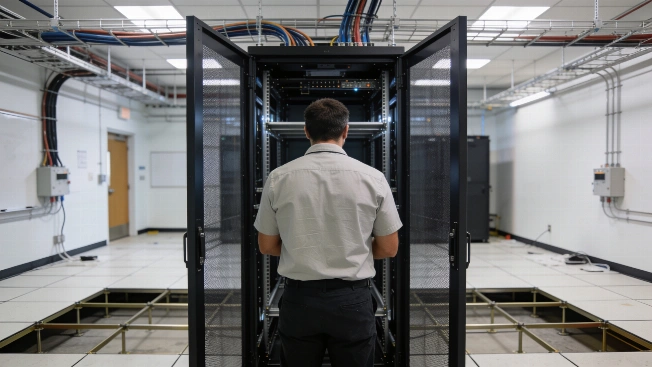
Florida International University has contracted IonQ to install a dedicated 256-physical-qubit trapped-ion quantum computer in Miami, creating Florida's first university-based system of its kind and opening planned access to students, researchers, invited scientists, and affiliated regional centers.
AI Design System Cuts Simulated Quantum Error Rates 14.6-Fold
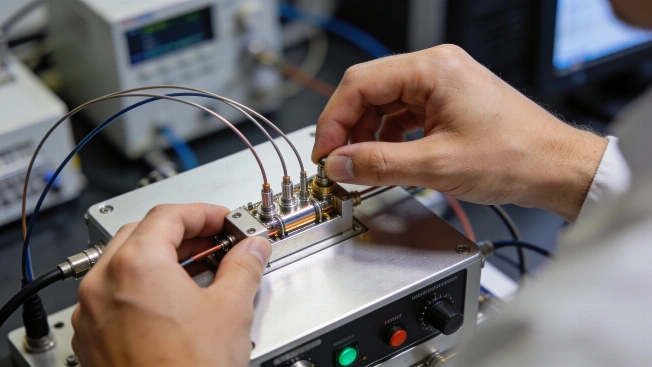
QC Design says its Meridian platform reduced evaluated logical error rates by a median factor of 14.6 across more than 100 quantum fault-tolerance design tasks. The company tested architectures against hardware noise in simulation.
memQ Releases Compiler for Heterogeneous Quantum Networks
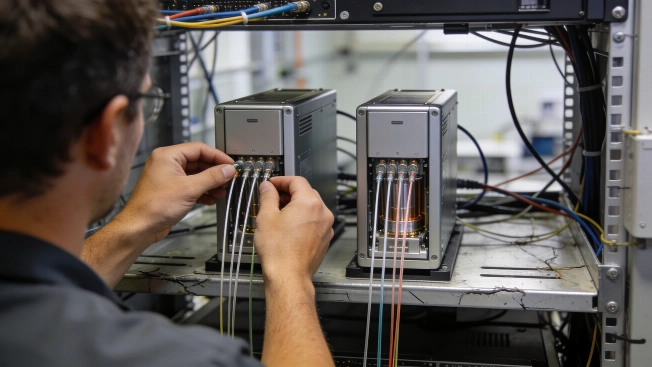
memQ has released an open-source compiler that converts monolithic quantum circuits into network-aware execution graphs and models entanglement costs across heterogeneous QPUs.
Surface Codes Put Logical Qubits on Trial for Patent Eligibility
Surface codes could protect logical qubits from physical errors, yet their patent claims may face an abstractness challenge unless they are tied to a specific quantum computing system and a measurable implementation.

IonQ Hardware Tests Quantum Optimization for Gas Networks
Classiq and Israel Natural Gas Lines used hybrid quantum-classical improvement to search for gas pipeline pressure settings. IonQ Forte-1 produced physically valid candidates close to the classical optimum, but the feasibility test did not demonstrate quantum advantage.
Quantum Hardware Depends on a Borderless Supply Network
A survey of 160 quantum enterprises across 15 countries finds that 90% depend on foreign suppliers while 74% sell abroad, revealing why protectionist controls could disrupt the sector.
Q-CTRL Outperforms IBM Error Suppression on 156-Qubit Heron
An arXiv benchmark on IBM's 156-qubit Heron processor finds that Q-CTRL led exact-output sampling, while Qedma delivered the lowest estimator error at a much higher QPU time cost.
Q-CTRL Executes a 100-Qubit Quantum Fourier Transform
Q-CTRL has run a functional Quantum Fourier Change on up to 100 physical qubits in an IBM Heron R3 processor while testing a compilation method designed to limit routing and noise.
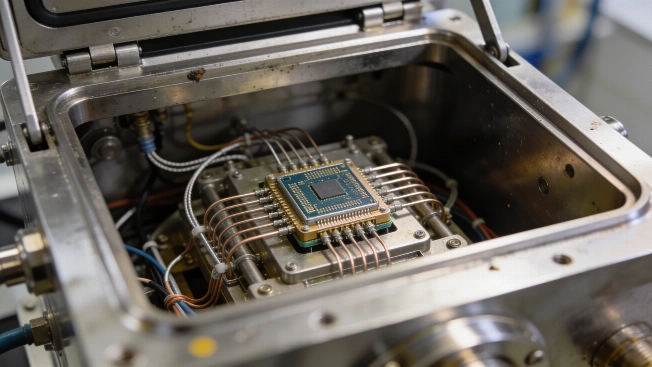
Germany Selects QUDORA Consortium for 1000 Qubit Quantum Project
Germany has invited a QUDORA-led consortium to submit a full proposal for a five-year trapped-ion machine targeting 1,000 physical qubits, 50 logical qubits and semiconductor-compatible quantum control.
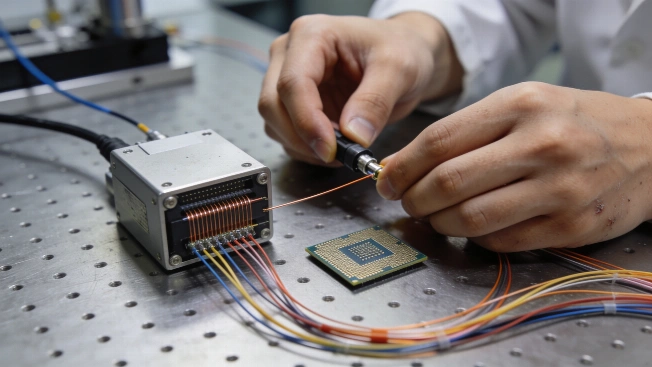
Quantum Resource Estimation Adds Distributed Photonic Architectures
Microsoft and Photonic are adapting an open-source quantum resource estimator for modular systems, enabling developers to model physical-qubit counts, runtime and optical-networking overhead before distributed hardware is available.
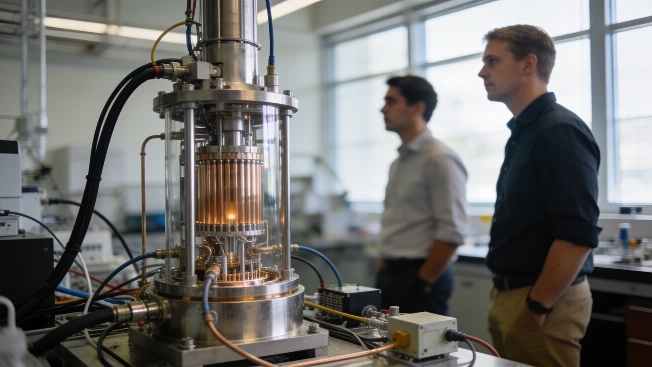
Maryland Is Building Quantum Infrastructure Before the Market
Maryland's quantum strategy now links federal benchmarking with university research funding, hands-on training and company laboratories across five hardware approaches, creating an environment whose value depends on reproducible testing and commercial results.
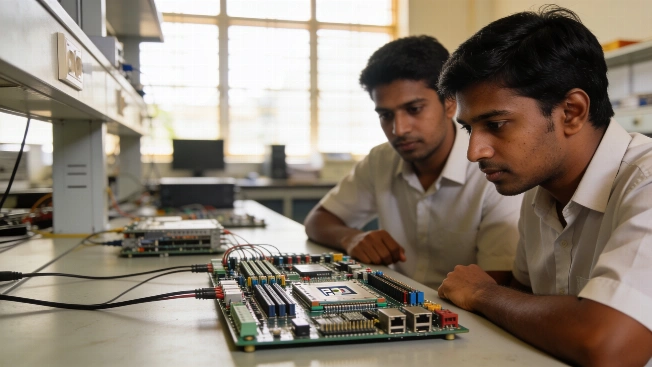
Yenepoya Plans Quantum AI Hardware Lab in Mangaluru
Yenepoya University and REYRA AI plan a Mangaluru laboratory for quantum-inspired hardware and software while preparing students and faculty through certificate courses in quantum computing and quantum machine learning.
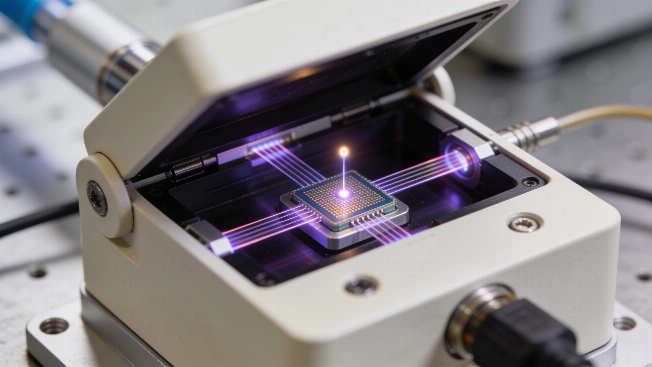
Standing Wave Cooling Brings Trapped Ions Near Ground State
Cornell researchers used a 397 nm standing wave on a fabricated ion-trap chip to cool a single 40Ca+ ion near its motional ground state in 150 microseconds
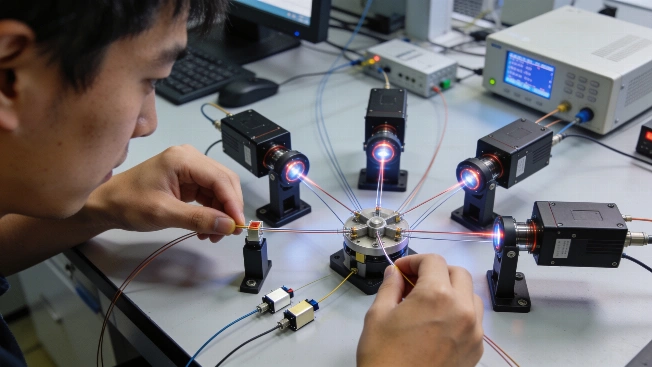
Nanjing Team Brings Asynchronous Quantum Conferencing to 59.6 dB Loss
Nanjing University has demonstrated a three-user measurement-device-independent quantum conferencing network that retains O(η) loss scaling and uses timestamped event pairing and software phase correction instead of global laser locking.

SK Telecom Builds a Digital Twin for Quantum Networks
SK Telecom and KISTI demonstrated a standards-compatible digital twin that lets engineers examine quantum-network configurations before installing physical QKD hardware. The demonstration reported no new secret-basic rate or distance results, and no security certification.
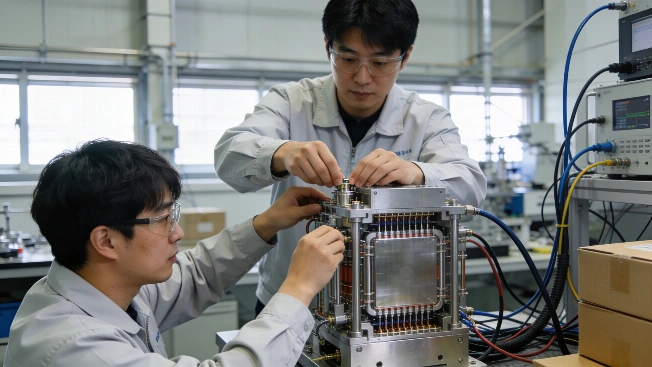
IonQ Brings Quantum Hardware to South Korea
IonQ and South Korea's SDT announced a multi-year partnership on September 21, 2026, covering deployment of a Superion 256 quantum system, silicon-vacancy memory modules, local hardware integration and a planned hybrid quantum-classical facility for medical and biomedical research.
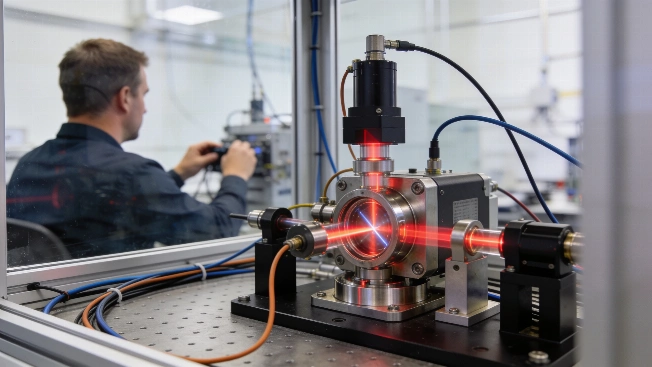
QuEra Brings Neutral-Atom Hardware to Maryland's Quantum Cluster
QuEra has opened a Discovery District office and expanded its University of Maryland partnership, giving researchers and students, along with educators, cloud access to a 256-qubit neutral-atom processor.
Federal Agencies Get a FIPS-Validated Quantum-Safe Key Layer
Quantum XChange will use Carahsoft's government distribution network to bring its FIPS-validated Phio TX platform to federal, state, local, and education buyers seeking post-quantum migration without replacing existing applications.
Microsoft Builds Maryland Hub for Quantum Hardware Verification
Microsoft has opened a 15,000-square-foot Maryland center where DARPA can physically test Majorana 2 and research partners can develop quantum hardware, control systems, and software, without yet establishing a useful fault-tolerant machine.
Quantum Utility Starts With Chemistry Not Qubit Counts
Matthias Troyer's assessment of quantum computing points to chemistry as the clearest near-term application. Error correction, data movement, hardware architecture and end-to-end cost will determine whether larger systems become scientifically useful.
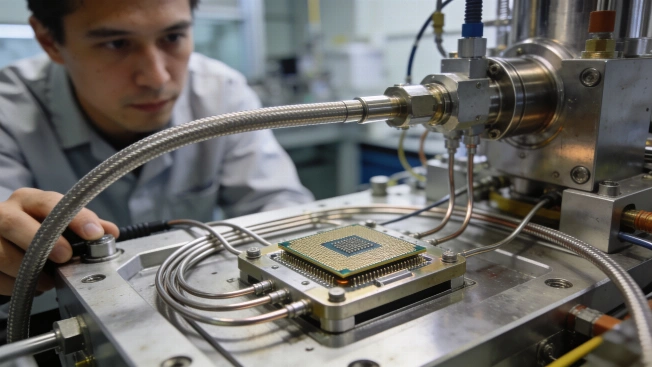
Quobly Puts Silicon Spin Qubits Through Hardware-Aware Simulation
Quobly and qBraid have publicly released a 15-qubit silicon spin-qubit emulator that models semiconductor noise and native gate constraints ahead of the expected end-of-2026 cloud launch of Quobly's first commercial machine, Alloy Pioneer.
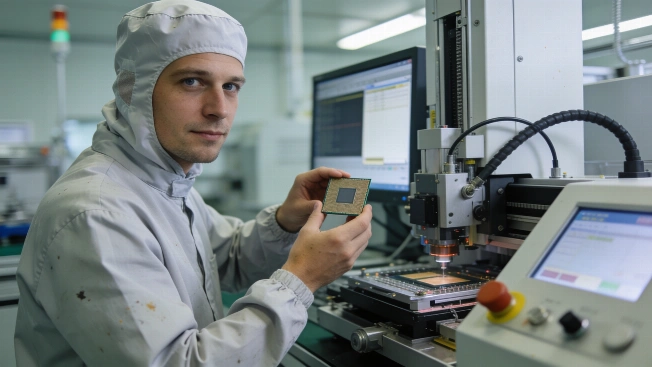
Jura Plans a Post-Quantum Semiconductor Security Hub
SEALSQ, WISeKey and the Canton of Jura have signed an MoU for a proposed CHF 40 million to CHF 60 million center focused on post-quantum chip personalization, testing and secure provisioning.
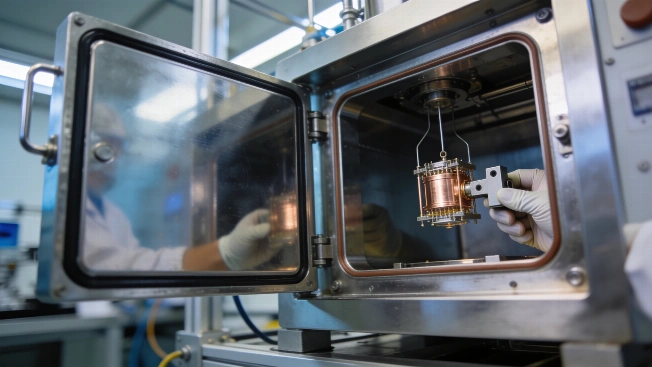
IBM Hybrid Error Mitigation Cuts Quantum Sampling Overhead 63-Fold
IBM researchers tested a hybrid protocol on a 27-qubit superconducting processor, recovering Ising-model magnetization while reducing inferred error-mitigation sampling overhead by up to 63-fold.
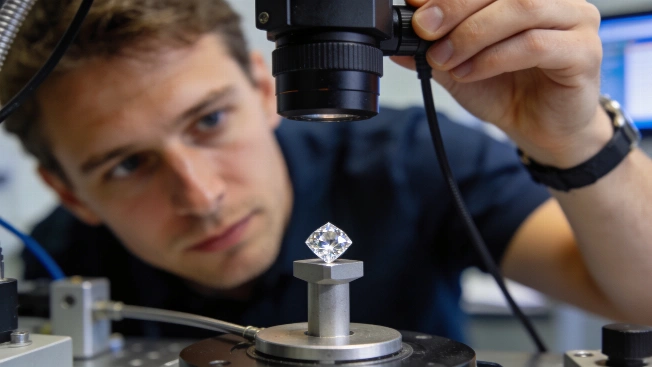
Diamond Spin Register Entangles Four Qubits in 14.8 Microseconds
University of Pennsylvania researchers entangled an electron spin with three nuclear memory qubits in diamond at room temperature using a single dynamical decoupling sequence instead of a chain of pairwise gates.
Part 6 of 14