SEALSQ, WISeKey and the Canton of Jura have signed an MoU for a proposed CHF 40 million to CHF 60 million center focused on post-quantum chip personalization, testing and secure provisioning.
A proposed Swiss facility would move post-quantum security from algorithm selection into the semiconductor supply chain. SEALSQ Corp, WISeKey International Holding Ltd and the Government of the Republic and Canton of Jura announced on September 21, 2026, that they had signed a Memorandum of Understanding to establish a Post-Quantum Semiconductor and Cybersecurity Center in Jura.
The announcement describes an industrial plan at the level of intent, not an operating facility. The final site, implementation schedule and production line have not been publicly identified. A joint working group is expected to address site selection, formal agreements and research partnerships before construction or routine manufacturing can be assessed.
What Jura Would Build
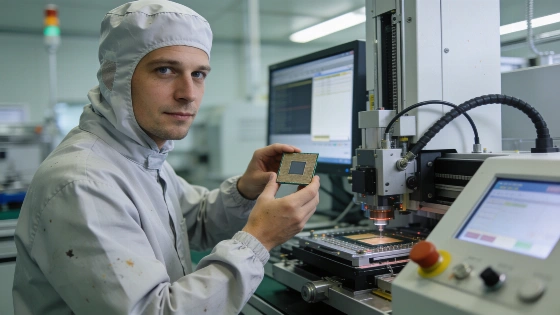
The planned center would handle personalization, testing, secure provisioning and potentially custom ASIC design for hardware-embedded post-quantum cryptography. Its proposed activities include secure firmware personalization, cryptographic key injection and certification work for defense, aerospace avionics and critical infrastructure applications.
The operating concept centers on SEALSQ's QS7001 Quantum Shield secure microcontrollers. Corporate materials associate the product with hardware acceleration for ML-KEM and ML-DSA, lattice-based algorithms selected in the U.S. National Institute of Standards and Technology's post-quantum standardization program. The NIST cryptography program distinguishes algorithm standardization from the engineering work required to implement, test and deploy those algorithms securely.
The project therefore concerns post-quantum cryptography running on conventional semiconductor hardware rather than quantum communication or a quantum computer. A qubit is a controlled quantum system, whereas a secure microcontroller performs classical computation and stores or processes cryptographic material using ordinary electronic circuits. The distinction is important: the proposed center would not need a quantum processor, quantum network or cryogenic quantum laboratory to perform its stated work.
Post-quantum algorithms are designed to resist attacks from sufficiently capable future quantum computers, particularly threats to public-key systems based on factoring or discrete logarithms. Their practical security still depends on implementation details such as randomness generation, memory handling, key lifecycle controls, resistance to fault injection and protection against side-channel leakage. This is why semiconductor personalization and certification can be as consequential as the selection of an algorithm.
Earlier corporate and market materials state that QS7001 received validation of its random-number generator under NIST SP 800-90B and underwent Common Criteria testing for resistance to fault-injection and side-channel attacks. Those statements indicate reported validation activity, but they do not by themselves establish a completed independent certification, manufacturing yield, field reliability or performance benchmark for a future Jura operation.
A Root of Trust is the hardware and associated provisioning process used to establish device identity and protect cryptographic material at the chip level. Personalization and key injection can determine whether a finished component enters service with controlled credentials and verifiable firmware rather than merely containing a selected cryptographic algorithm. Research and engineering communities at MIT, CERN and the journal Nature have likewise emphasized, across different areas of computing and physical science, that system-level reliability depends on the interaction between theoretical models, hardware and validated procedures.
The partnership has not announced an operating site or a completed production line. A joint working group is expected to finalize site selection, formal implementation agreements and applied research partnerships, including work with HE-Arc Ingénierie. That sequencing makes the current announcement a planning milestone rather than evidence that chips are already being processed in Jura.
The Investment and Workforce
The indicative public-private investment is CHF 40 million to CHF 60 million over six years. The stated workforce plan targets 40 direct jobs in year two and more than 250 by year eight, with at least 60% of employees intended to be residents of the canton.
Those figures describe targets attached to the proposed operating framework rather than achieved employment. Stéphane Theurillat, Jura's economy minister, characterized the initiative as an important milestone for the canton and linked it to digital sovereignty and economic diversification. The cantonal government has stated that it fully supports the project and will work toward accelerated siting and long-term development conditions.
The Canton of Jura would provide strategic facilitation while its existing microtechnology and precision-watchmaking infrastructure would be combined with SEALSQ's Root of Trust architecture. The proposed regional model could connect local skills in precision manufacturing with specialized security engineering, but the announcement does not yet provide a quantified study of supply-chain capacity, training needs or economic return.
From Murcia to Jura
The Jura proposal draws on operational methods from the €40 million Quantix Edge Security personalization facility in Murcia, Spain. That project received €19.6 million from Spain's Sociedad Española de Transformación Tecnológica and generated initial commercial revenues in the second quarter of 2026.
The Murcia example gives the Swiss plan a concrete reference point, but it does not establish that the Jura center will reproduce the same commercial outcome. The two initiatives are linked in the announcement through operational methodology rather than through a reported technical performance comparison, controlled study or independently published dataset.
The planned Swiss site would also evaluate industrial participation offsets aligned with Swiss defense procurement programs through armasuisse. That creates a possible route for the center to connect secure semiconductor work with procurement requirements, although the MoU itself does not represent a completed defense contract.
The Evidence Boundary
The announcement provides architecture and investment parameters but not measured QS7001 performance data. It does not report silicon yield, gate count, processor benchmarks, device failure rates, certification results or independent testing. It also does not specify the final site, operating equipment or the number of chips the center would process.
Those omissions matter because post-quantum security depends on implementation as much as on standardized mathematics. Secure provisioning must protect keys during manufacturing and deployment, while firmware personalization must be controlled against unauthorized changes. A center can provide those capabilities only when its process controls, certification evidence and production repeatability are demonstrated through documented testing.
A separate account of hardware-rooted migration appears in earlier PQC reporting, but the Jura announcement adds a regional semiconductor and personalization dimension rather than evidence of a new cryptographic standard.
The project's public value is therefore best understood as infrastructure planning rather than a finished quantum-safe manufacturing capability. NASA, ESA and other major research organizations have shown how complex technology programs depend on staged qualification, traceability and verification; the same general discipline applies here, even though the proposed Jura center would address secure semiconductor production rather than space systems.
Jura's MoU is a serious industrial proposal because it assigns post-quantum security a physical production setting and attaches a defined investment horizon, workforce plan and technical partner. It is not yet proof that the center exists as an operating facility or that its chips have passed independent evaluation. The project deserves attention precisely on that boundary: Switzerland is planning infrastructure for hardware-rooted cryptography, while the decisive evidence will come later through site execution, process validation and reproducible security performance.